Two-Tone Stoneware Bean Pot
Antique Kitchenware / Stoneware

Two-Tone Stoneware Bean Pot

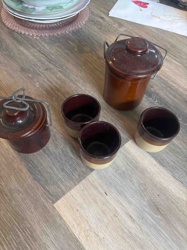
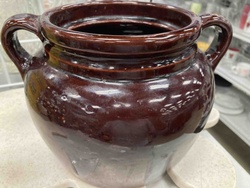
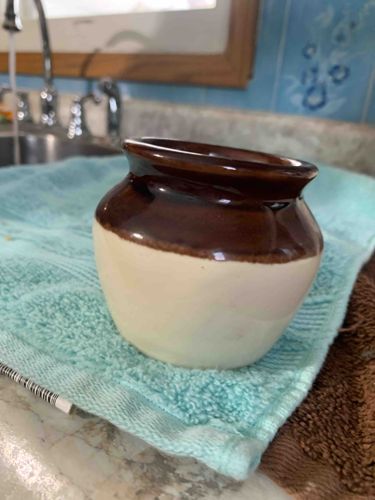
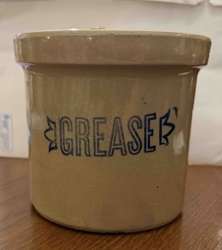
This is a small, wheel-thrown or mold-formed stoneware pot, characterized by a bulbous ovoid body that tapers toward a slightly flared, unstopped rim. The vessel features a classic two-tone salt or Bristol glaze typical of utilitarian American and European kitchenware from the late 19th to mid-20th centuries. The upper third of the pot, including the rim and interior neck, is finished in a rich, dark manganese or iron-oxide brown glaze, while the lower two-thirds display a creamy off-white slip. The application of the brown glaze is somewhat irregular along the shoulder line, indicating a hand-dipped process rather than industrial precision. There are no immediate maker's marks visible on the body; such pieces often bore stamps on the base or were mass-produced for local commercial distribution. The exterior surface shows light crazing and small kiln-firing pits consistent with its age and material composition. Although no major cracks are visible in the primary view, the piece shows some minor surface staining and a light patina from use. This style of utilitarian stoneware was common in farmhouse kitchens for storing beans, jam, or lard, reflecting a durable, functional design meant for everyday domestic tasks.
Estimated Value

$35.00 - $65.00

Basic Information

Category

Antique Kitchenware / Stoneware

Appraised On

January 9, 2026

Estimated Value

$35.00 - $65.00

Item Description

This is a small, wheel-thrown or mold-formed stoneware pot, characterized by a bulbous ovoid body that tapers toward a slightly flared, unstopped rim. The vessel features a classic two-tone salt or Bristol glaze typical of utilitarian American and European kitchenware from the late 19th to mid-20th centuries. The upper third of the pot, including the rim and interior neck, is finished in a rich, dark manganese or iron-oxide brown glaze, while the lower two-thirds display a creamy off-white slip. The application of the brown glaze is somewhat irregular along the shoulder line, indicating a hand-dipped process rather than industrial precision. There are no immediate maker's marks visible on the body; such pieces often bore stamps on the base or were mass-produced for local commercial distribution. The exterior surface shows light crazing and small kiln-firing pits consistent with its age and material composition. Although no major cracks are visible in the primary view, the piece shows some minor surface staining and a light patina from use. This style of utilitarian stoneware was common in farmhouse kitchens for storing beans, jam, or lard, reflecting a durable, functional design meant for everyday domestic tasks.
Get Your Items Appraised

Instant estimates of your treasures with AI-powered instant appraisals

Browse More Appraisals