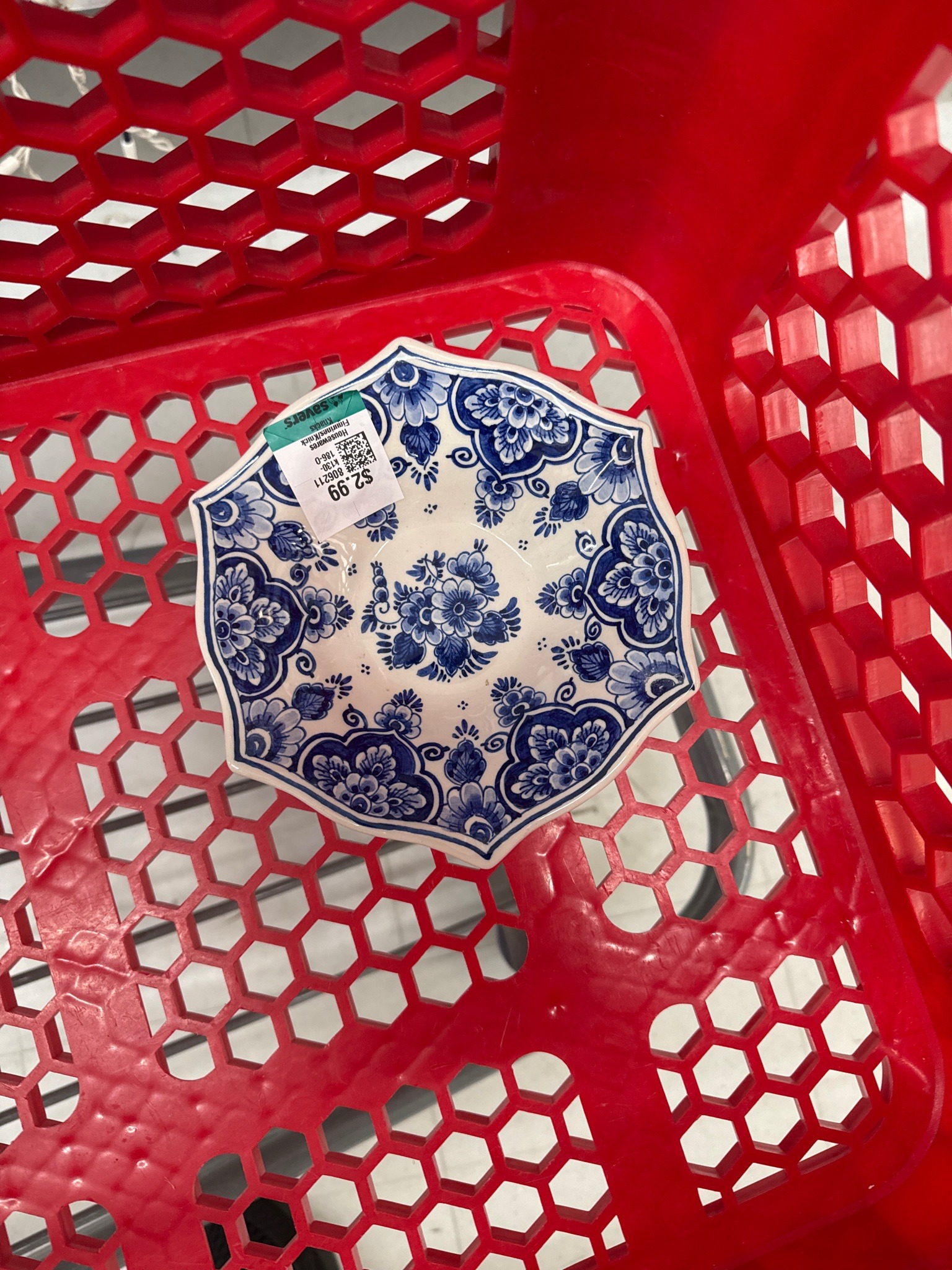
Delft Blue style scalloped ceramic bowl
This item is a decorative ceramic bowl featuring a classic blue and white aesthetic reminiscent of traditional Delftware. The piece is characterized by its distinct octagonal, scalloped rim that creates a floral silhouette. Centered in the basin is a hand-painted or transferred floral motif featuring stylized blossoms. The perimeter is adorned with ornate lobed panels containing further botanical details and scrollwork, separated by smaller floral sprays. The glaze appears bright white and glassy, providing a high contrast for the cobalt blue pigment. In terms of condition, the piece shows no major visible cracks or chips from this angle, though a modern thrift store retail sticker for $2.99 is adhered to the upper rim, which may leave adhesive residue. The uniformity of the blue tones and the crispness of the lines suggest a mid-to-late 20th-century production, likely mass-produced for the souvenir or home decor market rather than being an antique 18th-century original. The underside likely contains a maker's mark or country of origin, common for these types of earthenware or porcelain pieces.
AI-Generated Appraisal Disclaimer
Estimated Value
$15.00 - $25.00
Basic Information
Category
Decorative Arts / Ceramics
Appraised On
May 11, 2026
Estimated Value
$15.00 - $25.00
Item Description
This item is a decorative ceramic bowl featuring a classic blue and white aesthetic reminiscent of traditional Delftware. The piece is characterized by its distinct octagonal, scalloped rim that creates a floral silhouette. Centered in the basin is a hand-painted or transferred floral motif featuring stylized blossoms. The perimeter is adorned with ornate lobed panels containing further botanical details and scrollwork, separated by smaller floral sprays. The glaze appears bright white and glassy, providing a high contrast for the cobalt blue pigment. In terms of condition, the piece shows no major visible cracks or chips from this angle, though a modern thrift store retail sticker for $2.99 is adhered to the upper rim, which may leave adhesive residue. The uniformity of the blue tones and the crispness of the lines suggest a mid-to-late 20th-century production, likely mass-produced for the souvenir or home decor market rather than being an antique 18th-century original. The underside likely contains a maker's mark or country of origin, common for these types of earthenware or porcelain pieces.
Get Your Items Appraised
Instant estimates of your treasures with AI-powered instant appraisals