Tlatilco Style Ceramic Mother and Child Figure
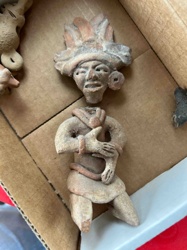
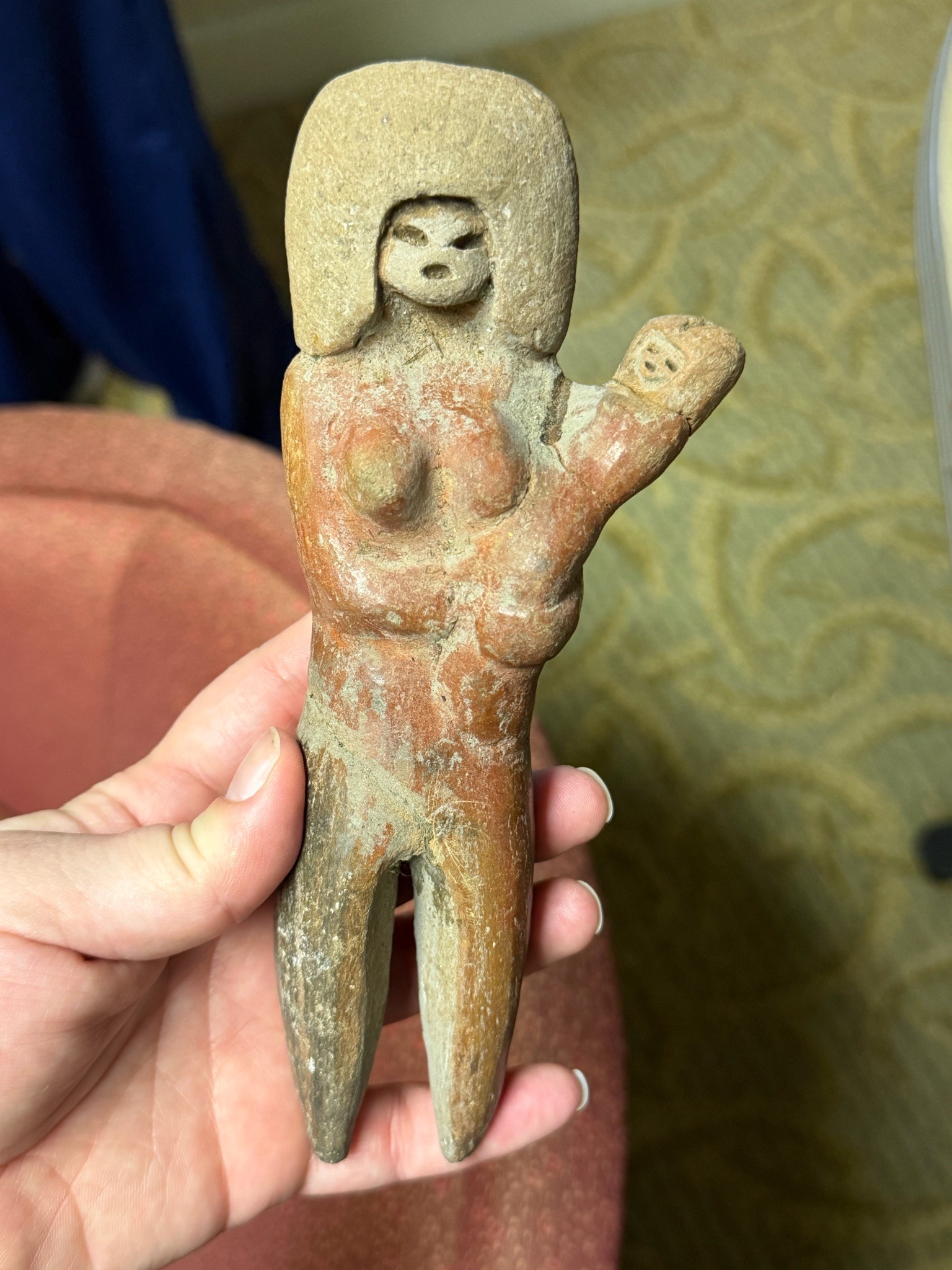
A hand-modeled ceramic figurine depicting a mother holding a child, rendered in the distinctive Pre-Columbian Tlatilco style, typically dating from the Early Formative period (approx. 1200-900 BCE) of Central Mexico. The figure is constructed from a reddish-orange earthenware clay with visible remnants of a creamy buff slip, particularly on the oversized, elaborate headdress or coiffure. The mother features exaggerated feminine attributes including prominent breasts and wide hips that taper into stump-like legs. The facial features are minimalist, characterized by 'coffee-bean' slit eyes and a small, circular punctured mouth. The child is held in the mother's left arm, also featuring a simplified face. The surface exhibits significant archaeological patina, including rooted encrustations, mineral deposits, and variations in coloration from burial. There is visible wear throughout, including minor abrasions and a possible professional repair or structural instability on the left leg. The craftsmanship displays the 'pretty lady' typology common to the Valley of Mexico, signifying fertility and domestic life. This piece lacks visible maker's marks, as is standard for the period.
AI-Generated Appraisal Disclaimer
Estimated Value
$1,200 - $1,800 USD
Basic Information
Category
Pre-Columbian Artifacts
Appraised On
May 6, 2026
Estimated Value
$1,200 - $1,800 USD
Item Description
A hand-modeled ceramic figurine depicting a mother holding a child, rendered in the distinctive Pre-Columbian Tlatilco style, typically dating from the Early Formative period (approx. 1200-900 BCE) of Central Mexico. The figure is constructed from a reddish-orange earthenware clay with visible remnants of a creamy buff slip, particularly on the oversized, elaborate headdress or coiffure. The mother features exaggerated feminine attributes including prominent breasts and wide hips that taper into stump-like legs. The facial features are minimalist, characterized by 'coffee-bean' slit eyes and a small, circular punctured mouth. The child is held in the mother's left arm, also featuring a simplified face. The surface exhibits significant archaeological patina, including rooted encrustations, mineral deposits, and variations in coloration from burial. There is visible wear throughout, including minor abrasions and a possible professional repair or structural instability on the left leg. The craftsmanship displays the 'pretty lady' typology common to the Valley of Mexico, signifying fertility and domestic life. This piece lacks visible maker's marks, as is standard for the period.
Get Your Items Appraised
Instant estimates of your treasures with AI-powered instant appraisals