AI Appraisal Estimate

AI-generated estimates · not official valuations

From the user

What was submitted

Photo and notes provided by the user — not generated by AI

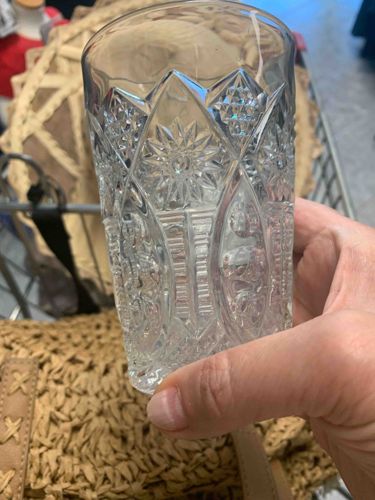
Submitted item photo
Submitted photo · May 28, 2026

User's notes

No additional notes provided.

AI analysis below

AI appraisal

AI analysis & estimate

AI-Generated · Verify before acting

Everything below is generated by AI for informational purposes only. AI can make mistakes — the AI may misidentify items or misattribute them (artist, maker, brand, designer, origin, era). This is not an official valuation and should not be used for insurance, sale, tax, estate, legal, or lending purposes — or any decision requiring a certified appraisal. It is not an authoritative claim about any person, brand, or rights holder — do not share or rely on it as a factual statement about a third party. Always consult qualified professionals before making financial decisions.

Read the full disclaimer

AI Identification

·Not independently authenticated·Verify before acting

Pressed Glass Tumbler with Hobstar Pattern

Drinkware

AI Estimated Value

·Not an official valuation·Verify before acting

$10-20

As of May 28, 2026

AI Item Analysis

·AI can make mistakes·Verify before acting
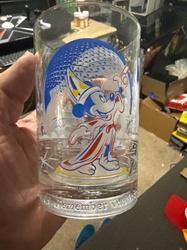
This item is a clear glass tumbler, likely a drinking glass, characterized by its elaborate pressed glass pattern. The overall form is cylindrical with a slight taper towards the base. The glass appears to be of standard thickness for everyday use, suggesting durability. The notable features include a highly decorative design that covers the majority of its exterior surface. Starting from the rim, there are faceted diamond-shaped cuts that transition into a repeating pattern of eight-pointed stars, often referred to as a 'hobstar' pattern, which is a hallmark of American Brilliant Period cut glass, though this appears to be pressed rather than cut. Below the hobstars, there are vertical panels or flutes that alternate with smaller, more intricate floral or medallion-like motifs. The base of the glass shows a more subdued pattern, possibly just fluting or a simple molded design, leading to a flat bottom. No visible chips, cracks, or significant wear are immediately apparent on the glass from the provided image, indicating it is in good to very good condition. There are no discernible maker's marks or signatures visible. Given the complexity and style of the pressed pattern, particularly the hobstar elements, this glass likely dates from the late 19th to early 20th century, common for what is known as 'Early American Pattern Glass' (EAPG) or a similar revival period. The craftsmanship, while not hand-cut, demonstrates a good level of detail for pressed glass, with clean lines and sharp definition in the molded pattern, suggesting a quality production process for its era.

AI Appraisal Report

·AI can make mistakes·Verify before acting
Upon examining the images of this pressed glass tumbler, I note its classic form and elaborate 'Hobstar' pattern, characteristic of the Early American Pattern Glass (EAPG) era, circa late 19th to early 20th century. The glass appears to be in very good condition, with no visible chips, cracks, or significant scuffs, and the pressed pattern retains sharp definition. Although the hobstar motif mimics the more valuable American Brilliant Period cut glass, this piece is clearly pressed glass, which was mass-produced for the middle-class market. Its value is therefore determined by its pattern, maker (if identifiable), and condition rather than the intrinsic value of hand-cutting. The market for individual EAPG tumblers is generally modest. While complete sets or rare patterns can command higher prices, single, common pattern tumblers are plentiful. The demand is steady but not high, primarily driven by collectors of specific patterns or those seeking affordable period decor. This particular hobstar and panel design is attractive but was likely produced by several different manufacturers, making it a relatively common example. Its value is supported by its excellent condition but limited by its commonality and mass-produced nature. It is crucial to note that this appraisal is based solely on images. A definitive attribution to a specific maker (e.g., Heisey, Fostoria, Imperial) would require in-person examination to identify subtle mold marks, confirm the glass formula through its weight and ring, and check for wear under magnification. Without physical inspection or provenance, precise identification and full authentication remain speculative.

Get your items appraised

Instant estimates of your treasures with AI-powered appraisals

Browse More Appraisals