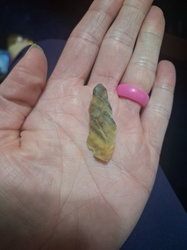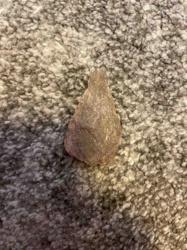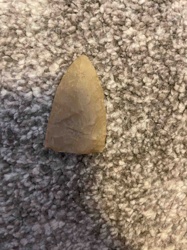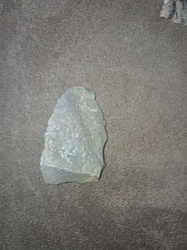
Ancient Chinese Bronze Ge (Dagger-Axe Head)
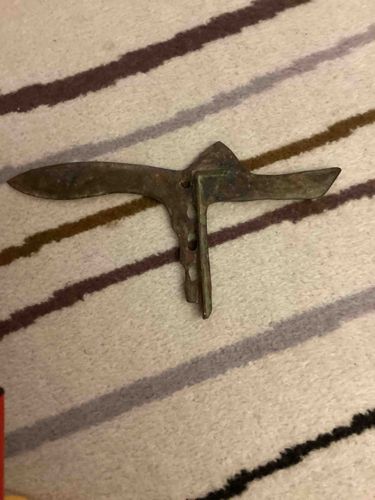
Small-scale ancient Chinese bronze Ge dagger-axe head, likely dating from the Warring States period or Han Dynasty. This artifact is cast in bronze and exhibits a characteristic three-part design: a long horizontal blade (yuan) with a pointed tip, a vertical mounting section (nei) perpendicular to the blade, and a smaller rear blade extension. The physical construction features a central ridge for reinforcement and multiple apertures or 'hu' (holes) designed for securing the bronze head to a wooden or bamboo shaft with leather thongs. The surface is heavily encrusted with a thick, authentic green and brown malachite/cuprite patina, indicating significant age and long-term burial in earth. This patina has developed unevenly across the object, showing varied mineral crystallization. The condition is consistent with an archaeological find; while the overall structural integrity remains, the edges are rounded by corrosion, and there is minor pitting throughout the surface. No specific maker's marks or inscriptions are visible under the current oxidation layer. The craftsmanship reflects typical military casting techniques of early Chinese dynastic periods, prioritizing utility and structural strength. This particular specimen is of a smaller size, potentially suggesting it was intended for ceremonial use or as a funerary object (mingqi) rather than active battlefield engagement. Its asymmetrical silhouette and specific hole placement are diagnostic markers of East Asian polearm development.
AI-Generated Appraisal Disclaimer
Estimated Value
$450 - $700
Basic Information
Category
Archaeological Artifacts / Ancient Weapons
Appraised On
January 10, 2026
Estimated Value
$450 - $700
Item Description
Small-scale ancient Chinese bronze Ge dagger-axe head, likely dating from the Warring States period or Han Dynasty. This artifact is cast in bronze and exhibits a characteristic three-part design: a long horizontal blade (yuan) with a pointed tip, a vertical mounting section (nei) perpendicular to the blade, and a smaller rear blade extension. The physical construction features a central ridge for reinforcement and multiple apertures or 'hu' (holes) designed for securing the bronze head to a wooden or bamboo shaft with leather thongs. The surface is heavily encrusted with a thick, authentic green and brown malachite/cuprite patina, indicating significant age and long-term burial in earth. This patina has developed unevenly across the object, showing varied mineral crystallization. The condition is consistent with an archaeological find; while the overall structural integrity remains, the edges are rounded by corrosion, and there is minor pitting throughout the surface. No specific maker's marks or inscriptions are visible under the current oxidation layer. The craftsmanship reflects typical military casting techniques of early Chinese dynastic periods, prioritizing utility and structural strength. This particular specimen is of a smaller size, potentially suggesting it was intended for ceremonial use or as a funerary object (mingqi) rather than active battlefield engagement. Its asymmetrical silhouette and specific hole placement are diagnostic markers of East Asian polearm development.
Get Your Items Appraised
Instant estimates of your treasures with AI-powered instant appraisals