Paleolithic Chert Scraper Tool
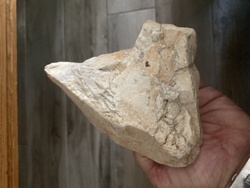
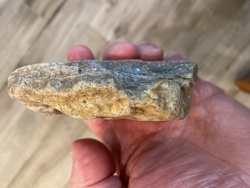
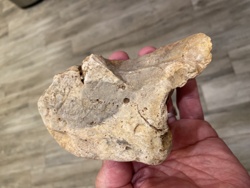
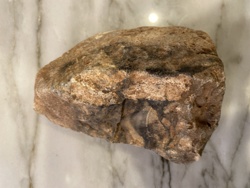
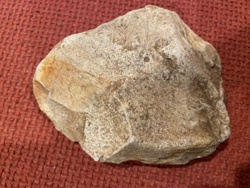
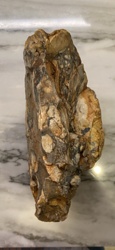
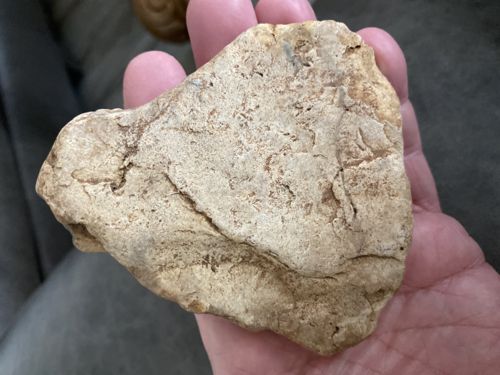
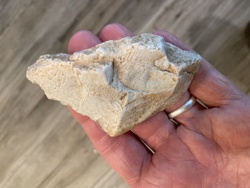
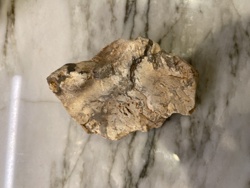
This artifact is a lithic scraper tool fashioned from chert, measuring approximately 3.75 inches by 3.25 inches. Discovered in Guthrie, Oklahoma, the item exhibits an irregular, triangular, or 'shield' shape designed for hand-held utility. The material displays a variegated color palette consisting of tan, cream, and ochre hues, characteristic of weathered chert from the Great Plains region. The surface demonstrates clear evidence of percussion flaking and unifacial retouching along the primary working edges to create a steep, durable bevel suitable for hide scraping or wood processing. Physically, the tool presents a heavy, dense construction with a visible bulb of percussion on the ventral side and several flake scars on the dorsal face. It shows a significant degree of natural patina and mineral encrustation consistent with prolonged burial and geological aging. The edges appear moderately worn from historical use, though they retain the distinct scalloped pattern typical of human-made lithic technology. There are no modern maker's marks, as it is a prehistoric artifact. The craftsmanship suggests a functional, expedient tool rather than a formal biface, reflecting the high-quality lithic reduction techniques of early North American inhabitants from the Paleolithic or Early Archaic period.
AI-Generated Appraisal Disclaimer
Estimated Value
$45 - $85
Basic Information
Category
Archaeological Artifact / Prehistoric Stone Tool
Appraised On
February 20, 2026
Estimated Value
$45 - $85
Additional Details Provided By Owner
User Provided Information
Paleolithic chert scraper tool found in Guthrie OK measuring 3.75" x 3.25"
Item Description
This artifact is a lithic scraper tool fashioned from chert, measuring approximately 3.75 inches by 3.25 inches. Discovered in Guthrie, Oklahoma, the item exhibits an irregular, triangular, or 'shield' shape designed for hand-held utility. The material displays a variegated color palette consisting of tan, cream, and ochre hues, characteristic of weathered chert from the Great Plains region. The surface demonstrates clear evidence of percussion flaking and unifacial retouching along the primary working edges to create a steep, durable bevel suitable for hide scraping or wood processing. Physically, the tool presents a heavy, dense construction with a visible bulb of percussion on the ventral side and several flake scars on the dorsal face. It shows a significant degree of natural patina and mineral encrustation consistent with prolonged burial and geological aging. The edges appear moderately worn from historical use, though they retain the distinct scalloped pattern typical of human-made lithic technology. There are no modern maker's marks, as it is a prehistoric artifact. The craftsmanship suggests a functional, expedient tool rather than a formal biface, reflecting the high-quality lithic reduction techniques of early North American inhabitants from the Paleolithic or Early Archaic period.
Get Your Items Appraised
Instant estimates of your treasures with AI-powered instant appraisals