AI estimate as of September 19, 2025 · verify with a professional before acting
AI-Generated · Verify before acting
Everything on this page is generated by AI for informational purposes only. AI can make mistakes — the AI may misidentify items or misattribute them (artist, maker, brand, designer, origin, era). This is not an official valuation and should not be used for insurance, sale, tax, estate, legal, or lending purposes — or any decision requiring a certified appraisal. It is not an authoritative claim about any person, brand, or rights holder — do not share or rely on it as a factual statement about a third party. Always consult qualified professionals before making financial decisions.
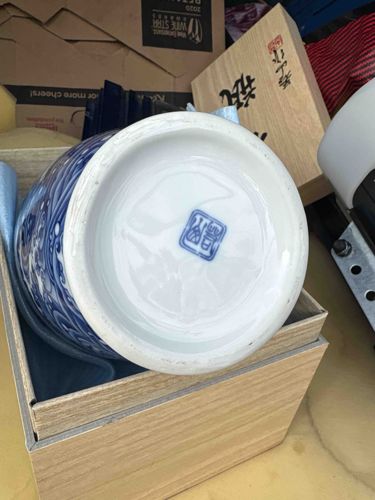
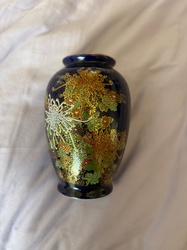
This image primarily displays the bottom of a blue and white porcelain vase, along with glimpses of its side and accompanying packaging. The vase itself appears to be made of fine porcelain, characterized by a smooth, glossy white glaze on the base, contrasting with a vibrant cobalt blue design visible on the curved body of the vessel. The blue pattern on the side suggests a flowing, organic motif, possibly waves or clouds, indicative of traditional Asian ceramic artistry. The base features a neatly trimmed footrim, showing the unglazed or bisque ceramic material, which typically indicates the quality of the firing process. At the center of the glazed base, there is a distinct blue square-shaped manufacturer's mark or seal, likely a 'fuku' mark (happiness/good fortune) or a kiln mark, which would be crucial for identifying the specific maker, period, and origin of the piece. The glazed surface of the base appears clean with no significant chips or cracks, although there are a few minor, dark speckles or inclusions that might be firing imperfections common in older porcelain. The vase is presented within a light-colored wooden box, possibly paulownia wood, which is often used for high-quality Asian ceramics to protect them and denote their value. The box has intricate joinery and a dark fabric or paper lining cradling the vase, further enhancing its presentation. The visible portion of the box's lid shows some hand-written or stamped characters in black ink, which are likely inscriptions related to the item's name, maker, or dedication. Based on the style and presentation, this vase likely dates from the 20th century, possibly mid to late, though some patterns can mimic earlier periods. The craftsmanship appears to be of good quality, suggesting it was produced by a reputable kiln or artisan.
AI Appraisal Report
Upon examining the provided image of this blue and white porcelain vase, I have made a preliminary assessment. The vase exhibits features of a 20th-century Japanese ceramic, likely produced in a reputable kiln such as Arita or Kutani. The quality of the porcelain, the neatness of the footrim, and the presentation in a traditional wooden box (tomobako) all suggest a piece of good craftsmanship. The central blue mark appears to be a 'fuku' (福) seal, a common auspicious symbol meaning 'good fortune,' often used on Japanese porcelain. The overall condition appears to be very good, with no visible cracks or significant chips on the base.
However, the value is significantly impacted by several factors. While well-made, this style of vase is not exceptionally rare, and the 'fuku' mark is very common, not indicative of a specific famous artist or imperial kiln. The market for mid-to-late 20th-century Japanese decorative porcelain is generally modest unless tied to a master artisan or specific historical context. Comparable 20th-century Japanese 'fuku'-marked vases of similar quality typically sell in the low hundreds.
It is crucial to note the severe limitations of an appraisal based solely on images. I cannot definitively verify its authenticity, age, or specific kiln without physical inspection. A hands-on examination would be required to feel the weight and texture of the paste, assess the glaze quality under magnification, and professionally translate the characters on the box, which could provide crucial provenance. Without provenance documentation or a detailed in-person analysis, the piece must be valued as a decorative item of good quality rather than a confirmed antique or a work by a specific master. Therefore, my current valuation reflects these uncertainties.