AI Appraisal Estimate

AI-generated estimates · not official valuations

From the user

What was submitted

Photo and notes provided by the user — not generated by AI

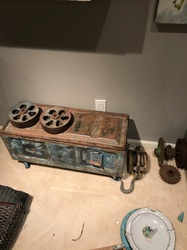
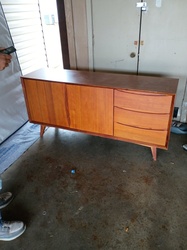
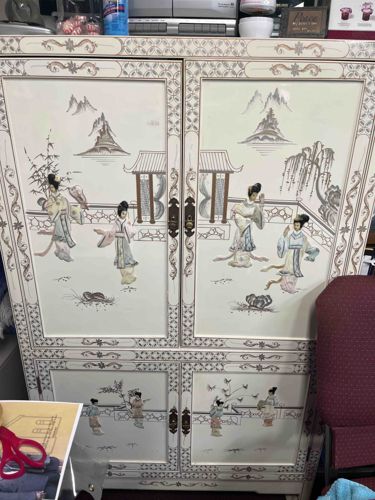
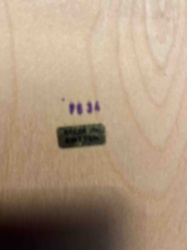
Submitted item photo
Submitted photo · June 10, 2026

User's notes

No additional notes provided.

AI analysis below

AI appraisal

AI analysis & estimate

AI-Generated · Verify before acting

Everything below is generated by AI for informational purposes only. AI can make mistakes — the AI may misidentify items or misattribute them (artist, maker, brand, designer, origin, era). This is not an official valuation and should not be used for insurance, sale, tax, estate, legal, or lending purposes — or any decision requiring a certified appraisal. It is not an authoritative claim about any person, brand, or rights holder — do not share or rely on it as a factual statement about a third party. Always consult qualified professionals before making financial decisions.

Read the full disclaimer

AI Identification

·Not independently authenticated·Verify before acting

Chinoiserie Style Lacquered Cabinet with Soapstone Overlay

Furniture

AI Estimated Value

·Not an official valuation·Verify before acting

$800 - $1,200

As of June 10, 2026

AI Item Analysis

·AI can make mistakes·Verify before acting
This is a large, two-tiered Chinoiserie-style storage cabinet, likely functioning as an armoire or a display piece. The item features a white or cream lacquered finish as the primary background color. It is highly decorated with traditional Chinese motifs, including mountainous landscapes, pagodas, bamboo, and weeping willow trees in a sepia-toned ink-wash style. The set of focal points consists of four female figures (Geishas or court ladies) on the upper doors and two on the lower doors, crafted using the 'shoushan' or 'soapstone inlay' technique. These figures are three-dimensional, made from carved stone or composite material applied to the surface. The cabinet's borders are intricately painted with scrolling floral and patterned motifs. The hardware consists of dark brass or bronze circular backplates with small drop pulls arranged in the center of both the upper and lower door sections. Based on the construction and the use of the lacquered finish over what is likely a wood or plywood substrate, this piece appears to be a mid-to-late 20th-century Asian export piece, potentially from the 1960s or 1970s. The condition appears fair with some visible yellowing of the lacquer consistent with age and exposure to light. There is minor wear around the edges of the doors and potentially some surface grime on the raised soapstone elements. No visible maker’s marks are present in the frontal view, but such pieces often have labels on the back or inside drawers.
AI Appraisal Report

·AI can make mistakes·Verify before acting
I have conducted a visual appraisal of this two-tiered Chinoiserie-style cabinet. The specimen is a mid-to-late 20th-century Asian export piece, likely manufactured in China or Hong Kong during the 1960s or 1970s. The cream lacquer finish and shoushan (soapstone) inlay work are characteristic of the 'Zunghua' or 'Coromandel' style revival popular in Mid-Century interiors. Upon examination, I observed noticeable UV-induced yellowing of the white lacquer, which is common for this era but reduces the 'brilliance' of the finish. The soapstone figures are well-executed but show signs of surface grime in the crevices. Stylistically, the piece sits within a stable market for Hollywood Regency decors. Unlike older 18th or 19th-century lacquerware, this item utilizes contemporary joinery and likely a plywood or mixed-wood substrate, classifying it as a high-end decorative asset rather than a rare antiquity. Market demand for large-scale Chinoiserie remains moderate; while the size provides significant utility, it limits the buyer pool to those with large spaces. Comparables for similar export cabinets in fair condition typically hammer between $700 and $1,500 at auction. Limitations: This appraisal is based solely on visual analysis. I cannot confirm the integrity of the hinges or the wood substrate beneath the lacquer. To fully authenticate the period and origin, an in-person inspection of the interior joinery (dovetails vs. staples) and any manufacturer stamps on the reverse would be required. Furthermore, a scientific test of the bonding agents used for the soapstone would distinguish between hand-carved stone and molded resin composites, which would significantly swing the value within the provided range.

Get your items appraised

Instant estimates of your treasures with AI-powered appraisals

Browse More Appraisals