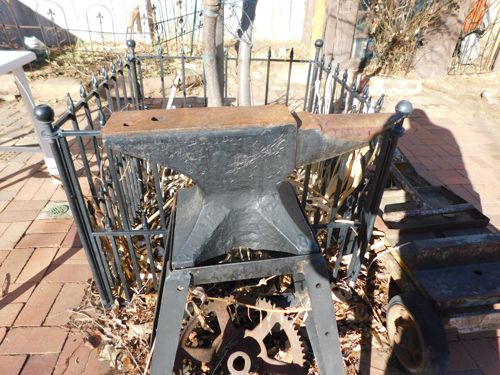
Antique Cast Iron Anvil, dated 1897
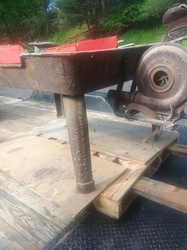
This is a substantial antique blacksmith anvil, dated to 1897 according to provided context. It measures approximately 9 inches in height and 18 inches in total length. The object features a traditional London pattern silhouette, comprising a flat face, a horn (beak) for curving metal, and a heel. The body is constructed from heavy cast iron, exhibiting a dark, weathered patina consistent with age and outdoor exposure. The top working surface, or face, shows significant surface oxidation and pitting, characteristic of long-term use and oxidation. Notable markings include an embossed number '8' at the base, which typically denotes a weight class or pattern number in historical manufacturing. A square hardie hole and a circular pritchel hole are visible on the heel, used for holding tools and punching holes respectively. The anvil sits on a wide, flared base designed for stability. Given the 1897 date, this piece represents late 19th-century industrial tool craftsmanship, likely intended for professional metalwork. The overall condition is weathered with significant surface rust, but it appears structurally sound without major cracks in the body, suggesting it remains a heavy, functional relic of the blacksmithing trade.
AI-Generated Appraisal Disclaimer
Estimated Value
$400 - $650
Basic Information
Category
Antique Industrial Tools
Appraised On
January 11, 2026
Estimated Value
$400 - $650
Additional Details Provided By Owner
User Provided Information
Antique 1897 Anvil. It has the Number 8 at the bottom that is embossed. it is 9"X 18" It is so heavy I cannot weigh it.
Item Description
This is a substantial antique blacksmith anvil, dated to 1897 according to provided context. It measures approximately 9 inches in height and 18 inches in total length. The object features a traditional London pattern silhouette, comprising a flat face, a horn (beak) for curving metal, and a heel. The body is constructed from heavy cast iron, exhibiting a dark, weathered patina consistent with age and outdoor exposure. The top working surface, or face, shows significant surface oxidation and pitting, characteristic of long-term use and oxidation. Notable markings include an embossed number '8' at the base, which typically denotes a weight class or pattern number in historical manufacturing. A square hardie hole and a circular pritchel hole are visible on the heel, used for holding tools and punching holes respectively. The anvil sits on a wide, flared base designed for stability. Given the 1897 date, this piece represents late 19th-century industrial tool craftsmanship, likely intended for professional metalwork. The overall condition is weathered with significant surface rust, but it appears structurally sound without major cracks in the body, suggesting it remains a heavy, functional relic of the blacksmithing trade.

Related Tags
Get Your Items Appraised
Instant estimates of your treasures with AI-powered instant appraisals