Middle Paleolithic Style Lithic Hand Tool
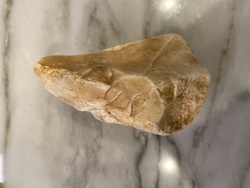
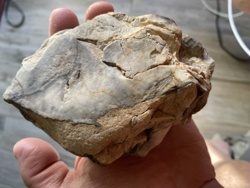
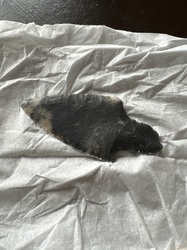
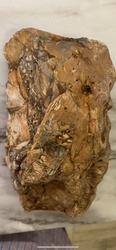
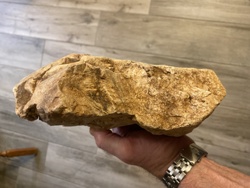
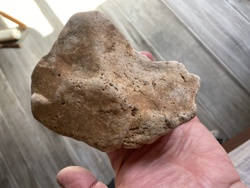
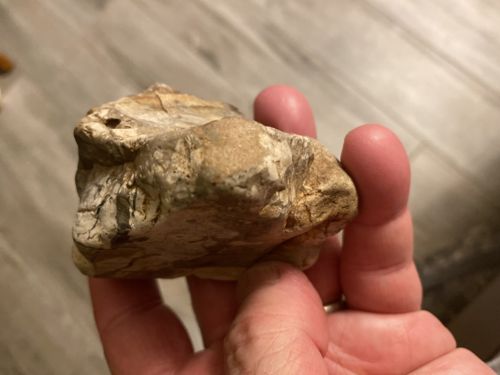
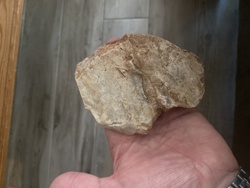
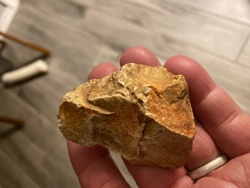
This specimen is a lithic artifact measuring approximately 2.25 by 2.25 inches, characterized as a multifunctional hand tool often used as a scraper. The object is composed of a fine-grained sedimentary or metamorphic stone, possibly chert or a high-quality limestone common to the Oklahoma region. It features varied earth tones ranging from tan and cream to deep ochre, with visible cortex remaining on parts of the surface. The construction displays evidence of unifacial and bifacial flaking, creating a robust, ergonomic grip suited for the palm of the hand. The presence of 'retouch'—smaller flakes removed along the working edge—suggests it was intended for scraping or cutting hides. The item shows significant surface weathering and a heavy patina consistent with long-term environmental exposure, though the primary percussion scars remain identifiable. While attributed to the Middle Paleolithic style, the regional context of Guthrie, OK, suggests it belongs to a North American prehistoric period, likely the Paleo-Indian or Archaic stage. The quality of craftsmanship is utilitarian, designed for durability and immediate use rather than ceremonial display. No modern maker's marks are present, emphasizing its origin as a hand-knapped tool.
AI-Generated Appraisal Disclaimer
Estimated Value
$45.00 - $85.00
Basic Information
Category
Archaeological Artifacts & Prehistoric Lithics
Appraised On
February 18, 2026
Estimated Value
$45.00 - $85.00
Additional Details Provided By Owner
User Provided Information
Middle Paleolithic Stone handaxe scraper lithic tool found in Guthrie OK measuring 2.25 x 2.25
Item Description
This specimen is a lithic artifact measuring approximately 2.25 by 2.25 inches, characterized as a multifunctional hand tool often used as a scraper. The object is composed of a fine-grained sedimentary or metamorphic stone, possibly chert or a high-quality limestone common to the Oklahoma region. It features varied earth tones ranging from tan and cream to deep ochre, with visible cortex remaining on parts of the surface. The construction displays evidence of unifacial and bifacial flaking, creating a robust, ergonomic grip suited for the palm of the hand. The presence of 'retouch'—smaller flakes removed along the working edge—suggests it was intended for scraping or cutting hides. The item shows significant surface weathering and a heavy patina consistent with long-term environmental exposure, though the primary percussion scars remain identifiable. While attributed to the Middle Paleolithic style, the regional context of Guthrie, OK, suggests it belongs to a North American prehistoric period, likely the Paleo-Indian or Archaic stage. The quality of craftsmanship is utilitarian, designed for durability and immediate use rather than ceremonial display. No modern maker's marks are present, emphasizing its origin as a hand-knapped tool.
Get Your Items Appraised
Instant estimates of your treasures with AI-powered instant appraisals