Maori Hei-Tiki Pounamu Pendant
Antiques & Ethnographic Art

Maori Hei-Tiki Pounamu Pendant

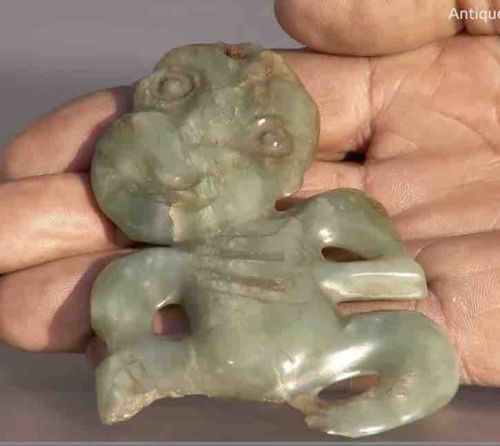
This is a hand-carved Hei-Tiki pendant, a traditional Maori neck ornament from New Zealand. The item is crafted from Pounamu (nephrite jade), characterized by its subtle celadon to olive green hue with milky, semi-translucent inclusions throughout. The figure is approximately palm-sized and features the classic anthropomorphic form associated with Tiki representation: a tilt-headed figure with large, circular orbital eyes, a protruding tongue, and simplified limbs folded inward. The carving exhibits significant age-related wear, with softened edges and a smooth, waxy patina developed through long-term tactile contact. Notable features include a small suspension hole at the top of the head through which a reddish cord is partially visible. The condition reveals several chips and abrasions, particularly on the lower appendages and the side of the head, suggesting a well-used heirloom piece. The craftsmanship shows traditional grinding and drilling techniques, likely dating from the late 19th to early 20th century. While no maker's marks are visible, the stylistic execution is representative of classical Maori design, intended to represent ancestors and fertility.
Estimated Value

$2,500 - $4,500

Basic Information

Category

Antiques & Ethnographic Art

Appraised On

February 11, 2026

Estimated Value

$2,500 - $4,500

Item Description

This is a hand-carved Hei-Tiki pendant, a traditional Maori neck ornament from New Zealand. The item is crafted from Pounamu (nephrite jade), characterized by its subtle celadon to olive green hue with milky, semi-translucent inclusions throughout. The figure is approximately palm-sized and features the classic anthropomorphic form associated with Tiki representation: a tilt-headed figure with large, circular orbital eyes, a protruding tongue, and simplified limbs folded inward. The carving exhibits significant age-related wear, with softened edges and a smooth, waxy patina developed through long-term tactile contact. Notable features include a small suspension hole at the top of the head through which a reddish cord is partially visible. The condition reveals several chips and abrasions, particularly on the lower appendages and the side of the head, suggesting a well-used heirloom piece. The craftsmanship shows traditional grinding and drilling techniques, likely dating from the late 19th to early 20th century. While no maker's marks are visible, the stylistic execution is representative of classical Maori design, intended to represent ancestors and fertility.
Get Your Items Appraised

Instant estimates of your treasures with AI-powered instant appraisals

Browse More Appraisals