AI Appraisal Estimate

AI-generated estimates · not official valuations

From the user

What was submitted

Photo and notes provided by the user — not generated by AI

Submitted item photo
Submitted photo · June 20, 2026

User's notes

No additional notes provided.

AI analysis below

AI appraisal

AI analysis & estimate

AI-Generated · Verify before acting

Everything below is generated by AI for informational purposes only. AI can make mistakes — the AI may misidentify items or misattribute them (artist, maker, brand, designer, origin, era). This is not an official valuation and should not be used for insurance, sale, tax, estate, legal, or lending purposes — or any decision requiring a certified appraisal. It is not an authoritative claim about any person, brand, or rights holder — do not share or rely on it as a factual statement about a third party. Always consult qualified professionals before making financial decisions.

Read the full disclaimer

AI Identification

·Not independently authenticated·Verify before acting

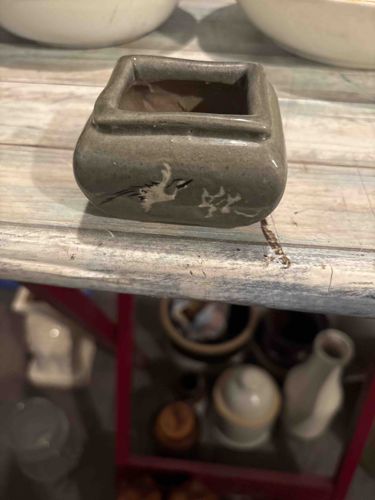
Japanese-style Celadon Glazed Stoneware Bonsai or Planter Pot

Ceramics and Decorative Arts

AI Estimated Value

·Not an official valuation·Verify before acting

$45 - $85

As of June 20, 2026

AI Item Analysis

·AI can make mistakes·Verify before acting
This is a small, rectangular stoneware pot featuring a subtle gray-green celadon-style glaze. The vessel is constructed with bulbous, rounded sides that taper inward toward a reinforced, slightly raised square rim. One side is decorated with a slip-trailed or hand-painted white crane in mid-flight alongside a character or floral motif, exhibiting traditional East Asian aesthetic influences. The crane is rendered with minimalist strokes, using black pigments to define the wing tips. Physically, the piece appears to be made of a heavy stoneware or ceramic material, reflecting a durable construction typical of functional garden or apothecary wares. The glaze has a semi-gloss finish with a slightly mottled or speckled texture known as 'salt-and-pepper' effect, which often occurs during high-temperature firing. Regarding condition, the piece shows some minor surface grime and a noticeable brown drip or stain near the base rim, likely from contact with organic material or shelf wear. There are no immediate visible cracks or large chips to the rim, suggesting fair to good preservation. This style of vessel is common to mid-20th-century Japanese studio pottery or mass-produced export wares intended for bonsai cultivation or as decorative incense burners. The lack of a visible maker's mark in this view makes specific attribution difficult, but the overall craftsmanship indicates a utilitarian yet artistic level of quality.

AI Appraisal Report

·AI can make mistakes·Verify before acting
I have conducted a visual analysis of this rectangular celadon-glazed stoneware vessel. The item displays characteristics consistent with mid-to-late 20th-century Japanese mass-produced export bonsai or kusamono pots. The 'salt-and-pepper' mottle in the celadon glaze and the slip-trailed crane motif are typical of studio-style production from regional centers like Seto or Tokoname, though the lack of a visible 'hanko' (maker's mark) suggests this is a utilitarian commercial piece rather than a signed work by a recognized master. The condition appears fair to good; while the structural integrity of the rim is intact, the surface exhibits calcification and organic staining near the base, typical of use in horticultural environments. Such wear is expected but detracts slightly from decorative value. The current market for vintage Japanese ceramics of this grade is stable, with high supply and steady demand among bonsai hobbyists. Comparables for unsigned, small-format crane motifs consistently realize prices in the double-digit range. Rarity is low, as these were produced in significant quantities for the Western market. Please note: This appraisal is based solely on digital imagery. A definitive valuation would require an in-person inspection to check for hairline fractures under UV light and to verify the clay body's vitrification. Absolute authentication of the production era would require provenance documentation or a physical examination of the unglazed footring to determine the exact firing method and kiln type.

Get your items appraised

Instant estimates of your treasures with AI-powered appraisals

Browse More Appraisals