AI Appraisal Estimate

AI-generated estimates · not official valuations

From the user

What was submitted

Photo and notes provided by the user — not generated by AI

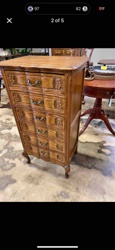
Submitted item photo
Submitted photo · June 12, 2026

User's notes

No additional notes provided.

AI analysis below

AI appraisal

AI analysis & estimate

AI-Generated · Verify before acting

Everything below is generated by AI for informational purposes only. AI can make mistakes — the AI may misidentify items or misattribute them (artist, maker, brand, designer, origin, era). This is not an official valuation and should not be used for insurance, sale, tax, estate, legal, or lending purposes — or any decision requiring a certified appraisal. It is not an authoritative claim about any person, brand, or rights holder — do not share or rely on it as a factual statement about a third party. Always consult qualified professionals before making financial decisions.

Read the full disclaimer

AI Identification

·Not independently authenticated·Verify before acting

Early American Style Colonial Tallboy Chest-on-Chest

Furniture - Case Goods

AI Estimated Value

·Not an official valuation·Verify before acting

$400 - $650

As of June 12, 2026

AI Item Analysis

·AI can make mistakes·Verify before acting
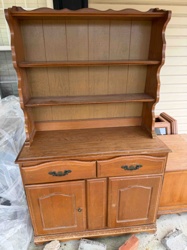
A vintage two-part tallboy chest crafted in an Early American or Colonial Revival style. The piece is constructed from solid wood, likely maple or birch, featuring a light, raw honey-colored finish that appears somewhat uneven or stripped. The upper section consists of two small top drawers over two long drawers, while the larger base section contains two deep full-width drawers. Each drawer is outfitted with traditional brass 'batwing' or willow style bail pull hardware, which shows a dark aged patina. The construction includes beveled drawer fronts and a stepped-out molding that separates the top chest from the bottom commode section. The base is supported by bracket feet with a simple scalloped apron between them. Condition-wise, the furniture exhibits significant surface wear including scuffs, scratches, and finish loss, particularly visible on the drawer edges and the top surface. The light color suggests the item may have been partially refinished or sanded at some point. The craftsmanship suggests a mid-20th-century mass-production piece (circa 1950s-1970s), modeled after 18th-century cabinetry designs. While no maker's marks are visible externally, the hardware and joinery are characteristic of American furniture manufacturers like Ethan Allen or Kling Colonial from that era.
AI Appraisal Report

·AI can make mistakes·Verify before acting
I have carefully examined the provided images of this Early American Style Colonial Revival chest-on-chest. Based on the construction methods, particularly the machine-cut joinery and the specific style of the 'batwing' brass hardware, I have identified this as a mid-20th-century production piece, likely dating between 1950 and 1970. The use of maple or birch indicates a utilitarian approach common to manufacturers like Ethan Allen or Kling during that era. The condition of the item significantly impacts its market value. The finish appears uneven and suggests a poorly executed or incomplete stripping process, resulting in a 'raw' honey tone that lacks the depth of original patina. Significant scuffing on the bracket feet and wear along the drawer beads further detract from its display potential. While structurally sound, it requires professional refinishing to reach its maximum secondary market value. The current market for Colonial Revival brown furniture remains soft, as modern preferences shift toward mid-century modern or contemporary styles. Rarity is low, as these were mass-produced for the mid-market consumer. Comparable sales for similar maple tallboys in restored condition range from $800 to $1,100, while examples in this 'as-is' condition typically fetch between $400 and $650 at auction. Please note that this appraisal is based on visual images alone. A physical inspection is required to verify the integrity of the drawer glides, confirm the wood species, and check for internal maker’s marks. Without an in-person examination, I cannot definitively assess whether the hardware is original to the piece or if there are structural repairs hidden by the current finish.

Get your items appraised

Instant estimates of your treasures with AI-powered appraisals

Browse More Appraisals