Middle Paleolithic Chert Hand Axe Scraper
Archeological Artifact

Middle Paleolithic Chert Hand Axe Scraper

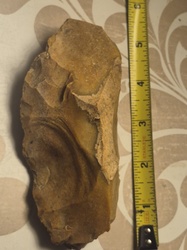
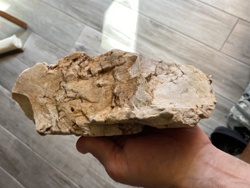
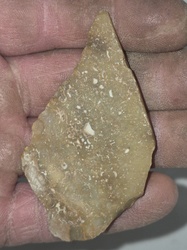
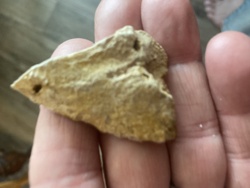
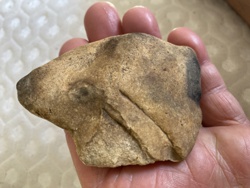
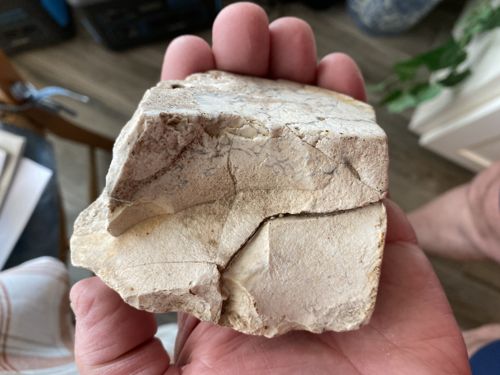
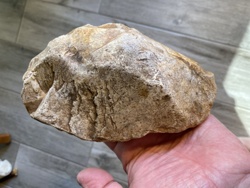
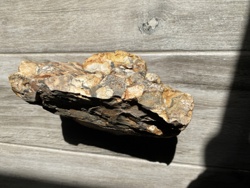
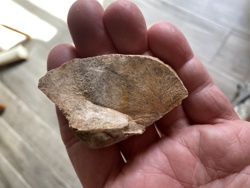
This lithic specimen, measuring approximately 3.5 inches by 3 inches, is identified as a Middle Paleolithic hand axe scraper discovered in Guthrie, Oklahoma. Created from light cream-colored chert, the tool exhibits classic unifacial and bifacial flaking characteristics typical of early stone tool manufacture. The material surface shows a weathered patina with subtle orange-brown iron staining and dendritic mineral inclusions, suggesting long-term exposure to the elements and burial in soil. Physically, the item displays a rugged, blocky geometry with a relatively flat ventral surface and a worked dorsal side featuring several large flake scars and secondary retouching along the margins to create a functional cutting edge. One side of the artifact shows a distinct step fracture and a significant crack, likely resulting from post-depositional freeze-thaw cycles or impact during discovery. The bulb of percussion and striking platform are somewhat obscured by subsequent flaking, but the overall morphology indicates intentional reduction for a gripped utility tool. The craftsmanship identifies as utilitarian, reflecting Middle Paleolithic technology aimed at hide scraping or wood processing. The specimen remains in a stable, found condition with no modern repairs or alterations.
Estimated Value

$45.00 - $75.00

Basic Information

Category

Archeological Artifact

Appraised On

February 20, 2026

Estimated Value

$45.00 - $75.00

Additional Details Provided By Owner

User Provided Information

Middle Paleolithic chert hand axe scraper lithic tool found in Guthrie, OK measuring 3.5" x 3"

Item Description

This lithic specimen, measuring approximately 3.5 inches by 3 inches, is identified as a Middle Paleolithic hand axe scraper discovered in Guthrie, Oklahoma. Created from light cream-colored chert, the tool exhibits classic unifacial and bifacial flaking characteristics typical of early stone tool manufacture. The material surface shows a weathered patina with subtle orange-brown iron staining and dendritic mineral inclusions, suggesting long-term exposure to the elements and burial in soil. Physically, the item displays a rugged, blocky geometry with a relatively flat ventral surface and a worked dorsal side featuring several large flake scars and secondary retouching along the margins to create a functional cutting edge. One side of the artifact shows a distinct step fracture and a significant crack, likely resulting from post-depositional freeze-thaw cycles or impact during discovery. The bulb of percussion and striking platform are somewhat obscured by subsequent flaking, but the overall morphology indicates intentional reduction for a gripped utility tool. The craftsmanship identifies as utilitarian, reflecting Middle Paleolithic technology aimed at hide scraping or wood processing. The specimen remains in a stable, found condition with no modern repairs or alterations.
Get Your Items Appraised

Instant estimates of your treasures with AI-powered instant appraisals

Browse More Appraisals