Kifwebe Mask with Raffia Fringe
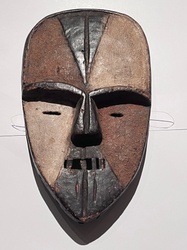
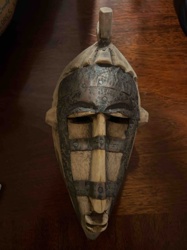
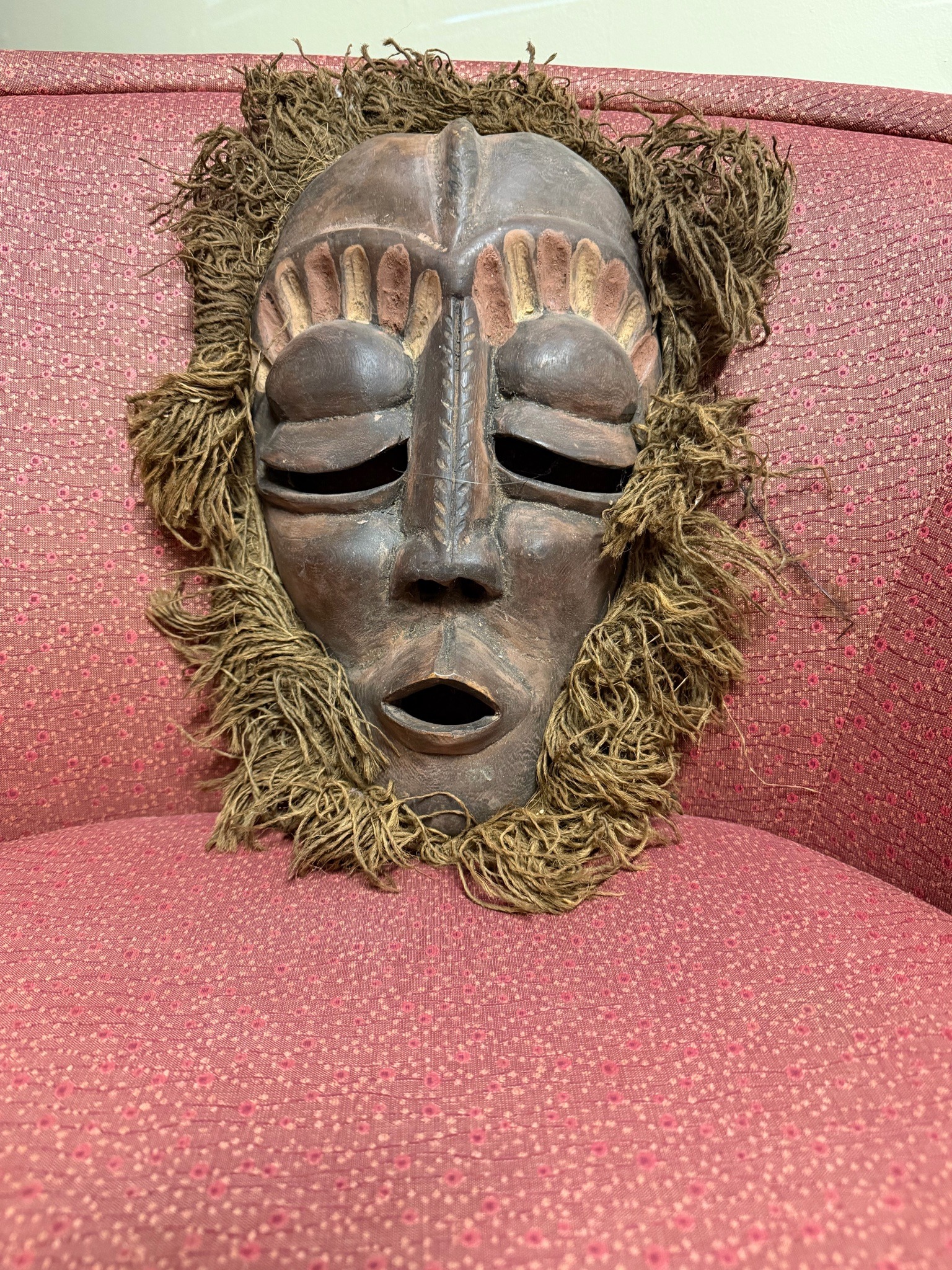
This is a hand-carved wooden mask, likely of Songye or Luba origin from the Democratic Republic of the Congo. The mask features a dark brown, almost charcoal-toned patina across the deeply carved facial structure. Its physical characteristics include a high, protruding forehead, heavy-lidded slit eyes, a bridge of the nose adorned with a vertical chevron carving, and an open, oval-shaped mouth. The top of the brow is decorated with a distinctive series of vertical grooves or 'scarification' marks, which show traces of an earthy, reddish-orange pigment in the recessed areas. A thick fringe of natural raffia or coarse braided fiber surrounds the entire perimeter of the mask, acting as a textural beard and hair. The wood shows signs of age with a smooth, worn surface on raised areas and accumulated dust in the crevices. There are minor scratches and small chips along the edges consistent with handling. The overall craftsmanship is high, exhibiting a powerful expressive quality common to Central African mask-making. It likely dates to the mid-20th century as a piece created for either local ceremonial use or the early African art export market.

AI-Generated Appraisal Disclaimer
Estimated Value
$1,500 - $2,500
Basic Information
Category
African Tribal Art
Appraised On
May 6, 2026
Estimated Value
$1,500 - $2,500
Item Description
This is a hand-carved wooden mask, likely of Songye or Luba origin from the Democratic Republic of the Congo. The mask features a dark brown, almost charcoal-toned patina across the deeply carved facial structure. Its physical characteristics include a high, protruding forehead, heavy-lidded slit eyes, a bridge of the nose adorned with a vertical chevron carving, and an open, oval-shaped mouth. The top of the brow is decorated with a distinctive series of vertical grooves or 'scarification' marks, which show traces of an earthy, reddish-orange pigment in the recessed areas. A thick fringe of natural raffia or coarse braided fiber surrounds the entire perimeter of the mask, acting as a textural beard and hair. The wood shows signs of age with a smooth, worn surface on raised areas and accumulated dust in the crevices. There are minor scratches and small chips along the edges consistent with handling. The overall craftsmanship is high, exhibiting a powerful expressive quality common to Central African mask-making. It likely dates to the mid-20th century as a piece created for either local ceremonial use or the early African art export market.
Get Your Items Appraised
Instant estimates of your treasures with AI-powered instant appraisals