AI Appraisal Estimate

AI-generated estimates · not official valuations

From the user

What was submitted

Photo and notes provided by the user — not generated by AI

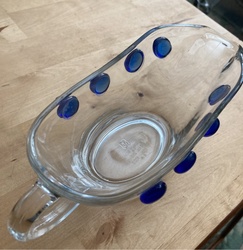
Submitted item photo
Submitted photo · June 28, 2026

User's notes

No additional notes provided.

AI analysis below

AI appraisal

AI analysis & estimate

AI-Generated · Verify before acting

Everything below is generated by AI for informational purposes only. AI can make mistakes — the AI may misidentify items or misattribute them (artist, maker, brand, designer, origin, era). This is not an official valuation and should not be used for insurance, sale, tax, estate, legal, or lending purposes — or any decision requiring a certified appraisal. It is not an authoritative claim about any person, brand, or rights holder — do not share or rely on it as a factual statement about a third party. Always consult qualified professionals before making financial decisions.

Read the full disclaimer

AI Identification

·Not independently authenticated·Verify before acting

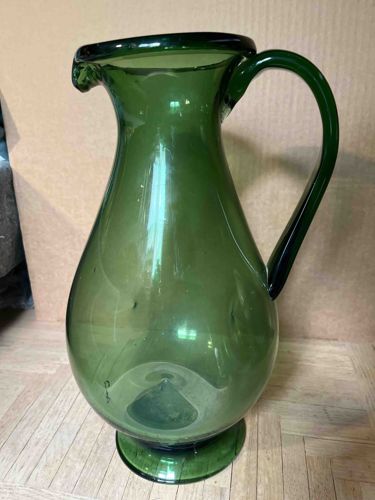
Mid-Century Blown Forest Green Glass Pitcher

Art Glass / Kitchenware

AI Estimated Value

·Not an official valuation·Verify before acting

$45.00 - $75.00

As of June 28, 2026

AI Item Analysis

·AI can make mistakes·Verify before acting
This is a hand-blown glass pitcher featuring a deep, vibrant forest green or emerald hue. The piece exhibits a classic bulbous or ovoid body that tapers upward to a flared neck and a wide rim with a practical pinched spout. A highlights of the craftsmanship is the elegant, integrated loop handle which is hand-applied, starting from the upper rim and gracefully curving down to attach at the widest point of the shoulder. The pitcher sits upon a slightly flared pedestal base, providing stability. Notable physical characteristics include visible internal bubbles (seeds) and slight undulations within the glass, which are hallmarks of the hand-blowing process rather than machine manufacturing. The color saturation is consistent throughout, though it appears darker at the thicker points like the handle and base. While no maker's mark is visible in the primary view, the style is highly indicative of mid-20th-century American art glass, likely produced between the 1950s and 1970s by makers such as Blenko, Kanawha, or Pilgrim Glass. The item appears to be in very good vintage condition with no visible cracks or significant chips; however, there are some faint surface scratches and shelf wear on the underside of the base consistent with age and moderate domestic use. The interior shows slight mineral clouding near the bottom, which is typical for vintage glassware used for liquids. The overall aesthetic speaks to the Organic Modern movement, blending functionality with a bold, minimalist use of color and form.
AI Appraisal Report

·AI can make mistakes·Verify before acting
I have examined the digital representation of this mid-century forest green hand-blown glass pitcher. The item displays characteristics consistent with American art glass production from the 1950s-1970s, specifically the 'Organic Modern' style popularized by West Virginia firms like Blenko, Kanawha, and Pilgrim. The hand-applied handle, pontil-influenced pedestal base, and internal 'seeds' (air bubbles) confirm a hand-blown origin rather than a molded production. The condition appears to be 'Very Good' vintage quality; while I noted slight mineral clouding and base shelf wear, these are expected traits that do not significantly detract from its decorative appeal. The market for mid-century colored glass remains steady, especially for forest green and amber tones, though unsigned pieces like this fall into a more accessible price bracket than documented, signature-stamped rarities. Comparables for similar unattributed West Virginia glass pitchers typically realize between $40 and $85 at auction and specialized vintage boutiques. Demand is driven by the growing interest in utilitarian art glass for interior design. Please note that this appraisal is based on visual data only. A definitive attribution to a specific maker or designer would require a physical inspection of the base for faint etchings, a weight comparison against known catalog standards, and an analysis of the glass composition under UV light to check for specific chemical signatures. For full authentication, provenance documentation or a confirmed match in a manufacturer's historical catalog would be necessary.

Get your items appraised

Instant estimates of your treasures with AI-powered appraisals

Browse More Appraisals