Hand Painted Nippon Porcelain Saucer/Plate
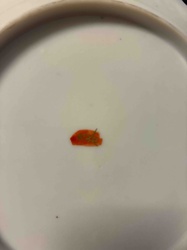
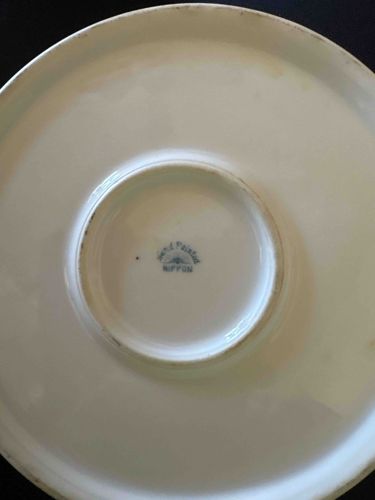
This item is the base of a hand-painted Nippon porcelain saucer or small plate, showcasing the reverse side. The piece is constructed from fine white translucent porcelain, a hallmark of Japanese ceramic production for the export market. The central feature is the blue underglaze backstamp which includes a rising sun or 'm-in-wreath' variation mark accompanied by the words 'Hand Painted' and 'NIPPON'. This specific marking indicates the piece was manufactured in Japan, likely between 1891 and 1921, to comply with the McKinley Tariff Act. Physically, the item features a prominent circular unglazed foot rim which shows evidence of shelf wear and minor discoloration characteristic of its age. The glaze appears bright and reflective, though there are visible manufacturing irregularities such as small dark firing specks (often called 'pepper spots') and minor pitting. Some light surface staining or oxidation is present along the outer edge and near the foot. The overall craftsmanship suggests a high-quality production standard typical of early 20th-century Japanese export wares intended for Western markets.
AI-Generated Appraisal Disclaimer
Estimated Value
$25.00 - $45.00
Basic Information
Category
Antique Japanese Porcelain
Appraised On
January 20, 2026
Estimated Value
$25.00 - $45.00
Item Description
This item is the base of a hand-painted Nippon porcelain saucer or small plate, showcasing the reverse side. The piece is constructed from fine white translucent porcelain, a hallmark of Japanese ceramic production for the export market. The central feature is the blue underglaze backstamp which includes a rising sun or 'm-in-wreath' variation mark accompanied by the words 'Hand Painted' and 'NIPPON'. This specific marking indicates the piece was manufactured in Japan, likely between 1891 and 1921, to comply with the McKinley Tariff Act. Physically, the item features a prominent circular unglazed foot rim which shows evidence of shelf wear and minor discoloration characteristic of its age. The glaze appears bright and reflective, though there are visible manufacturing irregularities such as small dark firing specks (often called 'pepper spots') and minor pitting. Some light surface staining or oxidation is present along the outer edge and near the foot. The overall craftsmanship suggests a high-quality production standard typical of early 20th-century Japanese export wares intended for Western markets.
Get Your Items Appraised
Instant estimates of your treasures with AI-powered instant appraisals