Prehistoric Chert Core Scraper / Chopping Tool
Prehistoric Native American Artifacts

Prehistoric Chert Core Scraper / Chopping Tool

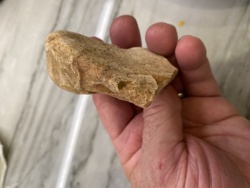
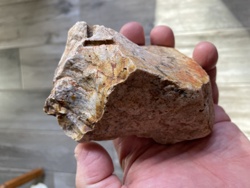
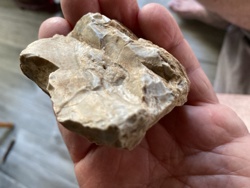
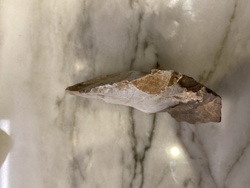
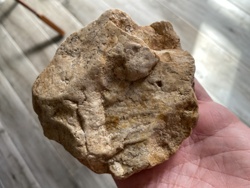
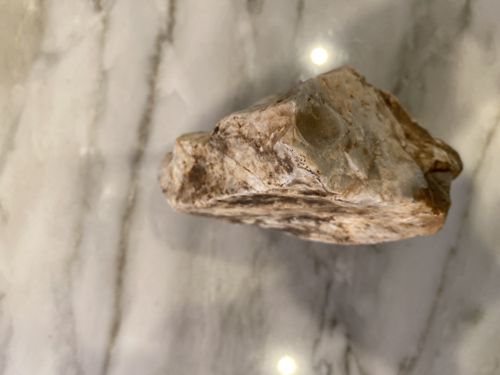
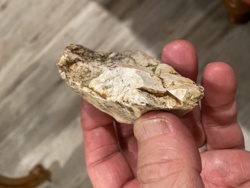
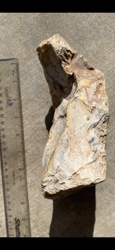
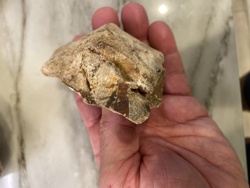
This specimen is a prehistoric lithic tool, likely serving a dual purpose as a scraper or hand-held chopper, typical of the Archaic period in North American archaeology. The item is fashionedจาก a variegated chert or flint material, exhibiting a palette of creamy whites, tan, and dark earthy browns. Its construction is characterized by percussion flaking, visible in the broad, concave flake scars and the distinct bulb of percussion near the upper center of the stone. One edge shows evidence of secondary retouching, creating a sharpened profile suitable for tasks like hide scraping or light woodworking. The surface displays a natural mineral patina and significant weathering, consistent with long-term burial or surface exposure in the Oklahoma red soil region. There is noticeable edge wear and micro-chipping along the primary working surface, which suggests functional use rather than modern breakage. The overall shape is irregular and wedge-like, fitting comfortably within the palm of the hand. While no specific maker's marks exist on such prehistoric artifacts, the craftsmanship demonstrates an intentional reduction sequence and a sophisticated understanding of stone fracture mechanics. Its provenance in Guthrie, OK, aligns with known regional prehistoric lithic industries found within the Southern Plains.
Estimated Value

$45 - $75

Basic Information

Category

Prehistoric Native American Artifacts

Appraised On

February 18, 2026

Estimated Value

$45 - $75

Additional Details Provided By Owner

User Provided Information

Prospect prehistoric stone axe/ scraper found in Guthrie, OK

Item Description

This specimen is a prehistoric lithic tool, likely serving a dual purpose as a scraper or hand-held chopper, typical of the Archaic period in North American archaeology. The item is fashionedจาก a variegated chert or flint material, exhibiting a palette of creamy whites, tan, and dark earthy browns. Its construction is characterized by percussion flaking, visible in the broad, concave flake scars and the distinct bulb of percussion near the upper center of the stone. One edge shows evidence of secondary retouching, creating a sharpened profile suitable for tasks like hide scraping or light woodworking. The surface displays a natural mineral patina and significant weathering, consistent with long-term burial or surface exposure in the Oklahoma red soil region. There is noticeable edge wear and micro-chipping along the primary working surface, which suggests functional use rather than modern breakage. The overall shape is irregular and wedge-like, fitting comfortably within the palm of the hand. While no specific maker's marks exist on such prehistoric artifacts, the craftsmanship demonstrates an intentional reduction sequence and a sophisticated understanding of stone fracture mechanics. Its provenance in Guthrie, OK, aligns with known regional prehistoric lithic industries found within the Southern Plains.
Get Your Items Appraised

Instant estimates of your treasures with AI-powered instant appraisals

Browse More Appraisals