Numbered Porcelain or Ceramic Base Section
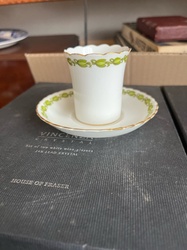
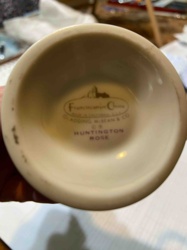
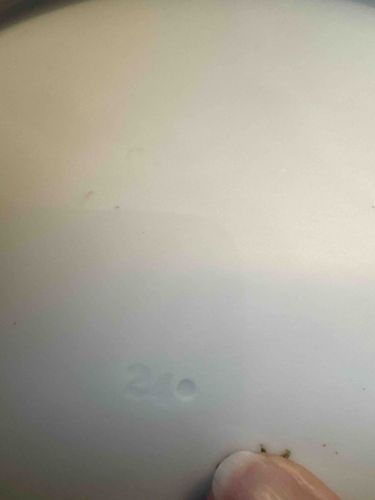
The item depicted is a close-up section of a white porcelain or ceramic piece, likely the underside or base of a decorative figurine or vessel. The material exhibits a smooth, satin-to-matte white finish indicative of bisque or fine porcelain construction. A significant distinguishing element is the presence of an impressed or incised numbering '240' located near the bottom edge. Such numerical markings are characteristic of early to mid-20th-century production, often used by European manufacturers like those in Germany (e.g., Goebel or Meissen) or England to denote specific mold numbers, pattern designs, or series identifiers. The piece shows visible signs of age and wear, including small chips or losses near the rim where the finger is placed, revealing a darker porous substrate. There is also evidence of surface grime and scattered dark spots or pitting, which may be kiln dust or environmental accumulation. The curvature suggests a rounded, possibly organic form consistent with traditional decorative arts. The craftsmanship appears to be of mid-range quality, featuring a clear, legible stamp but showing minor structural fragility around the edges.
AI-Generated Appraisal Disclaimer
Estimated Value
$45 - $85
Basic Information
Category
Antique Ceramics and Collectibles
Appraised On
January 10, 2026
Estimated Value
$45 - $85
Item Description
The item depicted is a close-up section of a white porcelain or ceramic piece, likely the underside or base of a decorative figurine or vessel. The material exhibits a smooth, satin-to-matte white finish indicative of bisque or fine porcelain construction. A significant distinguishing element is the presence of an impressed or incised numbering '240' located near the bottom edge. Such numerical markings are characteristic of early to mid-20th-century production, often used by European manufacturers like those in Germany (e.g., Goebel or Meissen) or England to denote specific mold numbers, pattern designs, or series identifiers. The piece shows visible signs of age and wear, including small chips or losses near the rim where the finger is placed, revealing a darker porous substrate. There is also evidence of surface grime and scattered dark spots or pitting, which may be kiln dust or environmental accumulation. The curvature suggests a rounded, possibly organic form consistent with traditional decorative arts. The craftsmanship appears to be of mid-range quality, featuring a clear, legible stamp but showing minor structural fragility around the edges.
Related Tags
Get Your Items Appraised
Instant estimates of your treasures with AI-powered instant appraisals