These notes were written by the person who submitted this item. Appraiser.AI has not verified them, and the AI's identification and estimate may rely on them.
AI Estimated Value
Not an official valuation
$5 - $15
AI estimate as of November 9, 2025 · verify with a professional before acting
AI-Generated · Verify before acting
Everything on this page is generated by AI for informational purposes only. AI can make mistakes — the AI may misidentify items or misattribute them (artist, maker, brand, designer, origin, era). This is not an official valuation and should not be used for insurance, sale, tax, estate, legal, or lending purposes — or any decision requiring a certified appraisal. It is not an authoritative claim about any person, brand, or rights holder — do not share or rely on it as a factual statement about a third party. Always consult qualified professionals before making financial decisions.
This analysis also relies on unverified notes provided by the user, which may be incomplete or inaccurate and could affect the result.
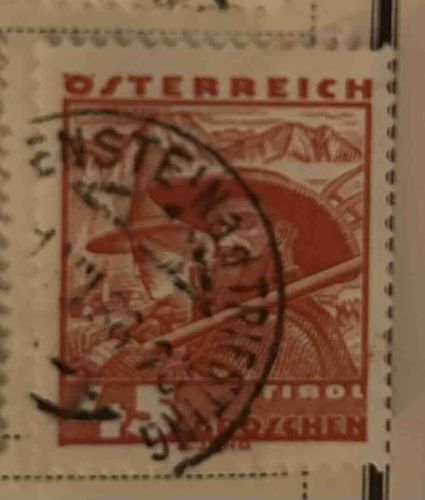
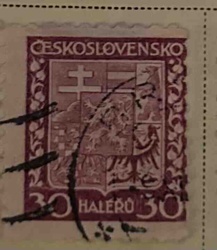
This item is a postage stamp, characterized by its rectangular form and serrated or 'perforated' edges, indicating it was intended to be torn from a sheet. The primary color of the stamp's design is a reddish-brown or terracotta hue, printed on what appears to be off-white or yellowish paper. The upper border of the stamp clearly displays the word 'OSTERREICH' in capital letters, signifying its origin in Austria. The central image depicts a figure, likely a man, wearing a hat, holding what appears to be a tool or instrument, possibly a scythe or a similar agricultural implement, against a backdrop of mountainous terrain. This imagery, combined with the visible text 'TIROL' and 'KIRCH' (partially obscured), strongly suggests a depiction related to the Tyrol region of Austria, known for its Alpine landscapes and traditional peasant life. The stamp has been postmarked with a circular black ink cancellation, which partially covers the central image and some of the text. The cancellation appears to have 'ENSTE...' and other illegible letters, along with a date that is difficult to discern completely, though '2.193' is faintly visible, hinting at a possible date in the 1930s. The stamp exhibits signs of wear commensurate with its age and use, including the cancellation mark and slight discoloration of the paper. Despite the wear, the perforation is largely intact, and the main design elements remain discernible. The quality of printing is typical for its era, with fine lines and a cohesive color application. The design speaks to a national or regional identity, likely celebrating the landscapes or traditional life of Tyrol.
AI Appraisal Report
I have carefully examined the provided image of the Austrian stamp from the Tyrol region. Based on my visual inspection, the stamp appears to be a genuine Austrian postage stamp, likely from the early to mid-1930s, given the faintly visible '2.193' date in the postmark. The 'OSTERREICH' and 'TIROL' inscriptions, along with the imagery of a figure and mountainous backdrop, are consistent with issues from this period. The reddish-brown color, serrated edges, and printing quality align with typical philatelic production of that era.
The condition of the stamp is fair to good, considering its age and use. The perforations appear largely intact, and the main design elements are discernible despite the postmark. The cancellation mark, while obscuring some details, is consistent with normal postal usage. Minor discoloration is expected for a stamp of this vintage.
Regarding market conditions, Austrian stamps from the 1930s depicting regional themes like Tyrol are generally quite common. While desirable to collectors specializing in Austrian philately or regional issues, they are not typically rare. The most significant factors impacting value for this type of stamp are its specific catalog number (which cannot be determined from the image alone), the clarity and completeness of the postmark (a neat, full postmark can sometimes add value), and overall condition. Unfortunately, a heavily cancelled standard issue stamp like this usually commands a modest price.
Demand for such an item is steady but not high, primarily among general collectors and those focused on specific Austrian issues. There are many comparable stamps available in the market.
Without an in-person examination, it's impossible to verify adhesive type, paper varieties, or potential repairs definitively. For full authentication and to identify the exact catalog number, which would allow for a precise valuation, physical inspection would be essential, ideally by a philatelic expert. This would also allow for examination under magnification to detect any printing errors or variations not visible in the image. Provenance documentation, while helpful for unique or high-value items, is less critical for a common stamp like this.