AI Appraisal Estimate

AI-generated estimates · not official valuations

From the user

What was submitted

Photo and notes provided by the user — not generated by AI

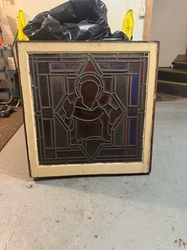
Submitted item photo
Submitted photo · June 13, 2026

User's notes

No additional notes provided.

AI analysis below

AI appraisal

AI analysis & estimate

AI-Generated · Verify before acting

Everything below is generated by AI for informational purposes only. AI can make mistakes — the AI may misidentify items or misattribute them (artist, maker, brand, designer, origin, era). This is not an official valuation and should not be used for insurance, sale, tax, estate, legal, or lending purposes — or any decision requiring a certified appraisal. It is not an authoritative claim about any person, brand, or rights holder — do not share or rely on it as a factual statement about a third party. Always consult qualified professionals before making financial decisions.

Read the full disclaimer

AI Identification

·Not independently authenticated·Verify before acting

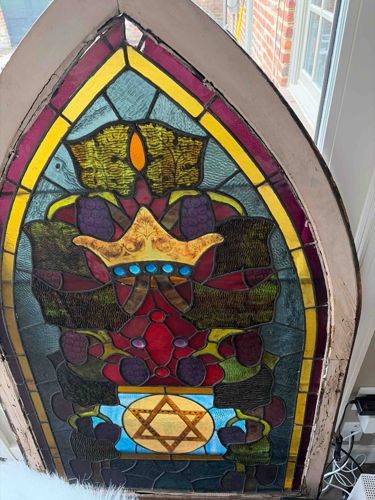
Gothic Arched Judaica Stained Glass Window

Antique Architectural Salvage / Judaica Art

AI Estimated Value

·Not an official valuation·Verify before acting

$4,500 - $6,500

As of June 13, 2026

AI Item Analysis

·AI can make mistakes·Verify before acting
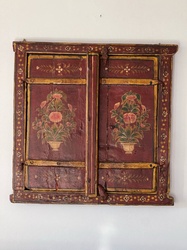
This is a significant architectural stained glass window, likely salvaged from a synagogue, featuring a pointed Gothic arch silhouette. The piece is constructed with lead cames and a diverse palette of textured glass, including slag, ripple, and hammered styles. Central to the composition is a prominent golden crown (Keter), a symbolic representation of the Sovereignty of God, accented with turquoise blue cabochon ‘jewels.’ Below the crown is a Star of David (Magen David) framed within a circular medallion against a sky-blue backdrop. The design also incorporates clusters of deep purple grapes and lush green leaves, referencing the abundance of the Land of Israel. The glass used shows a high level of craftsmanship, particularly in the hand-painted details on the crown and the play of light through the varied textures. The window is housed in its original, heavily weathered white-painted wooden frame, which shows significant chipping and loss of paint. There are visible cracks in several glass segments, notably in the blue-grey background pieces near the top left and right edges. There is also evident oxidation on the lead cames and some bowing in the structural lead lines, suggesting an early 20th-century origin, approximately 1900-1930. No clear maker's mark is visible in the provided image.
AI Appraisal Report

·AI can make mistakes·Verify before acting
I have conducted a visual examination of this Gothic-arched Judaica stained glass window, dating to the early 20th century (c. 1900–1920). The craftsmanship reflects the American Opalescent era, utilizing high-quality slag and ripple glass characteristic of studios such as those found in New York or Chicago during the height of synagogue construction. The iconographic program—featuring the Keter (Crown) and Magen David—is expertly executed, and the hand-painted details on the crown remain remarkably vibrant. The condition is consistent with architectural salvage. While the original wooden frame shows significant weathering and paint loss, the structural integrity of the window itself is fair. I noted visible stress cracks in several peripheral panels and moderate oxidation/bowing of the lead cames, likely due to decades of thermal expansion. These factors necessitate professional restoration, which has been factored into the valuation. In the current market, authentic Judaica architectural elements are highly sought after by private collectors and institutions alike. Comparables for windows of this size and symbolic complexity range significantly, but the presence of the jeweled cabochons and multi-textured glass places this in a premium tier. Limitations: My assessment is based solely on high-resolution imagery. A definitive authentication requires an in-person inspection to verify the stability of the lead cames, check for hidden 'light leaks' or previous repairs, and search for etched signatures or studio marks on the lower perimeter. Provenance documentation, such as the name or location of the decommissioned synagogue, would significantly increase the historical value and marketability of the piece.

Get your items appraised

Instant estimates of your treasures with AI-powered appraisals

Browse More Appraisals