Archaistic Bronze Twin-Handle Ritual Vase
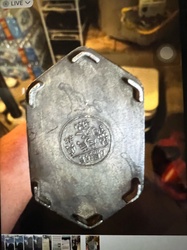
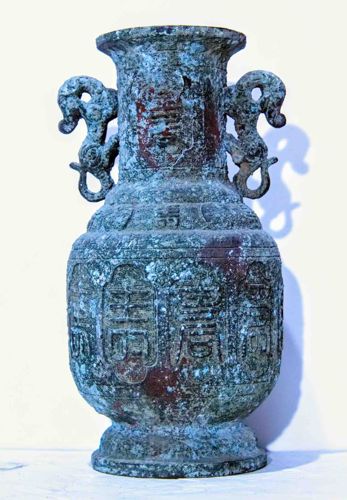
This is a heavy-set cast bronze ritual vessel or vase, designed in the archaistic style reminiscent of Zhou Dynasty bronzeware. The piece features a bulbous central body tapering down to a flared pedestal base, with a wide, straight neck topped by a flared rim. Flanking the neck are two highly decorative zoomorphic handles, fashioned in the form of stylized dragons or 'chilong,' characterized by their distinctive S-curves and scrolled appendages. The entire surface is heavily textured with a thick, mottled green and turquoise verdigris patina, punctuated by areas of reddish-brown encrustation, suggesting long-term burial or intentional chemical aging to mimic antiquity. The body is divided into vertical registers containing raised relief panels with archaic script or 'seal script' characters. Smaller geometric and calligraphic motifs repeat along the shoulder and neck. The construction quality is robust, showing evidence of traditional casting methods. Condition-wise, the vase displays significant environmental surface degradation consistent with aged bronze, including pitting and calcification that obscure some of the finer line work. While no maker's mark is visible through the heavy oxidation, the style suggests a late 19th to early 20th-century 'Fanggu' (imitation of the ancient) production, favored during the Qing dynasty revival periods for scholarly display and ritual use.
AI-Generated Appraisal Disclaimer
Estimated Value
$400 - $800
Basic Information
Category
Asian Antiques - Bronzeware
Appraised On
March 22, 2026
Estimated Value
$400 - $800
Additional Details Provided By Owner
User Provided Information
Unknown Artist, Untitled original artwork
Item Description
This is a heavy-set cast bronze ritual vessel or vase, designed in the archaistic style reminiscent of Zhou Dynasty bronzeware. The piece features a bulbous central body tapering down to a flared pedestal base, with a wide, straight neck topped by a flared rim. Flanking the neck are two highly decorative zoomorphic handles, fashioned in the form of stylized dragons or 'chilong,' characterized by their distinctive S-curves and scrolled appendages. The entire surface is heavily textured with a thick, mottled green and turquoise verdigris patina, punctuated by areas of reddish-brown encrustation, suggesting long-term burial or intentional chemical aging to mimic antiquity. The body is divided into vertical registers containing raised relief panels with archaic script or 'seal script' characters. Smaller geometric and calligraphic motifs repeat along the shoulder and neck. The construction quality is robust, showing evidence of traditional casting methods. Condition-wise, the vase displays significant environmental surface degradation consistent with aged bronze, including pitting and calcification that obscure some of the finer line work. While no maker's mark is visible through the heavy oxidation, the style suggests a late 19th to early 20th-century 'Fanggu' (imitation of the ancient) production, favored during the Qing dynasty revival periods for scholarly display and ritual use.
Get Your Items Appraised
Instant estimates of your treasures with AI-powered instant appraisals