Acoma Pueblo Hand-Painted Seed Jar
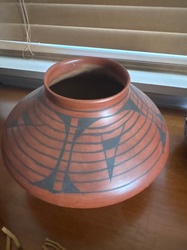
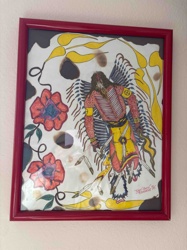
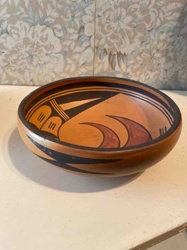
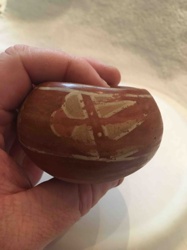
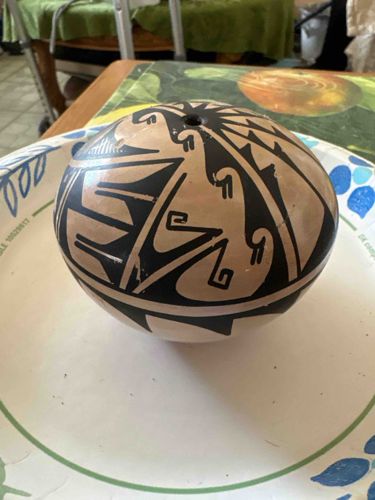
This is a globular ceramic seed jar, characteristic of Acoma Pueblo pottery from New Mexico. It features a small, circular opening at the top and is constructed from light-colored clay with a polished white-to-cream slip. The exterior is decorated with intricate, hand-painted geometric and stylized motifs in traditional black mineral paint. These motifs include classic Southwestern iconography such as clouds, rain lines, and spiral elements. The vessel exhibits a balanced, symmetrical form with a smooth, burnished finish that provides a slight sheen. Regarding condition, there is several visible surface issues, including localized areas of paint loss, small chips or abrasions on the shoulder, and a minor crack or hair-line fracture near the top aperture. The presence of surface grime suggests it has not been recently cleaned. This piece likely dates from the mid-to-late 20th century, though some traditional designs can make exact dating difficult without a visible signature. The intricate fine-line work and thin-walled construction are indicators of high-quality craftsmanship, despite the current surface wear. The overall aesthetic demonstrates the 'pueblo deco' style often sought by collectors of Native American art.
AI-Generated Appraisal Disclaimer
Estimated Value
$450 - $650
Basic Information
Category
Native American Ceramics / Fine Art
Appraised On
March 25, 2026
Estimated Value
$450 - $650
Item Description
This is a globular ceramic seed jar, characteristic of Acoma Pueblo pottery from New Mexico. It features a small, circular opening at the top and is constructed from light-colored clay with a polished white-to-cream slip. The exterior is decorated with intricate, hand-painted geometric and stylized motifs in traditional black mineral paint. These motifs include classic Southwestern iconography such as clouds, rain lines, and spiral elements. The vessel exhibits a balanced, symmetrical form with a smooth, burnished finish that provides a slight sheen. Regarding condition, there is several visible surface issues, including localized areas of paint loss, small chips or abrasions on the shoulder, and a minor crack or hair-line fracture near the top aperture. The presence of surface grime suggests it has not been recently cleaned. This piece likely dates from the mid-to-late 20th century, though some traditional designs can make exact dating difficult without a visible signature. The intricate fine-line work and thin-walled construction are indicators of high-quality craftsmanship, despite the current surface wear. The overall aesthetic demonstrates the 'pueblo deco' style often sought by collectors of Native American art.
Get Your Items Appraised
Instant estimates of your treasures with AI-powered instant appraisals