AI Appraisal Estimate

AI-generated estimates · not official valuations

From the user

What was submitted

Photo and notes provided by the user — not generated by AI

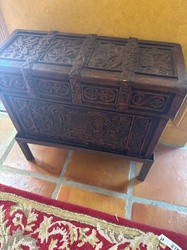
Submitted item photo
Submitted photo · May 24, 2026

User's notes

No additional notes provided.

AI analysis below

AI appraisal

AI analysis & estimate

AI-Generated · Verify before acting

Everything below is generated by AI for informational purposes only. AI can make mistakes — the AI may misidentify items or misattribute them (artist, maker, brand, designer, origin, era). This is not an official valuation and should not be used for insurance, sale, tax, estate, legal, or lending purposes — or any decision requiring a certified appraisal. It is not an authoritative claim about any person, brand, or rights holder — do not share or rely on it as a factual statement about a third party. Always consult qualified professionals before making financial decisions.

Read the full disclaimer

AI Identification

·Not independently authenticated·Verify before acting

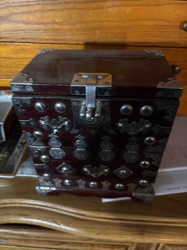
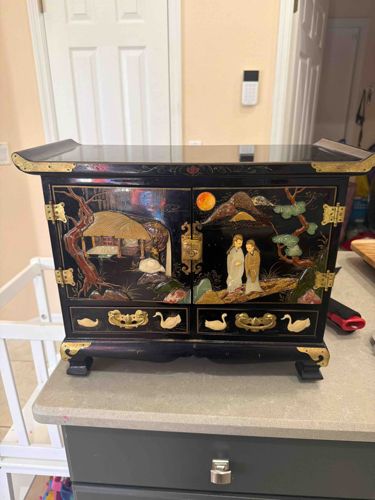
Vintage Chinese Black Lacquer Jewelry Cabinet with Mother of Pearl and Soapstone Inlays

Antique and Vintage Furniture / Jewelry Boxes

AI Estimated Value

·Not an official valuation·Verify before acting

$250 - $450

As of May 24, 2026

AI Item Analysis

·AI can make mistakes·Verify before acting
This is a mid-to-late 20th-century decorative jewelry cabinet, likely of Chinese origin, crafted in a traditional Ming-style pagoda silhouette. The piece is finished in a high-gloss black lacquer and features ornate Chinoiserie elements. The two main front doors are decorated with a hand-applied relief scene utilizing carved soapstone, mother of pearl, and other semi-precious stone materials to depict a landscape with human figures, a thatched gazebo, and a stylized sun. The base contains two lower drawers adorned with brass hardware and ivory-colored bird-shaped inlays. The cabinet is accented with polished brass hardware throughout, including traditional decorative corner protectors and butterfly-style hinges. Physically, the item appears to be made of wood or composite board under the lacquer. Notable features include the flared 'pagoda' top and the curved bracket feet. In terms of condition, the lacquer shows some minor surface scratching and dust accumulation consistent with age, particularly along the bottom edges and base. There is light tarnishing on the brass hardware. The craftsmanship reflects typical export-quality mid-century production, characterized by the mixed media inlay technique often referred to as 'Shibayama' style when miniaturized, though this is a larger furniture format. No visible manufacturer marks are seen on the exterior; such pieces often bore paper labels on the underside.
AI Appraisal Report

·AI can make mistakes·Verify before acting
I have conducted a visual inspection of this mid-to-late 20th-century Chinese jewelry cabinet. The piece is a classic example of export-ware, utilizing traditional black lacquer techniques alongside soapstone and mother-of-pearl relief inlays. The 'pagoda' silhouette and 'Luo-han' styled bracket feet are characteristic of mass-produced decorative furniture intended for Western markets between 1960 and 1980. The condition appears fair to good; while the soapstone figures remain intact, the visible surface scratching and brass tarnishing suggest a lack of climate-controlled storage, which can lead to lacquer 'checking' or delamination over time. Market demand for these items has softened compared to the late 20th-century height of the Chinoiserie trend. Currently, the secondary market is saturated with similar export pieces, which are valued more for their decorative utility than as investment-grade antiques. Comparables sold at online auctions and specialized estate sales typically range from $200 to $500 depending on the complexity of the soapstone carving. The primary value drivers here are the integrity of the inlays and the functionality of the brass hardware. However, a definitive valuation is limited by the digital format of this inspection. A physical examination is required to determine if the substrate is solid wood or medium-density fiberboard (MDF), the latter of which would reduce value. Furthermore, I would need to inspect for 'Made in China' stampings or paper labels on the underside to confirm the exact decade of manufacture. Long-term value depends on the stability of the lacquer and the absence of hidden structural cracks.

Get your items appraised

Instant estimates of your treasures with AI-powered appraisals

Browse More Appraisals