Vintage Italian Esperia Ceramic Pottery Base
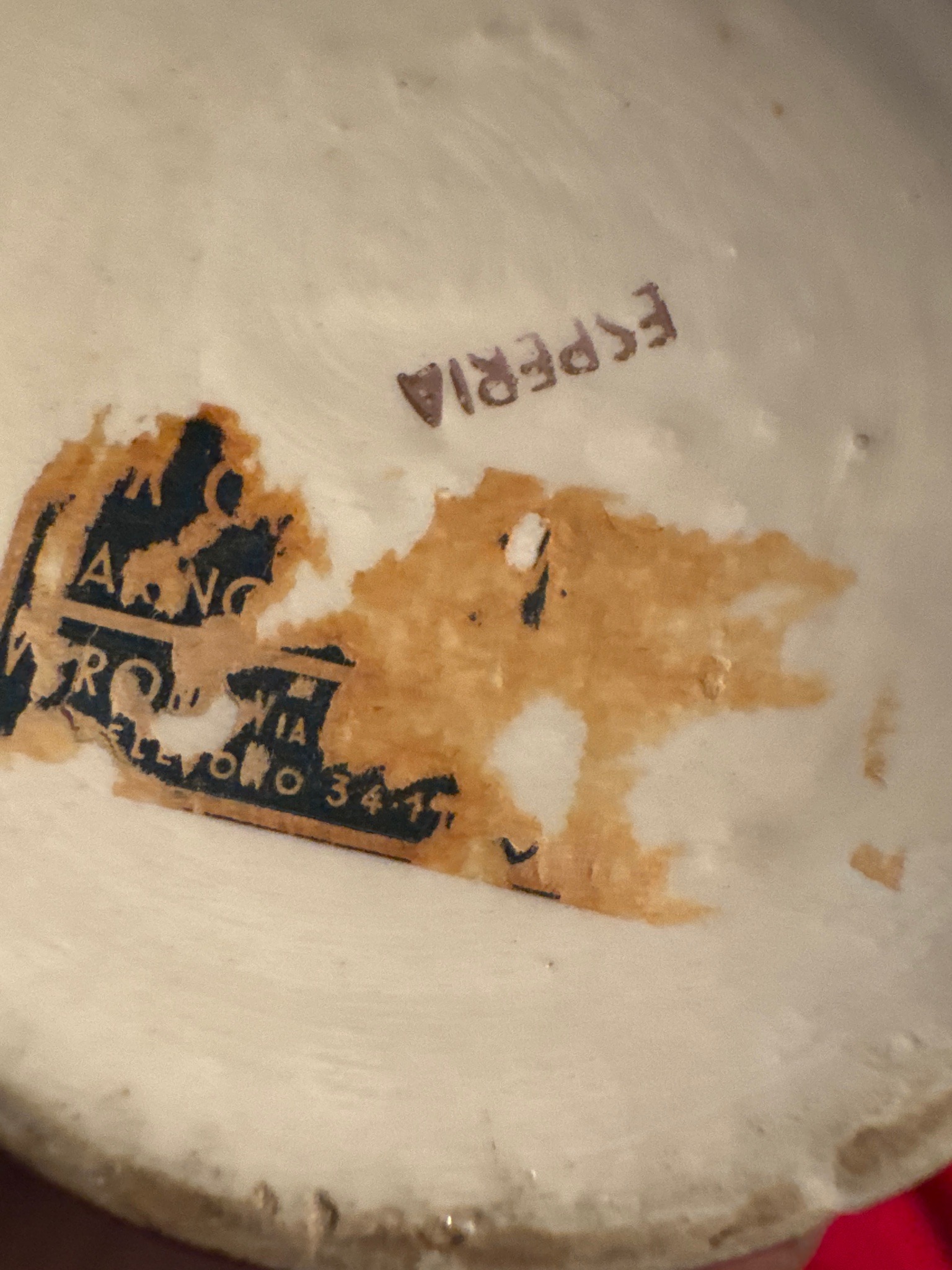
This is the underside of a ceramic item, likely a vase or decorative bowl, featuring an off-white or cream-toned glaze with a slightly uneven, handmade texture typical of mid-century Italian pottery. The base displays two significant identifying marks. The first is a stamped mark in a dark reddish-brown ink reading 'ESPERIA', an Italian brand known for producing ceramic wares in the mid-20th century. The second is a partially destroyed black and gold foil paper label. Despite the heavy damage and tearing, fragments of text are visible including 'A...NO', 'RO...A', and '...ORO 34 ...', which likely referenced the manufacturing city (possibly Sesto Fiorentino area) or specific decor style. The ceramic body appears to be a light-colored earthenware or majolica. Condition-wise, the base shows significant shelf wear along the unglazed foot ring, with minor chipping and darkening consistent with age. There is prominent adhesive residue and paper loss from the original export label, which was likely applied during the 1950s or 1960s. Small pits and bubbles in the glaze are characteristic of the kiln-firing process used during this era of Italian production.
AI-Generated Appraisal Disclaimer
Estimated Value
$125 - $225
Basic Information
Category
Antique and Vintage Pottery
Appraised On
May 6, 2026
Estimated Value
$125 - $225
Item Description
This is the underside of a ceramic item, likely a vase or decorative bowl, featuring an off-white or cream-toned glaze with a slightly uneven, handmade texture typical of mid-century Italian pottery. The base displays two significant identifying marks. The first is a stamped mark in a dark reddish-brown ink reading 'ESPERIA', an Italian brand known for producing ceramic wares in the mid-20th century. The second is a partially destroyed black and gold foil paper label. Despite the heavy damage and tearing, fragments of text are visible including 'A...NO', 'RO...A', and '...ORO 34 ...', which likely referenced the manufacturing city (possibly Sesto Fiorentino area) or specific decor style. The ceramic body appears to be a light-colored earthenware or majolica. Condition-wise, the base shows significant shelf wear along the unglazed foot ring, with minor chipping and darkening consistent with age. There is prominent adhesive residue and paper loss from the original export label, which was likely applied during the 1950s or 1960s. Small pits and bubbles in the glaze are characteristic of the kiln-firing process used during this era of Italian production.
Related Tags
Get Your Items Appraised
Instant estimates of your treasures with AI-powered instant appraisals