Antique Salt-Glazed and Albany Slip Stoneware Crocks, Trio
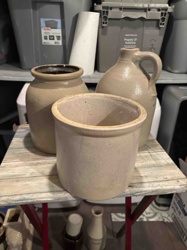
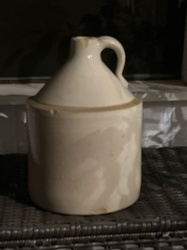
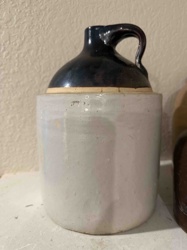
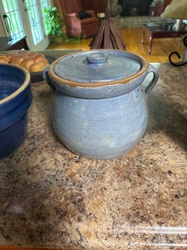
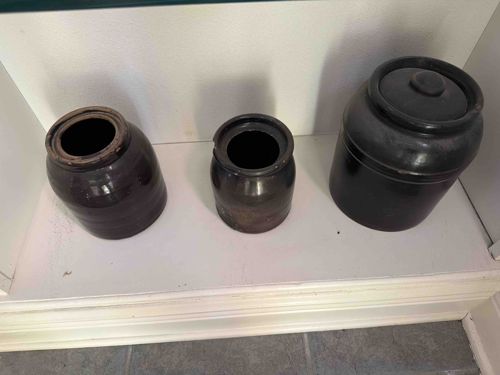
This set of three antique stoneware storage crocks consists of various sizes and shapes typically used for preserving foods such as butter, lard, or preserved vegetables. The vessels are crafted from heavy, dense stoneware clay. The largest crock on the right features a deep dark brown to black Albany slip glaze, common in the mid-to-late 19th century, and includes a matching fitted lid with a central knob handle. It has a cylindrical body with a slightly tapered shoulder. The two smaller crocks to the left exhibit variations in glaze, likely a mixture of salt-glazing and iron-rich slip, resulting in deep chocolate and earthy brown tones with a characteristic 'orange peel' texture on the far-left piece. Each has a thick, reinforced rim designed for securing cloth or waxed paper covers with twine. The middle crock shows significant surface wear and potential lime or salt deposits near the base, while the far-left crock displays minor chipping around the inner lip. These pieces represent American utilitarian pottery from the period of 1860-1890, showcasing handmade craftsmanship evident in the slight irregularities of their forms. No manufacturer marks are visible from this top-down perspective, but their robust construction indicates they were intended for heavy daily use.
AI-Generated Appraisal Disclaimer
Estimated Value
$150 - $275
Basic Information
Category
Antique Utilitarian Stoneware
Appraised On
February 6, 2026
Estimated Value
$150 - $275
Additional Details Provided By Owner
User Provided Information
Old crocks
Item Description
This set of three antique stoneware storage crocks consists of various sizes and shapes typically used for preserving foods such as butter, lard, or preserved vegetables. The vessels are crafted from heavy, dense stoneware clay. The largest crock on the right features a deep dark brown to black Albany slip glaze, common in the mid-to-late 19th century, and includes a matching fitted lid with a central knob handle. It has a cylindrical body with a slightly tapered shoulder. The two smaller crocks to the left exhibit variations in glaze, likely a mixture of salt-glazing and iron-rich slip, resulting in deep chocolate and earthy brown tones with a characteristic 'orange peel' texture on the far-left piece. Each has a thick, reinforced rim designed for securing cloth or waxed paper covers with twine. The middle crock shows significant surface wear and potential lime or salt deposits near the base, while the far-left crock displays minor chipping around the inner lip. These pieces represent American utilitarian pottery from the period of 1860-1890, showcasing handmade craftsmanship evident in the slight irregularities of their forms. No manufacturer marks are visible from this top-down perspective, but their robust construction indicates they were intended for heavy daily use.
Related Tags
Get Your Items Appraised
Instant estimates of your treasures with AI-powered instant appraisals