AI Appraisal Estimate

AI-generated estimates · not official valuations

From the user

What was submitted

Photo and notes provided by the user — not generated by AI

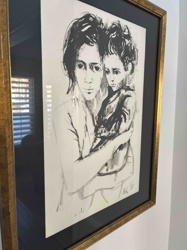
Submitted item photo
Submitted photo · June 23, 2026

User's notes

No additional notes provided.

AI analysis below

AI appraisal

AI analysis & estimate

AI-Generated · Verify before acting

Everything below is generated by AI for informational purposes only. AI can make mistakes — the AI may misidentify items or misattribute them (artist, maker, brand, designer, origin, era). This is not an official valuation and should not be used for insurance, sale, tax, estate, legal, or lending purposes — or any decision requiring a certified appraisal. It is not an authoritative claim about any person, brand, or rights holder — do not share or rely on it as a factual statement about a third party. Always consult qualified professionals before making financial decisions.

Read the full disclaimer

AI Identification

·Not independently authenticated·Verify before acting

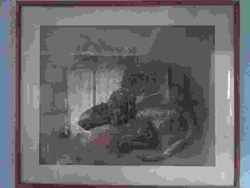
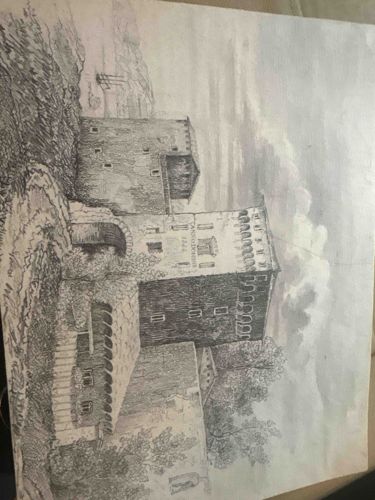
Italianate Landscape Ink Drawing of Medieval Fortress

Fine Art - Prints and Drawings

AI Estimated Value

·Not an official valuation·Verify before acting

$1,200 - $1,800

As of June 23, 2026

AI Item Analysis

·AI can make mistakes·Verify before acting
This is a monochrome ink and wash architectural drawing executed on a textured paper substrate. The composition features a prominent medieval stone fortress with several distinctive towers and a courtyard wall. Centrally, the tallest tower displays visible lettering 'ANNO DOMINI 1744' which likely suggests the date of the structure's renovation or the date of the artwork's conceptual origin. The drawing style utilizes fine cross-hatching to define shadows and masonry textures, while a light wash is used for the atmospheric sky and distant rolling hills. The architectural features include crenelations, arched doorways, and small rectangular windows consistent with a European fort style, likely representing a site in the Italian or French countryside. The paper exhibits signs of age-related toning (yellowing) and minor creasing along the right edge. There appears to be light foxing or spotting consistent with 18th or 19th-century works on paper. The craftsmanship suggests a skilled architectural illustrator or a grand tour artist. No clear artist signature is visible on the face, though the stylistic approach is reminiscent of Neoclassical topographical studies. The perspective is handled with precise geometric depth, highlighting the three-dimensional nature of the stonework. Overall, the piece demonstrates high quality in its line-work and maintains a strong aesthetic presence despite minor peripheral wear.
AI Appraisal Report

·AI can make mistakes·Verify before acting
I have conducted a visual examination of the Italianate Landscape Ink Drawing via high-resolution imagery. The work, dated 1744, is a sophisticated example of Grand Tour topographic illustration. The precision of the ink-work and the controlled wash application reflect a high level of academic training, likely that of an established architectural illustrator or a skilled traveler documenting European heritage. The condition is consistent with 18th-century paper, showing characteristic foxing and tonal yellowing that add to its historical charm without compromising the integrity of the central motif. The market for 18th-century architectural drawings remains stable, particularly for works with clear dated inscriptions. The 'Anno Domini 1744' markings serve as both a decorative element and a chronological anchor, increasing desirability for collectors of Neoclassical works. Similar topographical studies from the mid-18th century, when unsigned but of high technical merit, typically command mid-level four-figure prices at specialty auctions. However, there are inherent limitations to appraisals conducted via digital imagery. I cannot definitively verify the paper's watermark, which would be essential for confirming the 1744 date against the production era of the substrate. An in-person inspection is required to determine if the 'foxing' is superficial or indicative of deeper mold, and to ensure the ink is an iron-gall or carbon-based period medium rather than a later photomechanical reproduction. Full authentication would require provenance documentation tracing the piece back to a specific collection and tactile analysis of the paper's chain lines and texture. Consequently, this valuation assumes the work is an original 18th-century manuscript.

Get your items appraised

Instant estimates of your treasures with AI-powered appraisals

Browse More Appraisals