Prehistoric Lithic Scraper / Knife Multi-tool
Archaeological Artifacts / Native American Lithics

Prehistoric Lithic Scraper / Knife Multi-tool

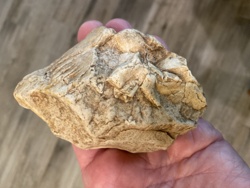
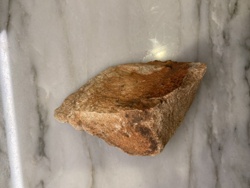
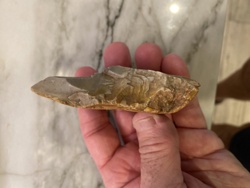
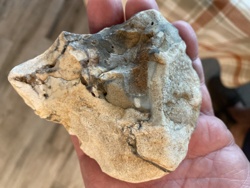
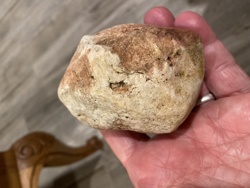
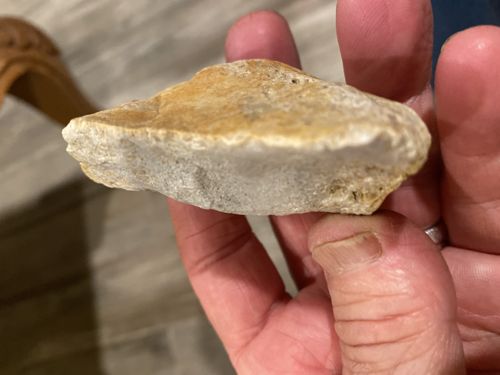
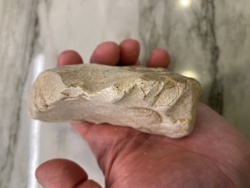
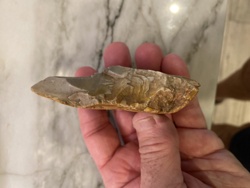
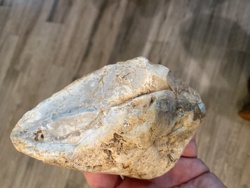
Measurements are approx. 3 inches by 2.5 inches. This item is a prehistoric lithic tool, likely serving a dual purpose as a scraper and a hand-held knife. It is constructed from a cryptocrystalline silicate (chert or flint) common to the Oklahoma region. The material exhibits a tan-to-ochre weathered patina on the dorsal surface, with a lighter greyish interior exposed on the worked edges. The tool features a thick, unworked 'back' or cortical surface that allows for a steady grip, while the opposite longitudinal edge shows intentional unifacial retouching to create a sharp, durable working surface. The craftsmanship is utilitarian, utilizing percussion flaking to shape the core and secondary pressure flaking to refine the cutting edge. Notable features include a slightly concave section that would allow for hide scraping or wood shaving. There are no maker's marks, as this is an Indigenous stone tool. Condition-wise, the item shows significant ancient use-wear along the working margin, known as 'edge-nibbling' or micro-flaking, and displays a heavy desert varnish/patina consistent with an age ranging from the Archaic to the Woodland period (approx. 1,000 to 5,000+ years old). No modern fractures or impact damage from farm equipment are visible, suggesting it was found in a primary or protected context.
Estimated Value

$45 - $85

Basic Information

Category

Archaeological Artifacts / Native American Lithics

Appraised On

February 18, 2026

Estimated Value

$45 - $85

Additional Details Provided By Owner

User Provided Information

Prehistoric knife/ scraper multi tool found in Guthrie, OK. 3" x 2.5"

Item Description

Measurements are approx. 3 inches by 2.5 inches. This item is a prehistoric lithic tool, likely serving a dual purpose as a scraper and a hand-held knife. It is constructed from a cryptocrystalline silicate (chert or flint) common to the Oklahoma region. The material exhibits a tan-to-ochre weathered patina on the dorsal surface, with a lighter greyish interior exposed on the worked edges. The tool features a thick, unworked 'back' or cortical surface that allows for a steady grip, while the opposite longitudinal edge shows intentional unifacial retouching to create a sharp, durable working surface. The craftsmanship is utilitarian, utilizing percussion flaking to shape the core and secondary pressure flaking to refine the cutting edge. Notable features include a slightly concave section that would allow for hide scraping or wood shaving. There are no maker's marks, as this is an Indigenous stone tool. Condition-wise, the item shows significant ancient use-wear along the working margin, known as 'edge-nibbling' or micro-flaking, and displays a heavy desert varnish/patina consistent with an age ranging from the Archaic to the Woodland period (approx. 1,000 to 5,000+ years old). No modern fractures or impact damage from farm equipment are visible, suggesting it was found in a primary or protected context.
Get Your Items Appraised

Instant estimates of your treasures with AI-powered instant appraisals

Browse More Appraisals