AI Appraisal Estimate

AI-generated estimates · not official valuations

From the user

What was submitted

Photo and notes provided by the user — not generated by AI

Submitted item photo
Submitted photo · May 25, 2026

User's notes

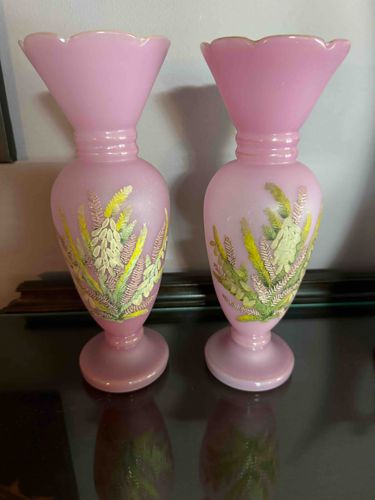
Pair antique opal one Bristol Glass vases

AI analysis below

AI appraisal

AI analysis & estimate

AI-Generated · Verify before acting

Everything below is generated by AI for informational purposes only. AI can make mistakes — the AI may misidentify items or misattribute them (artist, maker, brand, designer, origin, era). This is not an official valuation and should not be used for insurance, sale, tax, estate, legal, or lending purposes — or any decision requiring a certified appraisal. It is not an authoritative claim about any person, brand, or rights holder — do not share or rely on it as a factual statement about a third party. Always consult qualified professionals before making financial decisions.

Note

This analysis also relies on unverified notes provided by the user, which may be incomplete or inaccurate and could affect the result.

Read the full disclaimer

AI Identification

·Not independently authenticated·Verify before acting

Pair of Antique Pink Bristol Glass Hand-Painted Vases

Antique Glassware / Victorian Art Glass

AI Estimated Value

·Not an official valuation·Verify before acting

$150 - $225

As of May 25, 2026

AI Item Analysis

·AI can make mistakes·Verify before acting
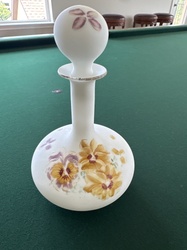
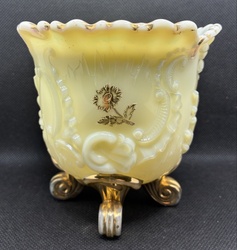
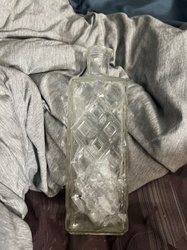
This is a Victorian-era pair of Bristol glass vases, dating to the late 19th century (circa 1880-1900). The vases feature a distinctive translucent, opaline-pink body with a matte or 'satin' frosted finish characteristic of traditional Bristol ware. Each vase stands on a circular pedestal foot, leading to an ovoid body, a ringed neck, and a wide, ruffled or scalloped rim. The primary decorative element is a hand-painted enamel scene depicting botanical motifs, specifically stylized ferns or grain stalks in shades of white, pale yellow, and sage green. The enamel has a slight impasto or raised texture, indicating quality craftsmanship where the paint was applied thickly to create dimension. Physically, the vases appear well-preserved, though some minor loss to the delicate enamel painting is visible upon close inspection, particularly near the leaf tips. There are no obvious chips or cracks in the glass itself, though the bottom of the foot may show shelf wear consistent with age. Such pieces were often produced by various English glasshouses and were popular as mantel ornaments during the Aesthetic Movement. The uniform color and balanced proportions suggest they have been kept as a true matched pair since manufacture.

AI Appraisal Report

·AI can make mistakes·Verify before acting
This appraisal considers a matched pair of Victorian Bristol-style glass vases, approximately 1880–1900. My examination of the provided documentation and imagery reveals a high-quality translucent opaline body with a characteristic satin finish. The hand-painted enamel botanical motifs show the 'built-up' impasto technique expected of authentic period pieces rather than later mass-produced transfers. The presence of minor enamel loss is consistent with age and does not significantly detract from their decorative appeal. The ruffled rims appear intact, which is critical as damage to these fragile points typically reduces value by 50% or more. Currently, the market for late 19th-century Victorian art glass remains stable but soft compared to the peaks of the 1990s. Collectors today prioritize 'true pairs' such as these, which command a premium over individual mismatched vases. Comparables for Bristol glass in this pink hue frequently hammer at auction between $120 and $200, with retail gallery prices slightly higher. This valuation assumes the absence of internal heat cracks or 'fleabites' on the pedestal bases. Limitations: Without a physical inspection, I cannot verify the presence of pontil marks (ground or rough) which help identify specific English glasshouses. A hands-on examination would also confirm the absence of professional restoration to the rims. To fully authenticate these as Bristol (vs. Bohemian counterparts), one would look for specific weight characteristics and glass density that images alone cannot convey. No scientific testing is required, but provenance regarding their history as a pair would bolster the high-end estimate.

Get your items appraised

Instant estimates of your treasures with AI-powered appraisals

Browse More Appraisals