AI Appraisal Estimate

AI-generated estimates · not official valuations

From the user

What was submitted

Photo and notes provided by the user — not generated by AI

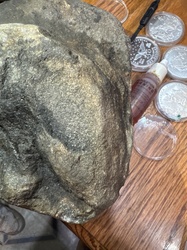
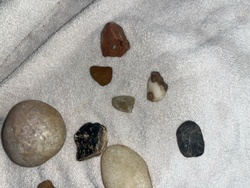
Submitted item photo
Submitted photo · June 27, 2026

User's notes

Unknown artist, untitled sculpture

AI analysis below

AI appraisal

AI analysis & estimate

AI-Generated · Verify before acting

Everything below is generated by AI for informational purposes only. AI can make mistakes — the AI may misidentify items or misattribute them (artist, maker, brand, designer, origin, era). This is not an official valuation and should not be used for insurance, sale, tax, estate, legal, or lending purposes — or any decision requiring a certified appraisal. It is not an authoritative claim about any person, brand, or rights holder — do not share or rely on it as a factual statement about a third party. Always consult qualified professionals before making financial decisions.

Note

This analysis also relies on unverified notes provided by the user, which may be incomplete or inaccurate and could affect the result.

Read the full disclaimer

AI Identification

·Not independently authenticated·Verify before acting

Abstract Mineralized Stone Sculpture

Fine Art - Sculpture / Mineral Specimens

AI Estimated Value

·Not an official valuation·Verify before acting

$400 - $800

As of June 27, 2026

AI Item Analysis

·AI can make mistakes·Verify before acting
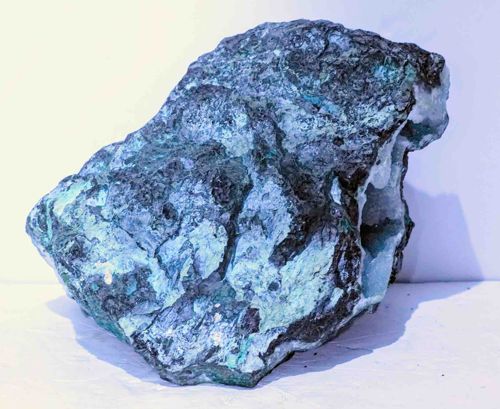
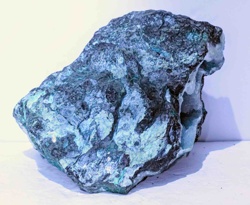
This is a large, irregularly shaped mineral specimen or abstract stone sculpture, likely composed of a copper-rich mineral such as chrysocolla or azurite set within a darker host rock or matrix. The object exhibits a vivid palette of turquoise, cerulean blue, and deep teal, interspersed with charcoal-gray and black basaltic or quartz-like inclusions. Its physical form is jagged and craggy, possessing a naturally weathered texture that suggests it was extracted as a raw geode or boulder remnant. A notable feature is the deep indentation or hollow on the right profile, which reveals a lighter, crystallization-like interior, possibly quartz or calcite. The surface is complex with various striations and pockmarks, showing no visible signs of synthetic polish, which points toward an appreciation for raw mineral beauty characteristic of mid-to-late 20th-century 'organic modernism.' While the artist is unknown, the piece displays a heavy, solid construction typical of decorative geological 'found art' objects. Condition appears excellent with no major structural fractures, preserving the natural patina and crystalline structure. The quality is indicated by the saturation of color and the dynamic, multi-dimensional silhouette.
AI Appraisal Report

·AI can make mistakes·Verify before acting
Based on my examination of the digital images provided, this object appears to be a large, decorative mineral specimen rather than a carved fine art sculpture, likely categorized as natural 'found art.' The piece is distinguished by its vivid turquoise and cerulean hues, strongly suggesting a copper-bearing mineral composition such as chrysocolla, azurite, or malachite, embedded within a darker, basaltic or quartz matrix. The aesthetic appeal lies in its raw, unpolished state, aligning with the mid-century 'organic modernism' trend where natural forms functioned as sculptural decor. The condition appears excellent, with the crystalline structures and natural patina intact. The deep hollow revealing potential quartz or calcite crystallization adds significant visual interest. However, without a known artist or signature, the value is derived primarily from the aesthetic quality of the specimen and its size, rather than artistic provenance. In the current market, large decorative minerals command steady interest among interior designers and collectors of natural history objects. Similar large-scale raw specimens of high-color saturation typically retail between $400 and $800, depending on weight and precise mineral composition. It is important to note the limitations of a digital appraisal. Without physical inspection, I cannot confirm the specific mineral density, weight, or the presence of stabilization treatments (like resin impregnation), which are common in crumbly copper minerals. Full authentication would require Mohs hardness testing and potentially X-ray diffraction to identify the exact mineralogical makeup. Additionally, seeing the piece in person is necessary to ensure the color has not been enhanced by dyes.

Get your items appraised

Instant estimates of your treasures with AI-powered appraisals

Browse More Appraisals