AI Appraisal Estimate

AI-generated estimates · not official valuations

From the user

What was submitted

Photo and notes provided by the user — not generated by AI

Submitted item photo
Submitted photo · May 26, 2026

User's notes

No additional notes provided.

AI analysis below

AI appraisal

AI analysis & estimate

AI-Generated · Verify before acting

Everything below is generated by AI for informational purposes only. AI can make mistakes — the AI may misidentify items or misattribute them (artist, maker, brand, designer, origin, era). This is not an official valuation and should not be used for insurance, sale, tax, estate, legal, or lending purposes — or any decision requiring a certified appraisal. It is not an authoritative claim about any person, brand, or rights holder — do not share or rely on it as a factual statement about a third party. Always consult qualified professionals before making financial decisions.

Read the full disclaimer

AI Identification

·Not independently authenticated·Verify before acting

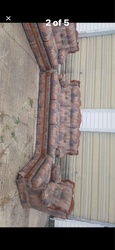
Vintage 3-Seat Gang Auditorium or Theater Seating

Vintage Institutional Furniture

AI Estimated Value

·Not an official valuation·Verify before acting

$150 - $250

As of May 26, 2026

AI Item Analysis

·AI can make mistakes·Verify before acting
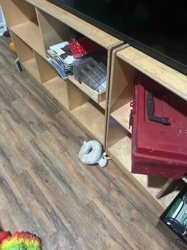
This is a bank of three vintage auditorium or theater chairs, constructed with curved plywood seats and backrests mounted on a metal and wood frame. The seats feature a classic folding mechanism designed to maximize aisle space when not in use. The backrests exhibit a tall, rectangular profile with rounded corners, finished in a medium-toned wood stain. The armrests are made of solid light-colored wood, likely maple or birch, providing a functional contrast to the darker frame. The structural supports appear to be composed of brown-painted metal or heavy-duty wood composites typical of mid-20th-century institutional furniture. In terms of condition, the set shows significant signs of wear and age. Most notably, the rightmost backrest has a large, vertical dark stain or burn mark running down the center, which significantly impacts its aesthetic value. There is visible surface scratching, finish loss along the edges of the plywood, and some grime accumulation consistent with long-term use in a public setting. The red power cord draped over the seats is not part of the original assembly. This style of seating was common in schools, churches, and small theaters from approximately the 1940s through the 1960s. These pieces represent a utilitarian, mid-century industrial design aesthetic, prized for their durability and space-saving efficiency, though this specific unit requires professional restoration to address the staining and surface degradation.
AI Appraisal Report

·AI can make mistakes·Verify before acting
I have examined the provided image of a three-seat bank of vintage institution theater chairs, likely dating from the 1940s to 1960s. The set features bent plywood backrests and seats with a gravity-fold mechanism, typical of mid-century industrial manufacturing. While the structural integrity appears stable, several condition issues significantly impact market value. I observed a prominent vertical stain or moisture damage on the rightmost backrest, along with significant finish loss and edge wear across the plywood surfaces. These issues necessitate professional refinishing, which at current labor rates often exceeds the resale value of the piece. Market demand for industrial seating remains steady for hospitality and home entryway use, but buyers typically seek units in 'as-found' clean condition or fully restored sets. Recent auction results for unrestored three-seat wood gangs range from $125 to $300 depending on the severity of surface damage. While this item appears to be an authentic period piece, my assessment is limited by the digital format. I cannot verify the mechanical smoothness of the folding hinges or the stability of the floor mounting brackets. For a definitive authentication, I would require an in-person physical inspection to confirm the absence of modern hardware replacements, a search for manufacturer stamps (such as American Seating Co. or Heywood-Wakefield), and provenance documentation linking the set to a specific historical venue or institution, which would provide a premium to the value.

Get your items appraised

Instant estimates of your treasures with AI-powered appraisals

Browse More Appraisals