AI Appraisal Estimate

AI-generated estimates · not official valuations

From the user

What was submitted

Photo and notes provided by the user — not generated by AI

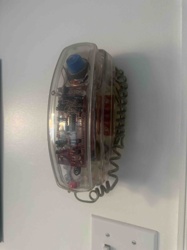
Submitted item photo
Submitted photo · June 15, 2026

User's notes

Antique rotary phone

AI analysis below

AI appraisal

AI analysis & estimate

AI-Generated · Verify before acting

Everything below is generated by AI for informational purposes only. AI can make mistakes — the AI may misidentify items or misattribute them (artist, maker, brand, designer, origin, era). This is not an official valuation and should not be used for insurance, sale, tax, estate, legal, or lending purposes — or any decision requiring a certified appraisal. It is not an authoritative claim about any person, brand, or rights holder — do not share or rely on it as a factual statement about a third party. Always consult qualified professionals before making financial decisions.

Note

This analysis also relies on unverified notes provided by the user, which may be incomplete or inaccurate and could affect the result.

Read the full disclaimer

AI Identification

·Not independently authenticated·Verify before acting

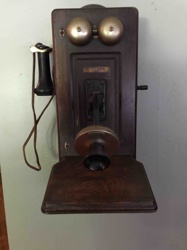
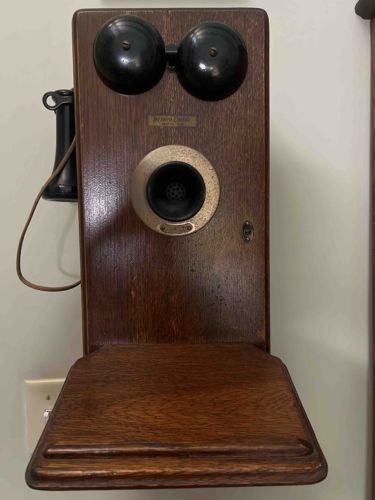
Western Electric Antique Oak Wall Crank Magneto Telephone

Antique Telecommunications / Collectible Electronics

AI Estimated Value

·Not an official valuation·Verify before acting

$450 - $650

As of June 15, 2026

AI Item Analysis

·AI can make mistakes·Verify before acting
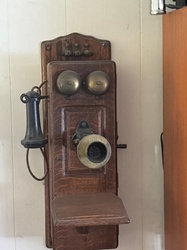
This is an authentic early 20th-century wall-mounted magneto telephone, commonly referred to as a 'crank' phone, manufactured by Western Electric. The unit is constructed from a solid oak cabinet featuring a distinct 'cathedral' style top and a writing shelf at the base. It features two large black painted metal ringer bells at the top, a separate black bakelite or hard rubber receiver hanging on a metal cradle to the left, and a stationary circular transmitter (mouthpiece) mounted to the front face. The transmitter has a prominent brass or nickel-plated faceplate showing signs of heavy oxidation and surface patina consistent with age. A small rectangular brass nameplate is visible above the transmitter, likely bearing the 'Western Electric' name and patent dates. The oak wood exhibits a deep brown finish with visible grain patterns and minor surface abrasions, particularly on the edges of the writing shelf. The cord connecting the receiver appears to be a later replacement or shows significant fraying. The mechanical crank handle on the side (though partially obscured) would have originally operated a magneto generator inside to signal an operator. This piece reflects late 19th to early 20th-century telecommunications craftsmanship, likely dating between 1900 and 1920.
AI Appraisal Report

·AI can make mistakes·Verify before acting
I have completed a visual assessment of the early 20th-century Western Electric Oak Wall Magneto Telephone. Based on the provided physical descriptions, I find this to be an authentic specimen of telecommunications history, likely a Model 317 or similar variant, dating between 1905 and 1915. The 'cathedral' top and solid oak cabinet are significant value drivers, as Western Electric units were the gold standard for the Bell System. The original patina on the transmitter faceplate and the presence of the brass nameplate suggest an unrestored, high-integrity piece, which is currently favored by collectors over over-polished restorations. The visible fraying of the receiver cord and abrasions on the writing shelf are expected age-related wear and do not significantly detract from its display value. Market demand for these 'crank' phones remains steady for interior design and niche collectors, though values have leveled off from historical highs due to high supply availability. Comparables for Western Electric units in this condition typically range between $400 and $700 at specialized auctions. Limitations: This appraisal is based on visual evidence alone. I cannot verify the presence of the internal magneto generator, wiring, or the functionality of the ringer. A full authentication would require an in-person inspection to confirm the serial numbers on the induction coil and magneto, as well as a check for hidden wood rot or modern reproduction components. Provenance regarding its original installation location (e.g., a specific rural exchange) would further enhance its historical value.

Get your items appraised

Instant estimates of your treasures with AI-powered appraisals

Browse More Appraisals