Prehistoric Lithic Multi-Tool (Hand Axe/Scraper)
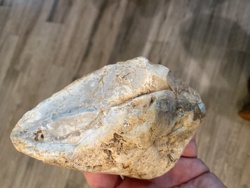
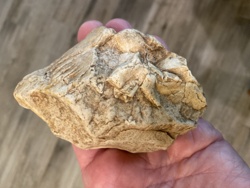
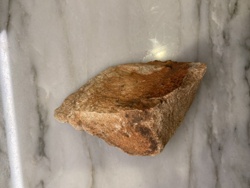
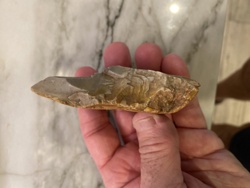
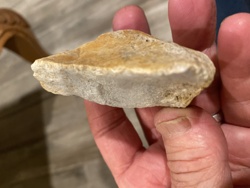
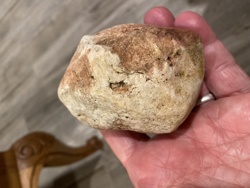
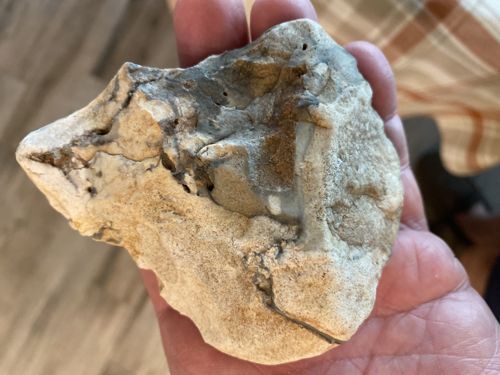
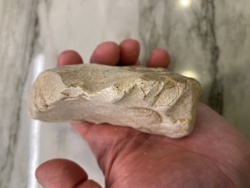
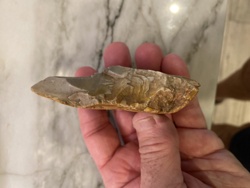
This specimen is a prehistoric lithic tool, measuring approximately 4 inches by 3.25 inches, identified as a multi-functional hand axe and scraper. Found in Guthrie, Oklahoma, the object is crafted from a high-quality, fine-grained chert or flint, exhibiting a varied color palette of creamy beige, tan, and dark gray with hints of iron-rich ochre staining. The item displays characteristic knapping techniques, including primary and secondary flaking along the edges to create a functional cutting and scraping surface. Its asymmetrical, somewhat triangular shape is designed for a comfortable grip within the palm, suggesting it was used as a handheld tool rather than being hafted. The surface shows a significant degree of prehistoric patina and calcification, consistent with long-term environmental exposure. Notable features include several concave 'scalloped' edges that would have been ideal for hide scraping or woodworking. While the tool shows some minor modern chips and edge wear, the overall condition is excellent for a surface-found artifact, retaining its original worked margins. There are no maker's marks, as is standard for Stone Age artifacts, but the craftsmanship level indicates a skilled flintknapper from the Archaic or Paleo-Indian periods of North American prehistory. The unique texture and mineral deposits on the surface provide strong evidence of its age and authenticity.
AI-Generated Appraisal Disclaimer
Estimated Value
$150 - $250
Basic Information
Category
Archaeological Artifacts / Native American Lithics
Appraised On
February 17, 2026
Estimated Value
$150 - $250
Additional Details Provided By Owner
User Provided Information
stone age multi tool hand axe scraper tool found in Guthrie, OK measuring 4" x 3.25
Item Description
This specimen is a prehistoric lithic tool, measuring approximately 4 inches by 3.25 inches, identified as a multi-functional hand axe and scraper. Found in Guthrie, Oklahoma, the object is crafted from a high-quality, fine-grained chert or flint, exhibiting a varied color palette of creamy beige, tan, and dark gray with hints of iron-rich ochre staining. The item displays characteristic knapping techniques, including primary and secondary flaking along the edges to create a functional cutting and scraping surface. Its asymmetrical, somewhat triangular shape is designed for a comfortable grip within the palm, suggesting it was used as a handheld tool rather than being hafted. The surface shows a significant degree of prehistoric patina and calcification, consistent with long-term environmental exposure. Notable features include several concave 'scalloped' edges that would have been ideal for hide scraping or woodworking. While the tool shows some minor modern chips and edge wear, the overall condition is excellent for a surface-found artifact, retaining its original worked margins. There are no maker's marks, as is standard for Stone Age artifacts, but the craftsmanship level indicates a skilled flintknapper from the Archaic or Paleo-Indian periods of North American prehistory. The unique texture and mineral deposits on the surface provide strong evidence of its age and authenticity.
Get Your Items Appraised
Instant estimates of your treasures with AI-powered instant appraisals