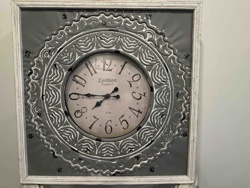
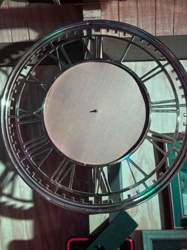
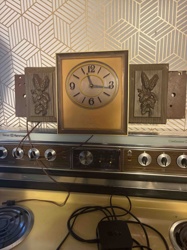
AI estimate as of July 26, 2025 · verify with a professional before acting
AI-Generated · Verify before acting
Everything on this page is generated by AI for informational purposes only. AI can make mistakes — the AI may misidentify items or misattribute them (artist, maker, brand, designer, origin, era). This is not an official valuation and should not be used for insurance, sale, tax, estate, legal, or lending purposes — or any decision requiring a certified appraisal. It is not an authoritative claim about any person, brand, or rights holder — do not share or rely on it as a factual statement about a third party. Always consult qualified professionals before making financial decisions.
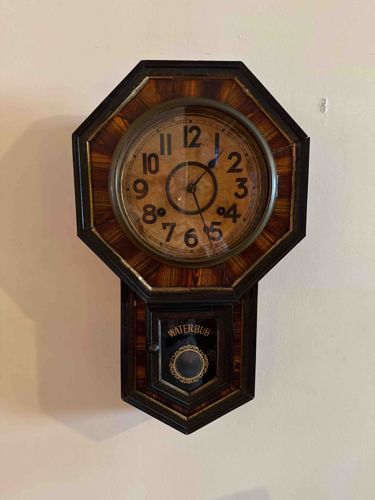
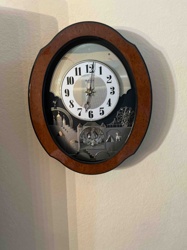
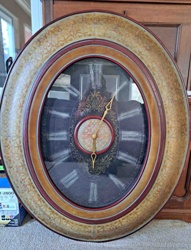
This is an antique Waterbury Regulator wall clock, likely dating from the late 19th to early 20th century, given its style. The clock features an octagonal upper section and a rectangular lower section with an angled base, forming a classic drop-dial or schoolhouse regulator design. The entire case appears to be constructed from wood, likely oak or a similar hard wood, with extensive use of marquetry or inlaid wood banding, particularly visible around the bezel of the clock face and on the lower door. The wood itself shows a rich, dark patina, indicative of age and past polishing. A notable feature is the intricate wood grain and cross-grain patterns used in the inlay work, creating a contrasting decorative border. The clock face is round, with large, clear Arabic numerals (1-12) and what appears to be a darker-toned outline for the numbers, possibly painted or printed. The minute and hour hands are black and simple in design. The dial itself has a mottled or textured appearance, suggesting either an aged paper dial or a metal dial with a painted finish that has developed a unique patina. A brass-toned bezel frames the clock face, providing a barrier to the glass cover (not clearly visible but presumed). Below the clock face, the lower section features a glass-fronted pendulum door. The glass is clear, allowing a view of the pendulum bob, which appears to be brass with an ornate, possibly cast, decorative surround. Above the pendulum glass, the name 'WATERBURY' is clearly visible in gold lettering, confirming the manufacturer. The overall condition appears good for its age, with a well-preserved finish and no obvious signs of significant damage such as large cracks or missing pieces. Minor wear consistent with age and use, such as small scratches or slight fading of the dial, would be expected. The craftsmanship is evident in the precise joinery and detailed inlay work, typical of quality clock manufacturers of the period.
AI Appraisal Report
This Waterbury Regulator wall clock presents as a fine example of late 19th to early 20th-century American clock manufacturing, consistent with the classic drop-dial or schoolhouse regulator design. Based on visual examination of the image, the condition appears remarkably good for its age. The rich, dark patina of the wood case, likely oak, suggests careful preservation over the decades. The extensive marquetry or inlaid banding is intact and contributes significantly to its aesthetic appeal and value. I note the clear 'WATERBURY' lettering, confirming authenticity of the manufacturer. While the dial shows a textured appearance, this could be aged paper or a painted metal dial with patina; it does not appear damaged. The brass bezel and pendulum bob also appear in good order.
From a market perspective, Waterbury regulator clocks are generally sought after, especially well-preserved examples like this. Demand is consistent for quality American timepieces, particularly those with decorative elements such as this intricate inlay work. While not exceedingly rare, this particular design with its specific marquetry pattern enhances its appeal. Factors significantly impacting value include the excellent apparent condition of both the case and dial, the presence of the original manufacturer's mark, and the decorative inlay.
My assessment of authenticity is limited to visual inspection. To fully authenticate and assess internal condition, a hands-on examination would be crucial. This would confirm the originality of the movement, consistency of internal components, and functional integrity. Provenance documentation (e.g., original sales receipts) would further establish its history and authenticity. Scientific testing, such as wood analysis, would not typically be necessary unless there were significant doubts about the age or materials used.