AI Appraisal Estimate

AI-generated estimates · not official valuations

From the user

What was submitted

Photo and notes provided by the user — not generated by AI

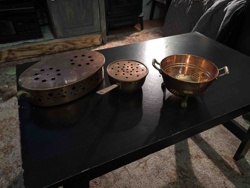
Submitted item photo
Submitted photo · May 27, 2026

User's notes

No additional notes provided.

AI analysis below

AI appraisal

AI analysis & estimate

AI-Generated · Verify before acting

Everything below is generated by AI for informational purposes only. AI can make mistakes — the AI may misidentify items or misattribute them (artist, maker, brand, designer, origin, era). This is not an official valuation and should not be used for insurance, sale, tax, estate, legal, or lending purposes — or any decision requiring a certified appraisal. It is not an authoritative claim about any person, brand, or rights holder — do not share or rely on it as a factual statement about a third party. Always consult qualified professionals before making financial decisions.

Read the full disclaimer

AI Identification

·Not independently authenticated·Verify before acting

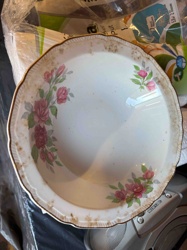
Vintage Oval Scalloped Ceramic Serving Platter

Antique and Vintage Kitchenware

AI Estimated Value

·Not an official valuation·Verify before acting

$45.00 - $65.00

As of May 27, 2026

AI Item Analysis

·AI can make mistakes·Verify before acting
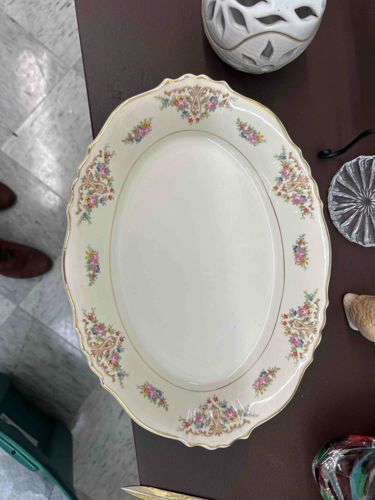
This is a vintage oval-shaped serving platter crafted from cream-colored ceramic or fine porcelain. The piece features a distinctive scalloped or 'wavy' rim edge, which is finished with a delicate gold-toned gilded border. The wide shoulder of the platter is decorated with a repeating floral transfer pattern consisting of four major floral arrangements and several smaller floral clusters. The floral motifs include pink, yellow, and blue blossoms set against golden-brown acanthus leaf-style scrolls. Between the main rim and the central well is a thin, circular gold pinstripe accentuating the depth of the dish. Based on the style, floral pattern, and cream glaze, this piece likely dates from the mid-20th century, approximately 1940-1960. The design is characteristic of American pottery manufacturers such as Homer Laughlin (specifically similar to the 'Virginia Rose' or 'Eggshell' lines) or Hall China. The glaze appears bright with consistent luster, showing minor shelf wear on the underside based on its orientation. No visible cracks or significant chips are observed from the top view, though some light fading of the gilt rim may be present due to age and handling. The craftsmanship indicates a mass-produced but high-quality domestic dinnerware item intended for formal table service.
AI Appraisal Report

·AI can make mistakes·Verify before acting
I have virtually examined this mid-20th-century oval scalloped serving platter. The piece demonstrates hallmarks of American dinnerware from the 1940s-1950s, specifically reminiscent of the 'Virginia Rose' shape by Homer Laughlin. The cream glaze maintains a high luster, and the transfer-print floral motifs—comprising pink, yellow, and blue blossoms—show crisp registration. The gilded scalloped rim and interior pinstripe appear largely intact, though minor thinning of the gold leaf is visible, consistent with age and gentle use. Based on this visual inspection, the item appears to be in 'Good' to 'Very Good' vintage condition with no evidence of structural crazing, chips, or staining. The market for mid-century American ceramics is currently saturated, with high supply and steady but modest demand. Comparables for similar platters from Homer Laughlin or Hall China typically realize between $35 and $75 at retail. Items with more prestigious backstamps or specific rare patterns may command a premium, but standard floral transfers generally remain at entry-level price points for collectors. Critically, this appraisal is based solely on photographic evidence. A definitive authentication and valuation would require an in-person physical examination to verify the existence of a manufacturer’s backstamp on the underside, which is essential for identifying the specific maker and pattern name. I would also need to perform a 'ring test' to check for internal hairline fractures and use a tactile inspection to identify any professional restorations or over-painting. To confirm the presence of real gold in the gilding versus a metallic pigment, a chemical test would be necessary for a formal insurance-grade appraisal.

Get your items appraised

Instant estimates of your treasures with AI-powered appraisals

Browse More Appraisals