AI Appraisal Estimate

AI-generated estimates · not official valuations

From the user

What was submitted

Photo and notes provided by the user — not generated by AI

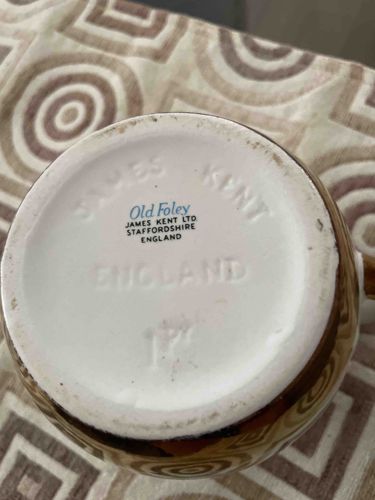
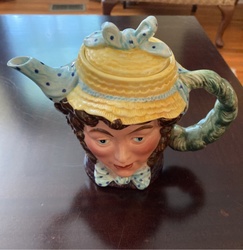
Submitted item photo
Submitted photo · June 6, 2026

User's notes

No additional notes provided.

AI analysis below

AI appraisal

AI analysis & estimate

AI-Generated · Verify before acting

Everything below is generated by AI for informational purposes only. AI can make mistakes — the AI may misidentify items or misattribute them (artist, maker, brand, designer, origin, era). This is not an official valuation and should not be used for insurance, sale, tax, estate, legal, or lending purposes — or any decision requiring a certified appraisal. It is not an authoritative claim about any person, brand, or rights holder — do not share or rely on it as a factual statement about a third party. Always consult qualified professionals before making financial decisions.

Read the full disclaimer

AI Identification

·Not independently authenticated·Verify before acting

James Kent Old Foley Staffordshire Pottery Vessel

Vintage British Ceramics / Staffordshire Pottery

AI Estimated Value

·Not an official valuation·Verify before acting

$45 - $75

As of June 6, 2026

AI Item Analysis

·AI can make mistakes·Verify before acting
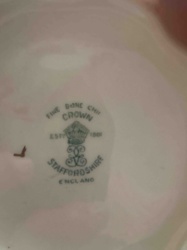
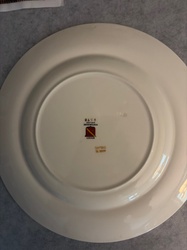
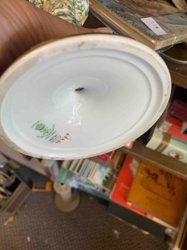
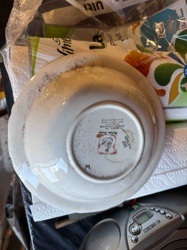
This item is a vintage ceramic vessel, likely a teapot or pitcher, produced by James Kent Ltd. at the Old Foley Pottery in Staffordshire, England. The base shows several distinct manufacturing marks: a blue printed mark that reads 'Old Foley JAMES KENT LTD STAFFORDSHIRE ENGLAND,' alongside deep relief embossed lettering for 'JAMES KENT' and 'ENGLAND.' An additional numerical mark, possibly '178' or similar, is impressed near the bottom edge. The body of the piece features a rich, metallic gold-tone glaze over a white earthenware or ironstone base, decorated with a repeating geometric circle or concentric ring motif. This specific backstamp style and the bold, mid-century aesthetic suggest a production date likely between the 1950s and 1960s. The piece shows visible wear consistent with age, specifically along the unglazed foot rim where dirt accumulation and minor shelf wear are present. There is evidence of slight rubbing or patina on the metallic finish. No major cracks are visible from this angle, though fine surface crazing typical of English earthenware of this era may be present upon closer inspection. The craftsmanship reflects the mass-market quality of mid-century Staffordshire pottery, characterized by robust construction and decorative transfers.
AI Appraisal Report

·AI can make mistakes·Verify before acting
Based on my visual examination of the provided documentation and imagery, I have assessed this James Kent 'Old Foley' vessel. The markings are consistent with mid-century production (circa 1950s-1960s) from the Longton works in Staffordshire. The metallic gold finish and geometric motif represent an attempt by traditional potteries to adapt to modern aesthetics during the post-war era. The piece appears authentic, displaying characteristic manufacturing marks including both the blue backstamp and the impressed relief lettering typical of the period. The condition exhibits expected shelf wear on the foot rim and minor oxidation or rubbing to the metallic glaze. While no catastrophic chips or cracks are noted, mid-century ironstone is prone to micro-crazing which likely exists beneath the glaze. Market demand for James Kent gold-wash items is generally stable but moderate, as these were mass-produced. They are popular among mid-century modern collectors but lack the rarity of earlier 19th-century lusterware. Comparables at auction regularly hammer in the $30 to $60 range, with retail 'buy-it-now' prices reaching up to $85 for pristine examples. This appraisal is based solely on digital images. A definitive valuation would require an in-person physical inspection to check for hidden restorations, internal stability, and to verify the resonance of the ceramic. While the marks are consistent with known examples, I cannot rule out high-quality reproductions without a tactile examination of the clay body's porosity and weight. Provenance documentation regarding its storage history would further solidify its market standing.

Get your items appraised

Instant estimates of your treasures with AI-powered appraisals

Browse More Appraisals