AI Appraisal Estimate

AI-generated estimates · not official valuations

From the user

What was submitted

Photo and notes provided by the user — not generated by AI

Submitted item photo
Submitted photo · June 18, 2026

User's notes

No additional notes provided.

AI analysis below

AI appraisal

AI analysis & estimate

AI-Generated · Verify before acting

Everything below is generated by AI for informational purposes only. AI can make mistakes — the AI may misidentify items or misattribute them (artist, maker, brand, designer, origin, era). This is not an official valuation and should not be used for insurance, sale, tax, estate, legal, or lending purposes — or any decision requiring a certified appraisal. It is not an authoritative claim about any person, brand, or rights holder — do not share or rely on it as a factual statement about a third party. Always consult qualified professionals before making financial decisions.

Read the full disclaimer

AI Identification

·Not independently authenticated·Verify before acting

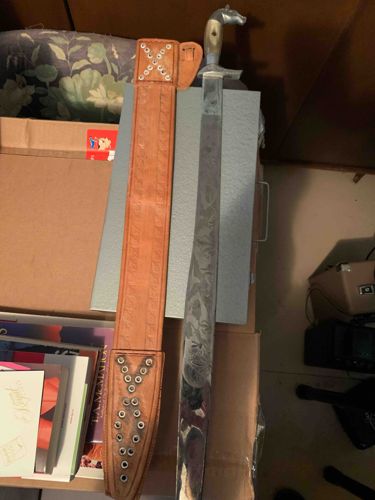
Mexican Espada Ancha Style Figural Horsehead Sword with Leather Sheath

Arms, Armor & Militaria

AI Estimated Value

·Not an official valuation·Verify before acting

$150 - $250

As of June 18, 2026

AI Item Analysis

·AI can make mistakes·Verify before acting
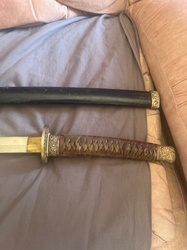
This item is a decorative short sword or large knife, commonly referred to as a Mexican Espada Ancha or a figural Bowie-style blade, likely dating from the mid-to-late 20th century. The piece features a long, single-edged polished steel blade with prominent etched or acid-engraved floral and scrollwork motifs running along the flat. The hilt is the most distinctive feature, featuring a cast metal pommel shaped like a horse's head, which appears to be made of aluminum or a chrome-plated alloy. The grip consists of two organic-looking scales, possibly aged bone or high-quality faux-ivory polymer, secured by metal pins. A simple metallic crossguard separates the blade from the handle. Accompanying the sword is a substantial hand-tooled tan leather sheath. The sheath is decorated with repetitive stamped geometric patterns and highlighted with decorative silver-toned metal rivets (grommets) arranged in a cross and diamond pattern at the throat and tip. The construction suggests it was intended as a souvenir, folk art, or dress accessory rather than a functional combat weapon. The condition appears fair to good, with some surface oxidation visible on the blade's tip and minor scuffing on the leather sheath. No visible maker's marks are present in the image, but the style is characteristic of artisan workshops in regions like Oaxaca or Guerrero, Mexico.
AI Appraisal Report

·AI can make mistakes·Verify before acting
I have completed a visual examination of the Mexican Espada Ancha-style figural sword. The item presents as a 20th-century decorative piece or 'charro' souvenir, characteristic of regional craftsmanship from central Mexico. The blade features mid-century acid-etched scrollwork, while the horsehead pommel—likely cast in aluminum—points to a post-1940s production era. The bone or synthetic scales show a pleasing patina, and the hand-tooled leather sheath remains supple despite minor scuffing and oxidation on the blade tip. Market demand for these items remains steady among collectors of Mexican folk art and regional edge weapons, though they lack the high premium associated with 19th-century military-grade Espadas Anchas. Comparable sales for mid-century horsehead variants with original leatherwork typically fall between $125 and $275. Factors positively impacting value include the integrity of the sheath’s stamping and the clarity of the blade etching; factors limiting value include the lack of a maker's mark and the use of non-precious alloys for the guard. Authentication via digital imagery is limited; I cannot definitively confirm the metal composition of the hilt or the organic nature of the grip scales without tactile inspection. A full authentication would require a physical check for 'hot needle' testing on the handle to distinguish bone from polymer, a magnet test on the blade to assess steel carbon content, and a search for hidden maker’s marks under the crossguard. Provenance documentation regarding its specific workshop origin would also enhance its historical value.

Get your items appraised

Instant estimates of your treasures with AI-powered appraisals

Browse More Appraisals