Porphyritic Igneous Rock Specimen
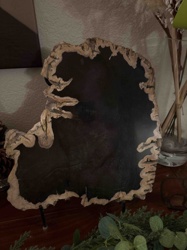
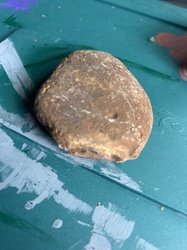
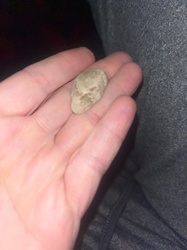
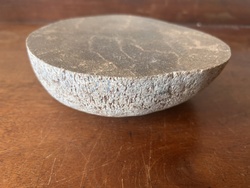
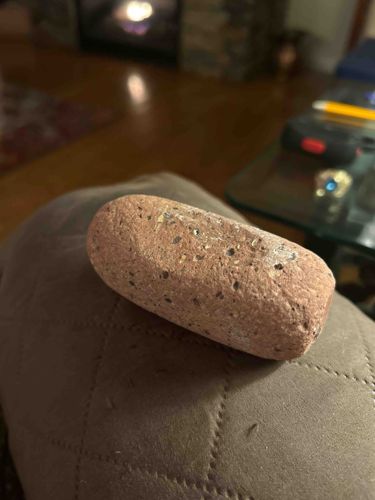
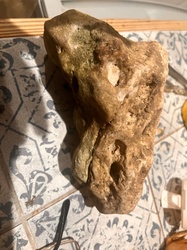
This specimen is an oblong, naturally water-worn or weathered stone featuring a distinct porphyritic texture. The primary body of the rock (the groundmass) is a terracotta-red to reddish-brown color, which suggests a high concentration of iron oxides. Embedded within this fine-grained matrix are visible crystals or phenocrysts of varying sizes, appearing in colors ranging from translucent white and gray to dark charcoal. These mineral inclusions characterize the rock as potentially a type of rhyolite or andesite with a porphyritic structure. The shape is cylindrical and smooth-edged, likely formed by long-term fluvial processes or glacial transport, which has rounded the corners into a soft, pill-like geometry. The surface texture is somewhat porous and matte, showing small pits where softer minerals may have eroded away. There are no visible maker's marks or anthropogenic carvings, indicating this is a natural geological object rather than an artifact. The condition appears stable with minor surface abrasions and naturally occurring indentations consistent with environmental exposure. Its overall aesthetic is rustic and geological, representing millions of years of volcanic formation and subsequent erosion.
AI-Generated Appraisal Disclaimer
Estimated Value
$5-15
Basic Information
Category
Geological Specimens / Natural History
Appraised On
February 2, 2026
Estimated Value
$5-15
Item Description
This specimen is an oblong, naturally water-worn or weathered stone featuring a distinct porphyritic texture. The primary body of the rock (the groundmass) is a terracotta-red to reddish-brown color, which suggests a high concentration of iron oxides. Embedded within this fine-grained matrix are visible crystals or phenocrysts of varying sizes, appearing in colors ranging from translucent white and gray to dark charcoal. These mineral inclusions characterize the rock as potentially a type of rhyolite or andesite with a porphyritic structure. The shape is cylindrical and smooth-edged, likely formed by long-term fluvial processes or glacial transport, which has rounded the corners into a soft, pill-like geometry. The surface texture is somewhat porous and matte, showing small pits where softer minerals may have eroded away. There are no visible maker's marks or anthropogenic carvings, indicating this is a natural geological object rather than an artifact. The condition appears stable with minor surface abrasions and naturally occurring indentations consistent with environmental exposure. Its overall aesthetic is rustic and geological, representing millions of years of volcanic formation and subsequent erosion.
Related Tags
Get Your Items Appraised
Instant estimates of your treasures with AI-powered instant appraisals