Aerial Hornets' Nest
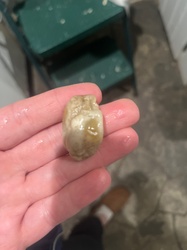
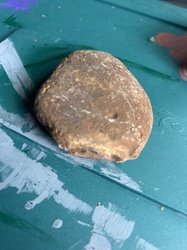
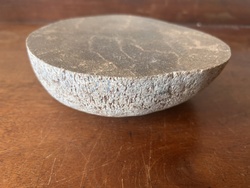
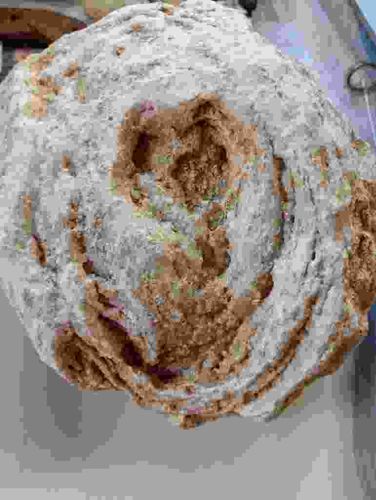
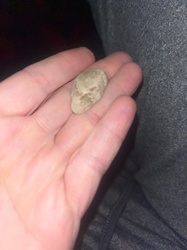
This is a naturally occurring aerial hornet's nest, likely constructed by Baldfaced Hornets (Dolichovespula maculata). It exhibits a characteristic globular or teardrop shape, composed of a paper-like substance called 'carton.' This material is created by the insects masticating wood fibers mixed with their saliva, resulting in a unique, variegated texture of swirling greys, tans, and browns. The exterior surface shows layered, scalloped ridges that provide structural integrity and insulation for the colony inside. The size appears to be substantial, common for a mid-to-late season nest. Regarding condition, the nest appears significantly weathered with visible deterioration. Large portions of the outer nesting envelope have been stripped away or damaged, revealing the darker, more compacted internal structural layers and the central void where the horizontal combs would typically be located. There are no visible signs of active inhabitants, suggesting it is an abandoned nest from a previous season. The color shows significant fading due to UV exposure and moisture, with some areas appearing brittle and frayed. Its aesthetic value lies in the intricate, organic 'architecture' representative of social hymenoptera, often sought by natural history collectors or as educational specimens.
AI-Generated Appraisal Disclaimer
Estimated Value
$25 - $50
Basic Information
Category
Natural History / Entomological Specimens
Appraised On
March 22, 2026
Estimated Value
$25 - $50
Item Description
This is a naturally occurring aerial hornet's nest, likely constructed by Baldfaced Hornets (Dolichovespula maculata). It exhibits a characteristic globular or teardrop shape, composed of a paper-like substance called 'carton.' This material is created by the insects masticating wood fibers mixed with their saliva, resulting in a unique, variegated texture of swirling greys, tans, and browns. The exterior surface shows layered, scalloped ridges that provide structural integrity and insulation for the colony inside. The size appears to be substantial, common for a mid-to-late season nest. Regarding condition, the nest appears significantly weathered with visible deterioration. Large portions of the outer nesting envelope have been stripped away or damaged, revealing the darker, more compacted internal structural layers and the central void where the horizontal combs would typically be located. There are no visible signs of active inhabitants, suggesting it is an abandoned nest from a previous season. The color shows significant fading due to UV exposure and moisture, with some areas appearing brittle and frayed. Its aesthetic value lies in the intricate, organic 'architecture' representative of social hymenoptera, often sought by natural history collectors or as educational specimens.
Related Tags
Get Your Items Appraised
Instant estimates of your treasures with AI-powered instant appraisals