Paleolithic Chert Hand Axe Scraper
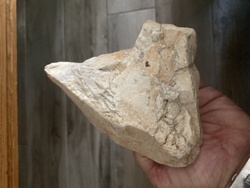
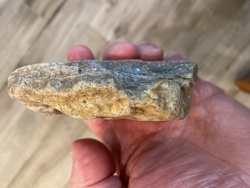
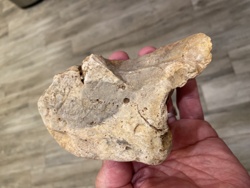
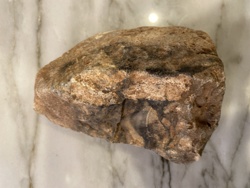
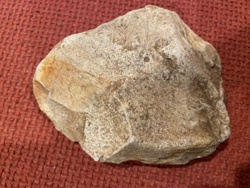
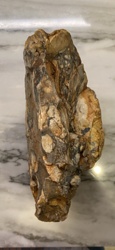
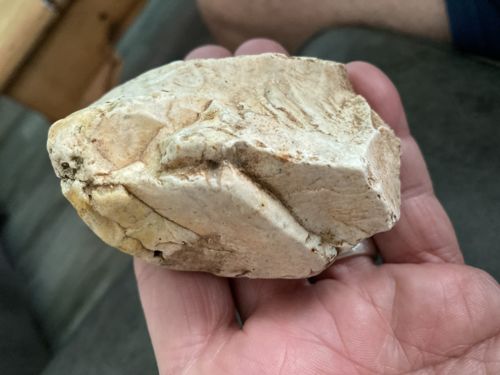
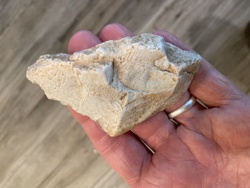
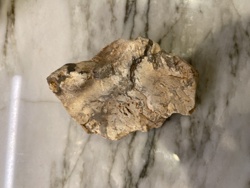
This artifact is a lithic tool measuring approximately 3 inches by 2.5 inches, identified as a hand axe or scraping tool from the Paleolithic period. It is crafted from a light-colored chert, featuring a cream and off-white palette with hints of tan and ochre staining throughout. The item exhibits clear evidence of percussion flaking, characterized by several large, concave flake scars across its surface which were used to create a sharp, functional edge. The overall form is ovoid to sub-triangular, designed to fit ergonomically within a human palm for manual use. There is a visible heavy patina and significant calcification or mineralization across the surface, suggesting a long period of burial in a subterranean environment. Edge wear is consistent with scraping or cutting heavy organic material, with some minor modern bruising and surface dirt typical of a field-found specimen from Guthrie, Oklahoma. The construction lacks formal grinding, pointing to an older, core-tool manufacturing tradition where functionality superseded aesthetic symmetry. The craftsmanship reflects a skilled reduction process, utilizing the natural lithic properties of the chert to achieve a durable working edge.
AI-Generated Appraisal Disclaimer
Estimated Value
$40.00 - $75.00
Basic Information
Category
Archaeological Artifacts / Prehistoric Stone Tools
Appraised On
February 20, 2026
Estimated Value
$40.00 - $75.00
Additional Details Provided By Owner
User Provided Information
Paleolithic chert hand axe scraper tool found in Guthrie OK measuring 3" x 2.5"
Item Description
This artifact is a lithic tool measuring approximately 3 inches by 2.5 inches, identified as a hand axe or scraping tool from the Paleolithic period. It is crafted from a light-colored chert, featuring a cream and off-white palette with hints of tan and ochre staining throughout. The item exhibits clear evidence of percussion flaking, characterized by several large, concave flake scars across its surface which were used to create a sharp, functional edge. The overall form is ovoid to sub-triangular, designed to fit ergonomically within a human palm for manual use. There is a visible heavy patina and significant calcification or mineralization across the surface, suggesting a long period of burial in a subterranean environment. Edge wear is consistent with scraping or cutting heavy organic material, with some minor modern bruising and surface dirt typical of a field-found specimen from Guthrie, Oklahoma. The construction lacks formal grinding, pointing to an older, core-tool manufacturing tradition where functionality superseded aesthetic symmetry. The craftsmanship reflects a skilled reduction process, utilizing the natural lithic properties of the chert to achieve a durable working edge.
Get Your Items Appraised
Instant estimates of your treasures with AI-powered instant appraisals