Lower Paleolithic Chert Bifacial Hand Axe Tool
Archeological Artifacts - Prehistoric Tools

Lower Paleolithic Chert Bifacial Hand Axe Tool

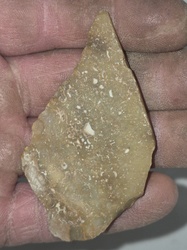
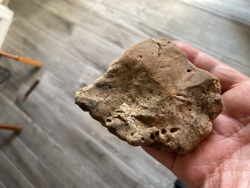
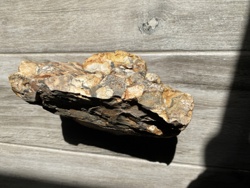
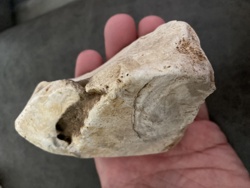
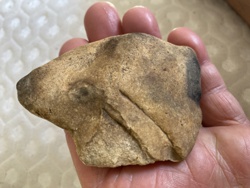
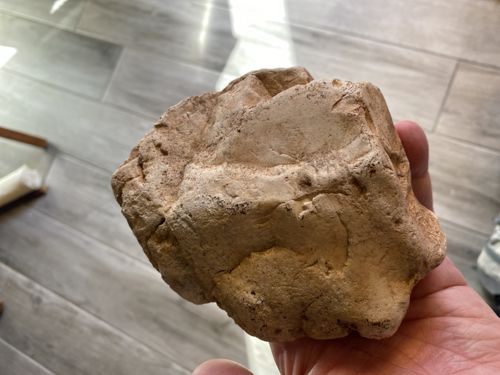
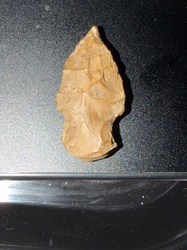
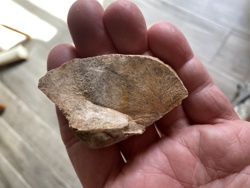
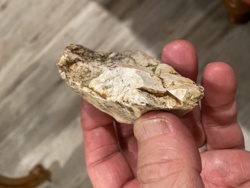
This artifact is a significant stone tool identified as a bifacial hand axe and scraper, measuring approximately 5.75 inches by 5 inches. Found in Guthrie, Oklahoma, the object is crafted from chert, a hard, dense sedimentary rock. The specimen exhibits characteristic percussion flaking indicative of Lower Paleolithic lithic technology, though found in a North American context where such large bifaces are often associated with Paleo-Indian traditions. Physically, the item presents a rugged, tan-to-cream colored exterior with a significant surface patina and mineral encrustation consistent with prolonged burial. The tool features a broad base for a palm grip and tapers toward a worked edge. Its construction shows intentional bulbous flake scars and hinge fractures, creating a functional but primitive cutting and scraping edge. There is visible smoothing of the ridges, likely due to natural geofact processes or heavy use-wear over millennia. The condition is stable but shows various micro-chips and environmental weathering across all surfaces. The weight and substantial size suggest it was used for heavy-duty tasks such as butchering or hide scraping. There are no visible maker's marks, as is typical for prehistoric lithic tools, but the craftsmanship reflects a sophisticated understanding of stone cleavage and fracture mechanics.
Estimated Value

$400.00 - $650.00

Basic Information

Category

Archeological Artifacts - Prehistoric Tools

Appraised On

February 18, 2026

Estimated Value

$400.00 - $650.00

Additional Details Provided By Owner

User Provided Information

Lower Paleolithic chert bi face hand axe scraper tool found in Guthrie, OK measuring 5.75" x 5"

Item Description

This artifact is a significant stone tool identified as a bifacial hand axe and scraper, measuring approximately 5.75 inches by 5 inches. Found in Guthrie, Oklahoma, the object is crafted from chert, a hard, dense sedimentary rock. The specimen exhibits characteristic percussion flaking indicative of Lower Paleolithic lithic technology, though found in a North American context where such large bifaces are often associated with Paleo-Indian traditions. Physically, the item presents a rugged, tan-to-cream colored exterior with a significant surface patina and mineral encrustation consistent with prolonged burial. The tool features a broad base for a palm grip and tapers toward a worked edge. Its construction shows intentional bulbous flake scars and hinge fractures, creating a functional but primitive cutting and scraping edge. There is visible smoothing of the ridges, likely due to natural geofact processes or heavy use-wear over millennia. The condition is stable but shows various micro-chips and environmental weathering across all surfaces. The weight and substantial size suggest it was used for heavy-duty tasks such as butchering or hide scraping. There are no visible maker's marks, as is typical for prehistoric lithic tools, but the craftsmanship reflects a sophisticated understanding of stone cleavage and fracture mechanics.
Get Your Items Appraised

Instant estimates of your treasures with AI-powered instant appraisals

Browse More Appraisals