AI estimate as of November 26, 2025 · verify with a professional before acting
AI-Generated · Verify before acting
Everything on this page is generated by AI for informational purposes only. AI can make mistakes — the AI may misidentify items or misattribute them (artist, maker, brand, designer, origin, era). This is not an official valuation and should not be used for insurance, sale, tax, estate, legal, or lending purposes — or any decision requiring a certified appraisal. It is not an authoritative claim about any person, brand, or rights holder — do not share or rely on it as a factual statement about a third party. Always consult qualified professionals before making financial decisions.
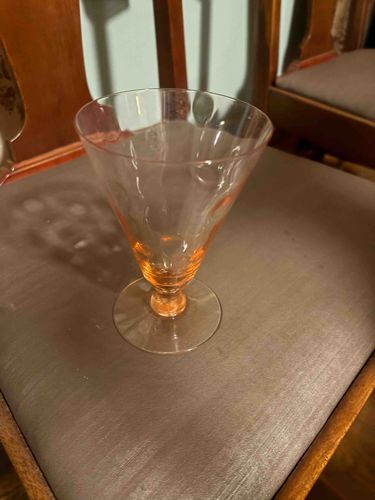
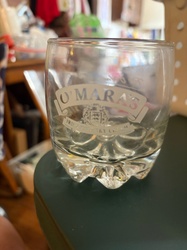
This item is a footed glass vessel, likely a tumbler or sherbet dish, crafted from pink-tinted glass, indicative of Depression-era glass production. The glass exhibits a translucent, salmon-pink hue. Its form features a flared, conical bowl resting on a short, tapered stem that widens to a flat, circular foot. The bowl itself appears to have subtle vertical ribbing or fluting, adding a textural element to its otherwise smooth surface. The craftsmanship suggests machine-pressed glass, common for the period. While specific dimensions are not provided, it appears to be of standard size for a beverage glass or dessert serving. The visible condition includes a generally clean appearance with no obvious chips, cracks, or significant wear marks discernible from the image. The surface has a consistent sheen, suggesting good preservation of the glass's original finish. No manufacturer's marks or signatures are visible. The overall aesthetic points to an estimated age from the 1920s to 1940s, aligning with the popularity of colored glass during the Depression era. The uniform tint and form are typical of mass-produced yet cherished household items from that period, often distributed as premiums or sold affordably.
AI Appraisal Report
I have visually examined the provided image of what appears to be a Pink Depression Glass footed tumbler or sherbet dish. Based on this visual inspection, the item exhibits characteristic features of Depression-era glassware, specifically the translucent, salmon-pink hue and the machine-pressed manufacturing style. The design, with its flared conical bowl, short tapered stem, and circular foot, is consistent with common patterns of the period. I observe subtle vertical ribbing, which adds a decorative element. \n\nThe condition appears to be very good; I see no discernible chips, cracks, or significant wear marks in the image, and the surface retains a consistent sheen, suggesting good preservation. This good condition contributes positively to its potential market value.\n\nIn terms of market conditions, Depression glass has a steady collector base, though individual pieces like this, especially common forms, are typically not high-value items. Comparables for similar footed tumblers or sherbet dishes in common pink Depression glass patterns typically range from $10 to $30. The demand is stable but not exceptionally high for individual pieces of this nature. It is not considered rare at this time. Factors impacting value include the specific pattern (which is difficult to identify definitively from the image), rarity of that pattern, and overall condition. The lack of visible manufacturer's marks is typical for many Depression glass pieces and does not necessarily detract from value, but it hinders pattern identification.
It is crucial to note that my assessment of authenticity and condition is limited by the visual nature of the examination. A definitive authentication would require an in-person examination to assess the glass quality, feel for any subtle imperfections, check for mold lines indicative of period manufacturing, and search for any very faint marks not visible in the photograph. Provenance documentation, though unlikely for an item of this value, would also provide additional certainty. Without physical inspection, I cannot confirm the absence of hairline cracks, internal flaws, or repairs with 100% certainty.