Sasak Terracotta Jar from Lombok
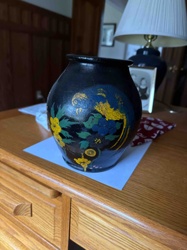
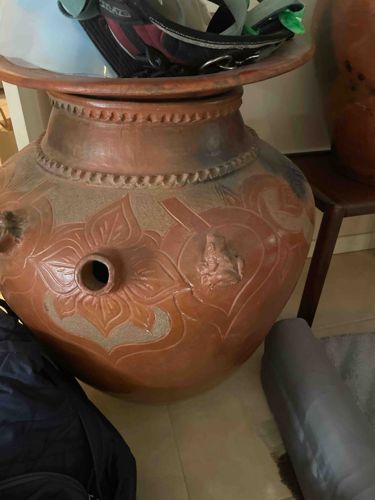
This is a large, hand-coiled terracotta earthenware jar originating from the island of Lombok, Indonesia, specifically from the Sasak pottery tradition. The piece exhibits a bulbous body with a high, slightly tapered neck and a wide, flared rim. It is crafted from local clay that fires to a rich reddish-brown or ochre hue. The surface is decorated with a combination of techniques, including incised floral motifs resembling lotus petals and applied high-relief figures, specifically small frogs which are symbolically significant in Indonesian agricultural culture for fertility and water. The jar features a distinct textured neck with a rope-like or scalloped band. A notable functional/stylistic element is the circular puncture or opening on the shoulder, likely intended for a spout or for aeration. The finish displays a varying patina with dark, smoky areas resulting from the traditional open-bonfire firing process common in Sasak villages like Banyumulek. Based on the provided context, the item is approximately 30 years old, placing it in the late 20th-century folk art revival period. In terms of condition, there is visible cracking on the body near the relief frog, along with surface abrasions and dust accumulation from utilitarian use or storage. The craftsmanship is characteristic of community-based artisan production, emphasizing organic forms and cultural motifs over machine-made precision.
AI-Generated Appraisal Disclaimer
Estimated Value
$250 - $400
Basic Information
Category
Indonesian Folk Art / Pottery
Appraised On
February 17, 2026
Estimated Value
$250 - $400
Additional Details Provided By Owner
User Provided Information
Lombok pottery 30 years old
Item Description
This is a large, hand-coiled terracotta earthenware jar originating from the island of Lombok, Indonesia, specifically from the Sasak pottery tradition. The piece exhibits a bulbous body with a high, slightly tapered neck and a wide, flared rim. It is crafted from local clay that fires to a rich reddish-brown or ochre hue. The surface is decorated with a combination of techniques, including incised floral motifs resembling lotus petals and applied high-relief figures, specifically small frogs which are symbolically significant in Indonesian agricultural culture for fertility and water. The jar features a distinct textured neck with a rope-like or scalloped band. A notable functional/stylistic element is the circular puncture or opening on the shoulder, likely intended for a spout or for aeration. The finish displays a varying patina with dark, smoky areas resulting from the traditional open-bonfire firing process common in Sasak villages like Banyumulek. Based on the provided context, the item is approximately 30 years old, placing it in the late 20th-century folk art revival period. In terms of condition, there is visible cracking on the body near the relief frog, along with surface abrasions and dust accumulation from utilitarian use or storage. The craftsmanship is characteristic of community-based artisan production, emphasizing organic forms and cultural motifs over machine-made precision.
Get Your Items Appraised
Instant estimates of your treasures with AI-powered instant appraisals