AI Appraisal Estimate

AI-generated estimates · not official valuations

From the user

What was submitted

Photo and notes provided by the user — not generated by AI

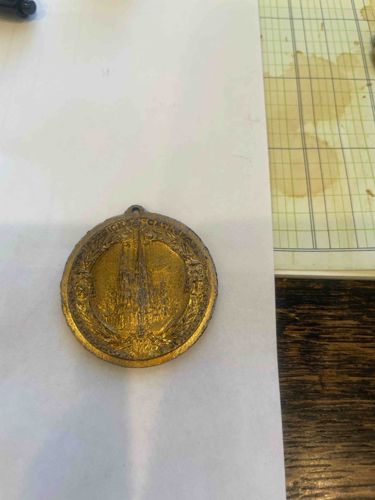
Submitted item photo
Submitted photo · June 8, 2026

User's notes

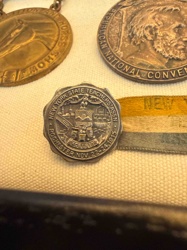
Consecration of st Patrick’s cathedral 1910

AI analysis below

AI appraisal

AI analysis & estimate

AI-Generated · Verify before acting

Everything below is generated by AI for informational purposes only. AI can make mistakes — the AI may misidentify items or misattribute them (artist, maker, brand, designer, origin, era). This is not an official valuation and should not be used for insurance, sale, tax, estate, legal, or lending purposes — or any decision requiring a certified appraisal. It is not an authoritative claim about any person, brand, or rights holder — do not share or rely on it as a factual statement about a third party. Always consult qualified professionals before making financial decisions.

Note

This analysis also relies on unverified notes provided by the user, which may be incomplete or inaccurate and could affect the result.

Read the full disclaimer

AI Identification

·Not independently authenticated·Verify before acting

1910 Consecration of St. Patrick's Cathedral Commemorative Medal

Religous Memorabilia / Numismatics

AI Estimated Value

·Not an official valuation·Verify before acting

$45.00 - $75.00

As of June 8, 2026

AI Item Analysis

·AI can make mistakes·Verify before acting
This is a circular commemorative medal issued for the consecration of St. Patrick’s Cathedral in New York City in 1910. The medal is struck in a base metal with a brass or bronze-toned galvanic finish. The obverse features a highly detailed, low-relief architectural rendering of the cathedral's facade, including its iconic twin spires and central rose window. This central image is framed by a decorative laurel wreath or floral border, with an inscription along the upper edge that identifies the building. Condition shows significant signs of age and handling; there is visible wear to the high points of the relief and extensive loss of the original gilded finish, revealing a darker underlying metal. Heavy oxidation, pitting, and surface grime are present across both the field and the design elements, particularly visible as dark grey patches in the center and along the rim. The piece includes an integrated suspension loop at the 12 o'clock position, though the original ribbon or jump ring is missing. The craftsmanship reflects the mass-produced liturgical souvenirs of the early 20th century, utilizing die-striking techniques typical of the Edwardian period. Despite the surface degradation, the architectural icon remains clearly identifiable, marking a significant event in American Catholic history.

AI Appraisal Report

·AI can make mistakes·Verify before acting
I have conducted a visual examination of the 1910 St. Patrick’s Cathedral Consecration medal. This piece is a classic example of Edwardian-era liturgical souvenir numismatics. The design correctly reflects the architectural details of the facade as it appeared following the completion of the Lady Chapel and the subsequent 1910 consecration. Based on the strike characteristics and the visible degradation of the galvanic coating, I believe the piece is authentic to the period rather than a modern reproduction. The condition of this specific specimen is considered 'Fair' to 'Good' by numismatic standards. The significant loss of the original gilt finish, combined with pitting and surface oxidation, negatively impacts the eye appeal. The absence of the original suspension ribbon and pin further diminishes its value to 'total' collectors. Market demand for these medals is niche, primarily driven by Catholic historians and collectors of New York City memorabilia. Comparable sales for similar base-metal medals from this event range from $30 at the low end for worn examples to roughly $125 for specimens in near-mint condition with original ribbons. While the visual characteristics align with early 20th-century die-striking, this appraisal is limited by the digital nature of the inspection. A definitive authentication would require an in-person examination to verify the specific gravity of the base metal (to rule out modern cast fakes) and a microscopic inspection of the rim for any casting seams. To enhance the valuation, provenance documentation—such as family history or original packaging—would be beneficial. No destructive scientific testing is recommended given the item's current market tier.

Get your items appraised

Instant estimates of your treasures with AI-powered appraisals

Browse More Appraisals