AI Appraisal Estimate

AI-generated estimates · not official valuations

From the user

What was submitted

Photo and notes provided by the user — not generated by AI

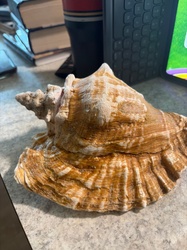
Submitted item photo
Submitted photo · June 25, 2026

User's notes

No additional notes provided.

AI analysis below

AI appraisal

AI analysis & estimate

AI-Generated · Verify before acting

Everything below is generated by AI for informational purposes only. AI can make mistakes — the AI may misidentify items or misattribute them (artist, maker, brand, designer, origin, era). This is not an official valuation and should not be used for insurance, sale, tax, estate, legal, or lending purposes — or any decision requiring a certified appraisal. It is not an authoritative claim about any person, brand, or rights holder — do not share or rely on it as a factual statement about a third party. Always consult qualified professionals before making financial decisions.

Read the full disclaimer

AI Identification

·Not independently authenticated·Verify before acting

Syrinx aruanus (Australian Trumpet Shell)

Natural History / Marine Specimens

AI Estimated Value

·Not an official valuation·Verify before acting

$150 - $250

As of June 25, 2026

AI Item Analysis

·AI can make mistakes·Verify before acting
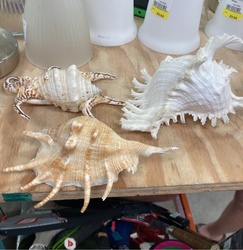
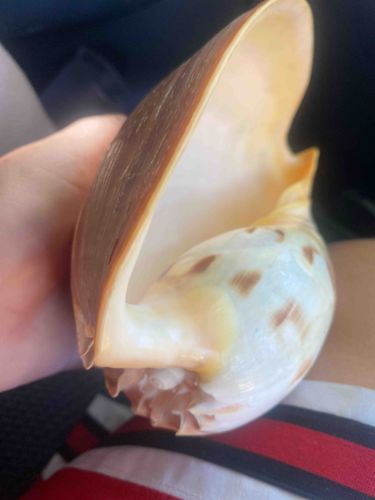
This item is a specimen of Syrinx aruanus, commonly known as the Australian Trumpet or False Trumpet. It is a very large sea snail shell characterized by its robust, calcified structure and distinctive fusiform shape. The specimen displays a creamy-white to light apricot base color on the exterior, decorated with faint brown maculations or spots along the whorls. The interior aperture is wide and smooth, showing a glossy porcelaneous finish with a soft peachy-orange hue. Its size appears substantial, fitting within a human hand, though mature specimens can reach up to 91 cm in length. The shell's spiral structure is evident, leading to a prominent columella and a flared outer lip. Condition-wise, the shell exhibits minor edge chipping along the delicate outer lip and some visible wear near the apex, which is typical for beach-collected or handled specimens. There is no evidence of artificial polishing, suggesting a natural finish. These gastropods are native to the northern half of Australia and adjacent areas, often prized by collectors for their sheer size and sculptural aesthetic. The craftsmanship is purely biological, demonstrating the intricate calcium carbonate layering typical of the Turbinellidae family.
AI Appraisal Report

·AI can make mistakes·Verify before acting
I have virtually examined this specimen of Syrinx aruanus, the world's largest extant gastropod. The specimen presents with a natural, unpolished finish, which is highly desirable among malacologists and natural history collectors as it preserves the integrity of the shell's biological growth. The coloration is consistent with specimens recovered from the northern Australian coastline, featuring a healthy peach-toned aperture and characteristic spiral sculpture. Condition-wise, I note minor chipping along the labrum (outer lip) and some erosion at the apex. While these are common in wild-harvested specimens, pristine shells command a significant premium. Based on the visual scale provided, this is a mid-sized specimen; however, market value for these shells is heavily contingent on precise measurement, as value increases exponentially for specimens approaching the 70cm+ range. The market for Marine Specimens is currently stable, with high demand for larger, 'decorator-grade' shells. Comparables for specimens of this size and condition typically fall within the $150 to $250 range at auction. Limitation of Remote Appraisal: This valuation is based solely on digital images. A definitive appraisal would require in-person inspection to verify internal structural integrity and to confirm the absence of synthetic repair or cosmetic fillers. I cannot definitively verify the exact species lineage or regional provenance without a physical examination or a detailed find-site history (provenance). For full authentication, I would recommend a precise measurement in centimeters, a weight determination, and documentation regarding its legal importation to ensure compliance with CITES regulations or local wildlife laws.

Get your items appraised

Instant estimates of your treasures with AI-powered appraisals

Browse More Appraisals