AI identification & appraisal estimate

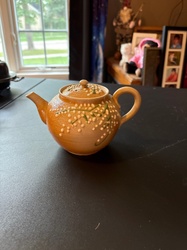
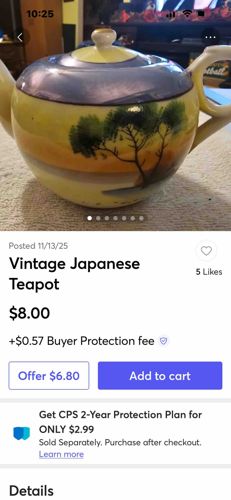
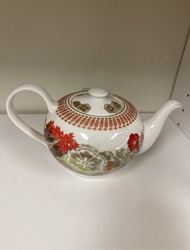
Vintage Japanese Lusterware Teapot

Submitted photo of Vintage Japanese Lusterware Teapot
Photo submitted by the user — not generated by AI

AI Estimated Value

Not an official valuation

$35 - $65

AI estimate as of January 22, 2026 · verify with a professional before acting

AI-Generated · Verify before acting

Everything on this page is generated by AI for informational purposes only. AI can make mistakes — the AI may misidentify items or misattribute them (artist, maker, brand, designer, origin, era). This is not an official valuation and should not be used for insurance, sale, tax, estate, legal, or lending purposes — or any decision requiring a certified appraisal. It is not an authoritative claim about any person, brand, or rights holder — do not share or rely on it as a factual statement about a third party. Always consult qualified professionals before making financial decisions.

Read the full disclaimer

AI Item Analysis

This is a mid-20th century Japanese lusterware teapot, likely dating from the 1930s to the 1950s. The piece is constructed from fine porcelain and features a distinctive iridescent iridescent metallic glaze known as lusterware, characterized here by a pearlescent blue-to-purple band around the shoulder and lid. The body of the teapot is hand-painted with a scenic landscape depicting a coastal sunset with prominent silhouetted pine trees in the foreground, rendered in dark green and black strokes. The background utilizes a gradient of yellow and orange tones to represent a horizon. The teapot has a bulbous shape with a curved handle and a matching lid featuring a small round finial. The craftsmanship is typical of Japanese export ware from the Showa era, intended for the Western market. There are no visible chips or cracks shown in the primary photo, but the glaze appears to have a soft, aged patina. The handle and spout show a creamy base porcelain color. Items of this style were frequently marked 'Hand Painted Made in Japan' on the underside, indicating a mass-produced yet hand-decorated quality characteristic of the period.
AI Appraisal Report

I have performed a visual examination of this mid-20th century Japanese lusterware teapot. Based on the iridescent glaze and hand-painted coastal landscape, the piece is a classic example of Showa-era export porcelain, likely produced between the 1930s and early 1950s. The condition appears to be 'Good to Very Good'; I note no visible hairline fractures or significant glaze loss, though there is a soft patina consistent with age. However, the market for Japanese lusterware is currently saturated. These pieces were mass-produced for Western department stores and gift shops, which limits their rarity. Similar items frequently appear on the secondary market (eBay, Etsy) at modest price points. The value is driven primarily by its decorative charm rather than investment-grade scarcity. Factors that could slightly elevate this value include a clear 'Made in Japan' backstamp and the presence of a matching sugar and creamer set. A primary limitation of this digital assessment is the inability to check for 'pinks' or internal stress cracks that only a physical inspection or ‘ring test’ would reveal. I cannot definitively verify the absence of professional restoration to the spout or handle without a UV light examination. Furthermore, while the style is highly consistent with authentic period export ware, physical verification of the clay body and weight or provenance documentation would be required for a formal, insurance-grade authentication.

Keep exploring

More antique & vintage teapots appraisals

Get your items appraised

Instant AI-powered appraisal estimates from a photo

Browse More Appraisals