Vintage Silver-Plated Lidded Sugar Bowl
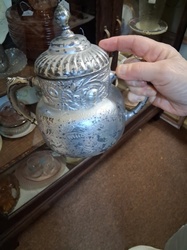
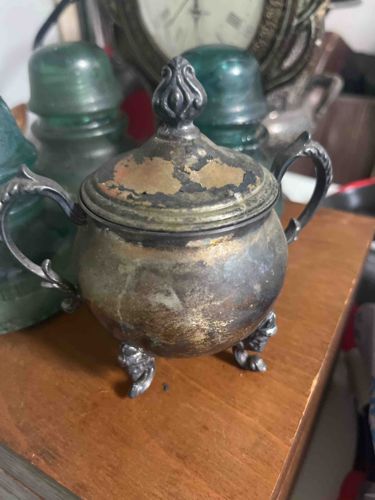
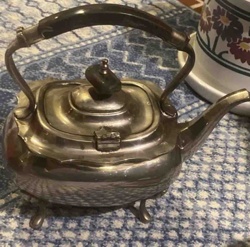
This is a vintage, double-handled covered sugar bowl, typically part of a Victorian or Edwardian style tea service. The vessel features a bulbous, globular body supported by four ornate cast 'beast' or scroll-motif feet. It includes a matching domed lid topped with a decorative foliate or flame-style finial. The two handles are elegantly curved with acanthus leaf accents where they join the body. Regarding its construction and condition, the item is made of a base metal—likely brass or copper—that was originally silver-plated. The condition is significantly weathered; the silver plating has largely worn away (a state known as 'bleeding'), revealing the yellowish base metal beneath. Heavy oxidation and tarnish are present across the entire surface, particularly on the lid and lower body. There is visible pitting and surface texture loss due to age and environmental exposure. While no specific maker's mark is visible in the photograph, the style and construction suggest it was mass-produced in the late 19th to early 20th century. The ornate casting of the handles and feet indicates a mid-range quality of craftsmanship from that period.
AI-Generated Appraisal Disclaimer
Estimated Value
$15.00 - $35.00
Basic Information
Category
Antique Tableware / Silverplate
Appraised On
March 24, 2026
Estimated Value
$15.00 - $35.00
Item Description
This is a vintage, double-handled covered sugar bowl, typically part of a Victorian or Edwardian style tea service. The vessel features a bulbous, globular body supported by four ornate cast 'beast' or scroll-motif feet. It includes a matching domed lid topped with a decorative foliate or flame-style finial. The two handles are elegantly curved with acanthus leaf accents where they join the body. Regarding its construction and condition, the item is made of a base metal—likely brass or copper—that was originally silver-plated. The condition is significantly weathered; the silver plating has largely worn away (a state known as 'bleeding'), revealing the yellowish base metal beneath. Heavy oxidation and tarnish are present across the entire surface, particularly on the lid and lower body. There is visible pitting and surface texture loss due to age and environmental exposure. While no specific maker's mark is visible in the photograph, the style and construction suggest it was mass-produced in the late 19th to early 20th century. The ornate casting of the handles and feet indicates a mid-range quality of craftsmanship from that period.
Related Tags
Get Your Items Appraised
Instant estimates of your treasures with AI-powered instant appraisals