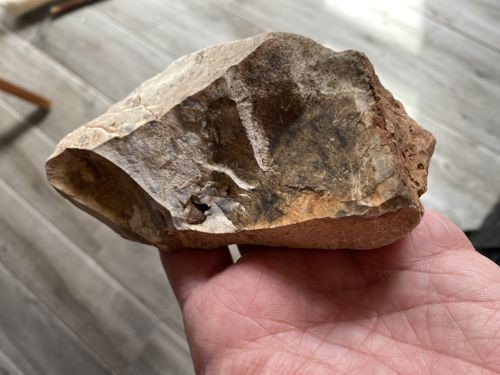
Paleo-Indian Chert Hand Axe Scraper
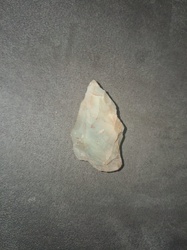
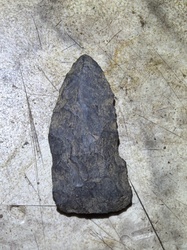
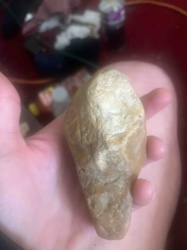
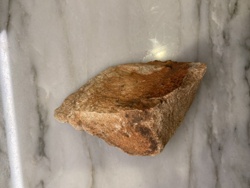
This artifact is a lithic tool measuring approximately 4.5 inches by 2.75 inches, identified as a Paleo-Indian period hand axe or unifacial scraper. The item is fashioned from a high-quality, dense chert or flint material, displaying a variegated palette of earthy tones including beige, tan, and dark grey-brown with hints of iron oxide staining (russet). The construction features deliberate bifacial percussion flaking along the margins to create a functional cutting or scraping edge. One side retains a significant portion of the original cortex, providing an ergonomic grip for the hand, which is typical of hand-held tools from this era. The flaking scars exhibit a degree of smoothing and a heavy desert varnish or patina, suggesting significant antiquity and post-depositional weathering. Visible condition issues include minor micro-chipping along the working edge, likely resulting from prehistoric use-wear rather than modern damage. There are no modern maker's marks or signatures, consistent with ancient stone tools. The craftsmanship indicates a sophisticated understanding of lithic reduction techniques, resulting in a tool that is both balanced and durable. The artifact represents an important example of early North American tool-making technology, utilized for hide processing or butchery.
AI-Generated Appraisal Disclaimer
Estimated Value
$350 - $550
Basic Information
Category
Archaeological Artifacts / Native American Pre-Contact Stone Tools
Appraised On
February 19, 2026
Estimated Value
$350 - $550
Additional Details Provided By Owner
User Provided Information
Paleo Indian chert hand axe scraper 4.5" x 2.75
Item Description
This artifact is a lithic tool measuring approximately 4.5 inches by 2.75 inches, identified as a Paleo-Indian period hand axe or unifacial scraper. The item is fashioned from a high-quality, dense chert or flint material, displaying a variegated palette of earthy tones including beige, tan, and dark grey-brown with hints of iron oxide staining (russet). The construction features deliberate bifacial percussion flaking along the margins to create a functional cutting or scraping edge. One side retains a significant portion of the original cortex, providing an ergonomic grip for the hand, which is typical of hand-held tools from this era. The flaking scars exhibit a degree of smoothing and a heavy desert varnish or patina, suggesting significant antiquity and post-depositional weathering. Visible condition issues include minor micro-chipping along the working edge, likely resulting from prehistoric use-wear rather than modern damage. There are no modern maker's marks or signatures, consistent with ancient stone tools. The craftsmanship indicates a sophisticated understanding of lithic reduction techniques, resulting in a tool that is both balanced and durable. The artifact represents an important example of early North American tool-making technology, utilized for hide processing or butchery.
Get Your Items Appraised
Instant estimates of your treasures with AI-powered instant appraisals