Middle Paleolithic Style Chert Biface Hand Axe / Scraper
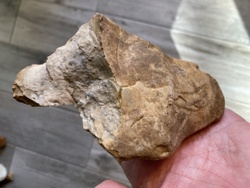
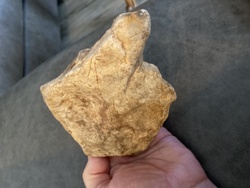
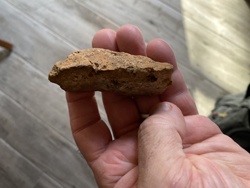
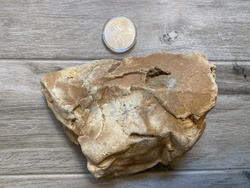
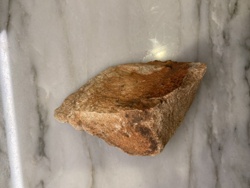
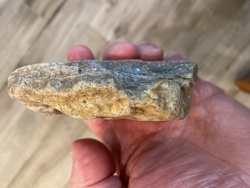
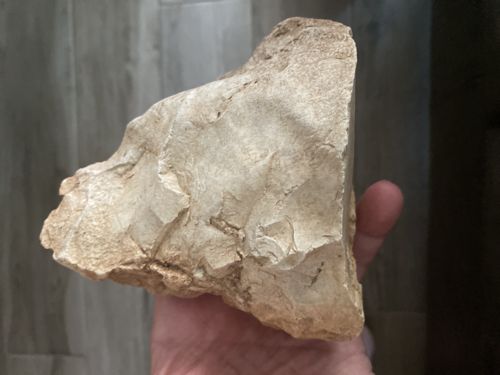
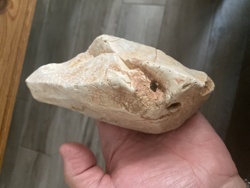
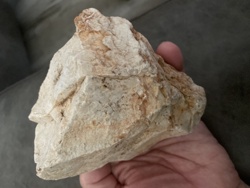
This is a lithic artifact consistent with a prehistoric percussion-flaked tool, specifically a bifacial hand axe or large scraper. Measuring approximately 4.5 inches by 5 inches, the item is crafted from a light-tan to cream-colored chert or flint material. The tool displays evidence of intentional lithic reduction, with distinct flake scars and percussion bulbs visible on its surface, indicating it was shaped by human hand rather than natural weathering. The form is roughly triangular to sub-rectangular, featuring a thick, bulbous base that would serve as a comfortable grip, tapering toward a worked edge. The surface exhibits a heavy calcium carbonate or mineral patina, suggestive of significant age and long-term burial in an alkaline soil environment, typical of findings in the Guthrie, Oklahoma region. The edges show secondary retouching, which suggests it was utilized for heavy-duty tasks such as butchering, hide scraping, or wood processing. While listed as 'Middle Paleolithic' in style, it is important to note that in North American contexts, such tools are typically associated with the Paleo-Indian or Archaic periods. The item appears stable with no recent fractures, though it shows ancient edge wear and minor step fractures from historical use. The craftsmanship reflects a Mastery of hard-hammer percussion techniques.
AI-Generated Appraisal Disclaimer
Estimated Value
$150 - $250
Basic Information
Category
Prehistoric Lithic Artifacts / Archaeology
Appraised On
February 19, 2026
Estimated Value
$150 - $250
Additional Details Provided By Owner
User Provided Information
Middle Paleolithic chert Bi face hand axe scraper tool found in Guthrie OK measuring 4.5" x 5"
Item Description
This is a lithic artifact consistent with a prehistoric percussion-flaked tool, specifically a bifacial hand axe or large scraper. Measuring approximately 4.5 inches by 5 inches, the item is crafted from a light-tan to cream-colored chert or flint material. The tool displays evidence of intentional lithic reduction, with distinct flake scars and percussion bulbs visible on its surface, indicating it was shaped by human hand rather than natural weathering. The form is roughly triangular to sub-rectangular, featuring a thick, bulbous base that would serve as a comfortable grip, tapering toward a worked edge. The surface exhibits a heavy calcium carbonate or mineral patina, suggestive of significant age and long-term burial in an alkaline soil environment, typical of findings in the Guthrie, Oklahoma region. The edges show secondary retouching, which suggests it was utilized for heavy-duty tasks such as butchering, hide scraping, or wood processing. While listed as 'Middle Paleolithic' in style, it is important to note that in North American contexts, such tools are typically associated with the Paleo-Indian or Archaic periods. The item appears stable with no recent fractures, though it shows ancient edge wear and minor step fractures from historical use. The craftsmanship reflects a Mastery of hard-hammer percussion techniques.
Related Tags
Explore similar items and categories:
Get Your Items Appraised
Instant estimates of your treasures with AI-powered instant appraisals