Paleolithic Chert Multi-Tool Scraper
Archaeological Artifacts / Lithics

Paleolithic Chert Multi-Tool Scraper

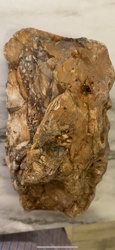
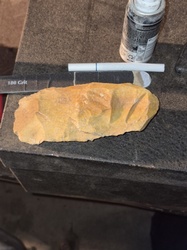
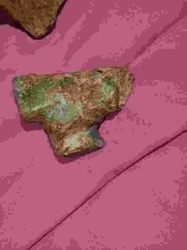
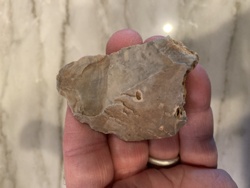
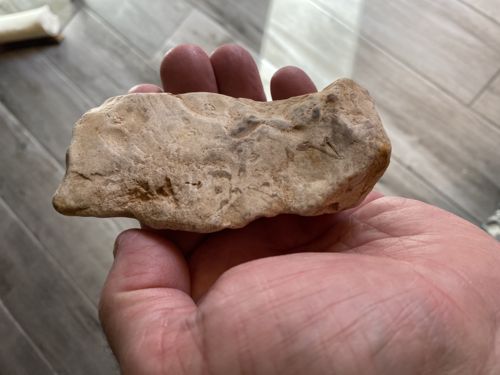
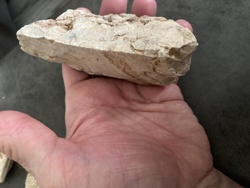
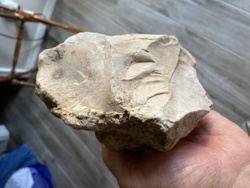
This artifact is a Paleolithic-style multi-tool scraper, measuring approximately 4.75 inches in length and 1.75 inches in width. Found in Guthrie, Oklahoma, the tool is composed of lithic chert, exhibiting a predominately tan and buff color profile with subtle inclusions and variations in mineral staining. The physical construction shows evidence of intentional flaking and percussion scarring along the margins, indicating its use as a handheld tool for scraping or cutting. Its ergonomic, elongated shape fits comfortably within the palm, suggesting it functioned as a versatile utilitarian implement. The surface displays a significant degree of natural patina and weathering consistent with long-term environmental exposure, though the distinct worked edges remain discernible. No modern maker's marks are present, as is characteristic of ancient lithic technology. The item shows heavy use-wear, with some minor rounding of the once-sharp edges and incidental micro-chipping. This specimen represents early human craftsmanship and resourcefulness, where the natural properties of chert—known for its conchoidal fracture—were harnessed for survival tools. Its find-site in Oklahoma provides important geographical context for Paleolithic human activity in the region.

Estimated Value

$45 - $85

Basic Information

Category

Archaeological Artifacts / Lithics

Appraised On

February 18, 2026

Estimated Value

$45 - $85

Additional Details Provided By Owner

User Provided Information

Paleolithic chert multi tool scraper found in Guthrie, OK measuring 4.75" x 1.75"

Item Description

This artifact is a Paleolithic-style multi-tool scraper, measuring approximately 4.75 inches in length and 1.75 inches in width. Found in Guthrie, Oklahoma, the tool is composed of lithic chert, exhibiting a predominately tan and buff color profile with subtle inclusions and variations in mineral staining. The physical construction shows evidence of intentional flaking and percussion scarring along the margins, indicating its use as a handheld tool for scraping or cutting. Its ergonomic, elongated shape fits comfortably within the palm, suggesting it functioned as a versatile utilitarian implement. The surface displays a significant degree of natural patina and weathering consistent with long-term environmental exposure, though the distinct worked edges remain discernible. No modern maker's marks are present, as is characteristic of ancient lithic technology. The item shows heavy use-wear, with some minor rounding of the once-sharp edges and incidental micro-chipping. This specimen represents early human craftsmanship and resourcefulness, where the natural properties of chert—known for its conchoidal fracture—were harnessed for survival tools. Its find-site in Oklahoma provides important geographical context for Paleolithic human activity in the region.
Get Your Items Appraised

Instant estimates of your treasures with AI-powered instant appraisals

Browse More Appraisals